Laboratory of Molecular Signaling, NIAAA, NIH, 5625 Fishers Lane, Rockville, MD, 20852, USA.
Center for Neuroscience and Regenerative Medicine, Henry M. Jackson Foundation, Bethesda, MD, 20817, USA.
J Neuroinflammation. 2021 Jul 17;18(1):157. doi: 10.1186/s12974-021-02195-y.
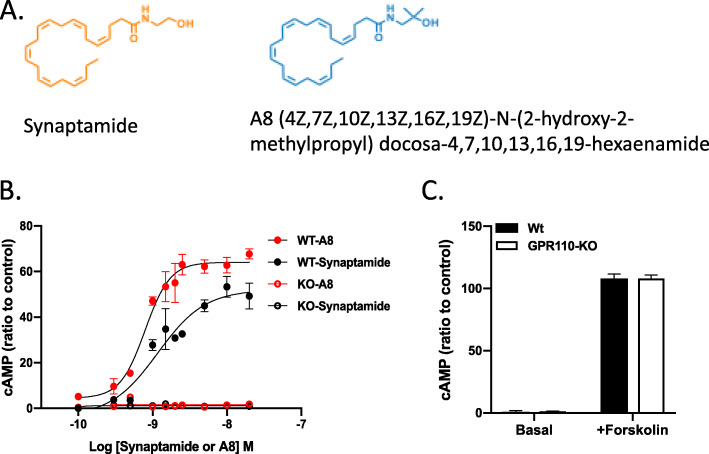
Repetitive mild traumatic brain injury (mTBI) can result in chronic visual dysfunction. G-protein receptor 110 (GPR110, ADGRF1) is the target receptor of N-docosahexaenoylethanolamine (synaptamide) mediating the anti-neuroinflammatory function of synaptamide. In this study, we evaluated the effect of an endogenous and a synthetic ligand of GPR110, synaptamide and (4Z,7Z,10Z,13Z,16Z,19Z)-N-(2-hydroxy-2-methylpropyl) docosa-4,7,10,13,16,19-hexaenamide (dimethylsynaptamide, A8), on the mTBI-induced long-term optic tract histopathology and visual dysfunction using Closed-Head Impact Model of Engineered Rotational Acceleration (CHIMERA), a clinically relevant model of mTBI.
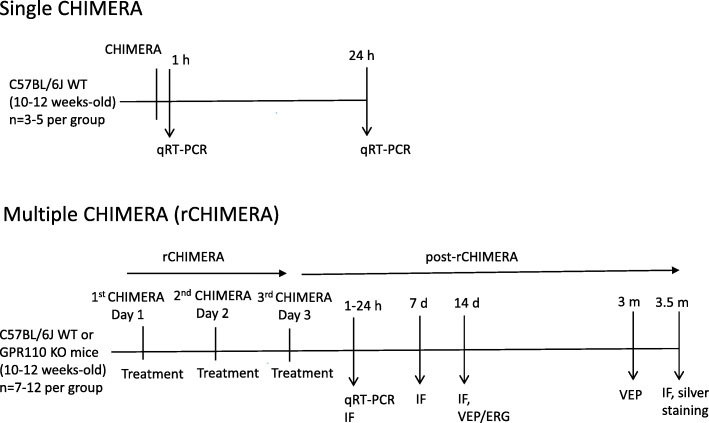
The brain injury in wild-type (WT) and GPR110 knockout (KO) mice was induced by CHIMERA applied daily for 3 days, and GPR110 ligands were intraperitoneally injected immediately following each impact. The expression of GPR110 and proinflammatory mediator tumor necrosis factor (TNF) in the brain was measured by using real-time quantitative reverse transcription polymerase chain reaction (qRT-PCR) in an acute phase. Chronic inflammatory responses in the optic tract and visual dysfunction were assessed by immunostaining for Iba-1 and GFAP and visual evoked potential (VEP), respectively. The effect of GPR110 ligands in vitro was evaluated by the cyclic adenosine monophosphate (cAMP) production in primary microglia isolated from adult WT or KO mouse brains.
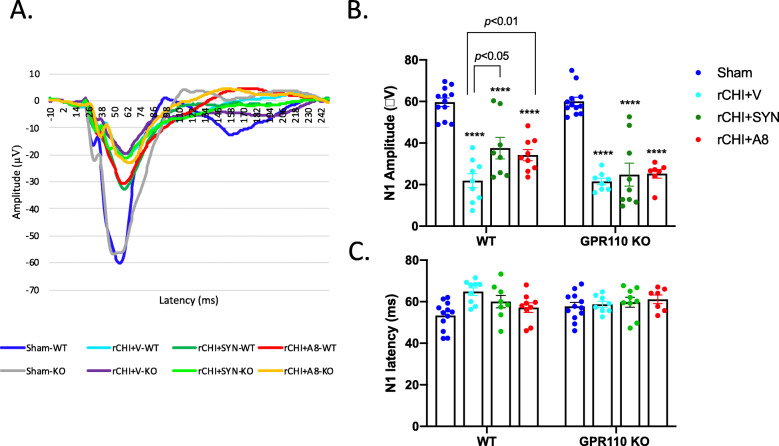
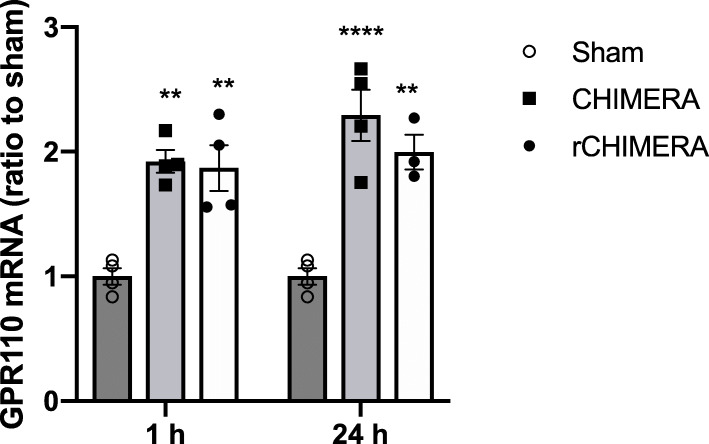
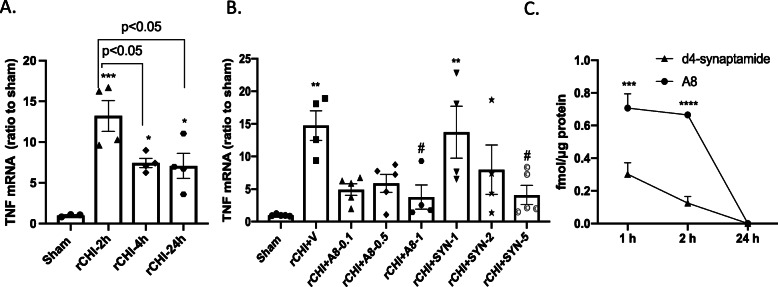
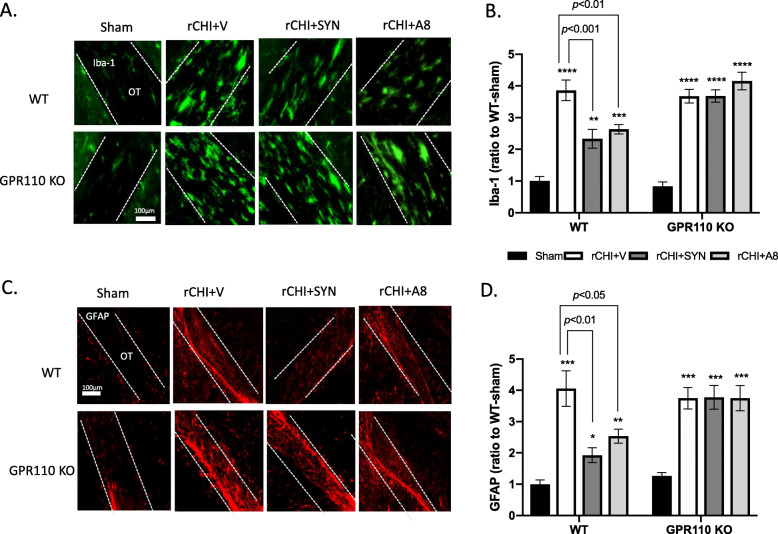
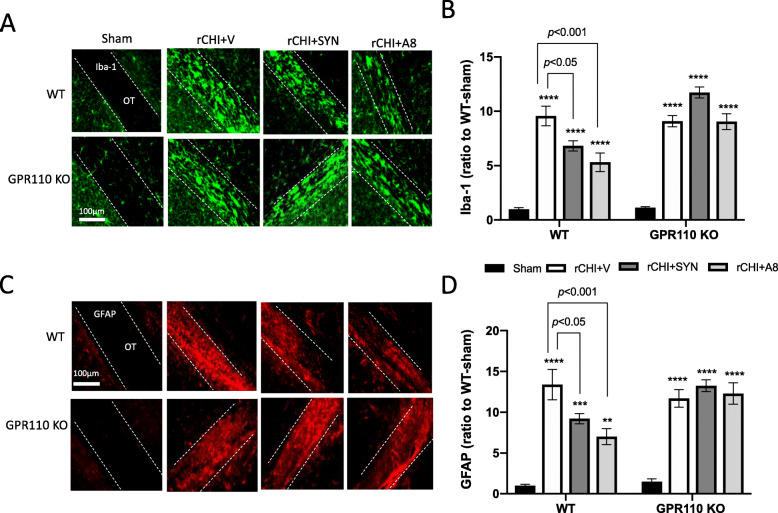
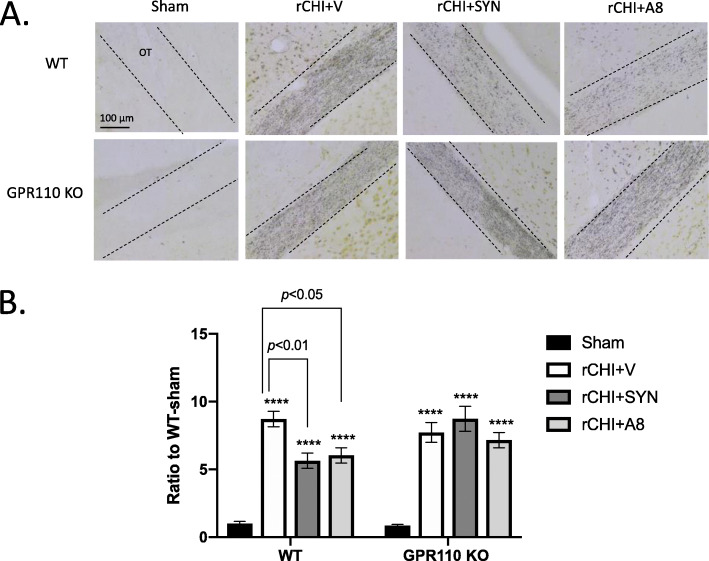
CHIMERA injury acutely upregulated the GPR110 and TNF gene level in mouse brain. Repetitive CHIMERA (rCHIMERA) increased the GFAP and Iba-1 immunostaining of glia cells and silver staining of degenerating axons in the optic tract with significant reduction of N1 amplitude of visual evoked potential at up to 3.5 months after injury. Both GPR110 ligands dose- and GPR110-dependently increased cAMP in cultured primary microglia with A8, a ligand with improved stability, being more effective than synaptamide. Intraperitoneal injection of A8 at 1 mg/kg or synaptamide at 5 mg/kg significantly reduced the acute expression of TNF mRNA in the brain and ameliorated chronic optic tract microgliosis, astrogliosis, and axonal degeneration as well as visual deficit caused by injury in WT but not in GPR110 KO mice.
Our data demonstrate that ligand-induced activation of the GPR110/cAMP system upregulated after injury ameliorates the long-term optic tract histopathology and visual impairment caused by rCHIMERA. Based on the anti-inflammatory nature of GPR110 activation, we suggest that GPR110 ligands may have therapeutic potential for chronic visual dysfunction associated with mTBI.
重复性轻度创伤性脑损伤(mTBI)可导致慢性视觉功能障碍。G 蛋白受体 110(GPR110,ADGRF1)是 N-二十二碳六烯酰乙醇胺(神经酰胺)的靶受体,介导神经酰胺的抗炎作用。在这项研究中,我们使用临床相关的 mTBI 模型——工程旋转加速度闭合性头部撞击模型(CHIMERA),评估了 GPR110 的内源性和合成配体神经酰胺和(4Z,7Z,10Z,13Z,16Z,19Z)-N-(2-羟基-2-甲基丙基)二十二碳-4、7、10、13、16、19-六烯酰胺(二甲神经酰胺,A8)对 mTBI 诱导的长期视束组织病理学和视觉功能障碍的影响。
野生型(WT)和 GPR110 敲除(KO)小鼠的脑损伤通过 CHIMERA 每天应用 3 天诱导,并且在每次撞击后立即腹膜内注射 GPR110 配体。通过实时定量逆转录聚合酶链反应(qRT-PCR)在急性期测量脑内 GPR110 和促炎介质肿瘤坏死因子(TNF)的表达。通过免疫染色 Iba-1 和 GFAP 评估视束中的慢性炎症反应和视觉功能障碍,通过视觉诱发电位(VEP)评估。通过从成年 WT 或 KO 小鼠大脑中分离的原代小胶质细胞中 cAMP 的产生来评估 GPR110 配体的体外作用。
CHIMERA 损伤急性上调了小鼠脑内的 GPR110 和 TNF 基因水平。重复 CHIMERA(rCHIMERA)增加了视束中的 GFAP 和 Iba-1 胶质细胞免疫染色以及变性轴突的银染色,并且在损伤后长达 3.5 个月时 N1 振幅的视觉诱发电位明显降低。两种 GPR110 配体均以剂量和 GPR110 依赖性方式增加培养的原代小胶质细胞中的 cAMP,其中稳定性得到改善的配体 A8 比神经酰胺更有效。1mg/kg 的 A8 或 5mg/kg 的神经酰胺腹膜内注射可显著降低 WT 小鼠脑内 TNF mRNA 的急性表达,并改善由 WT 但不是 GPR110 KO 小鼠损伤引起的慢性视束小胶质细胞增生、星形胶质细胞增生和轴突变性以及视觉缺陷。
我们的数据表明,损伤后诱导的 GPR110/cAMP 系统的配体激活可改善 rCHIMERA 引起的长期视束组织病理学和视觉障碍。基于 GPR110 激活的抗炎特性,我们建议 GPR110 配体可能具有治疗 mTBI 相关慢性视觉功能障碍的潜力。