Huang Bill X, Hu Xin, Kwon Heung-Sun, Fu Cheng, Lee Ji-Won, Southall Noel, Marugan Juan, Kim Hee-Yong
Laboratory of Molecular Signaling, National Institute on Alcohol Abuse and Alcoholism, NIH, 5625 Fishers Lane, Rockville, MD, 20852, USA.
Division of Preclinical Innovation, National Center for Advancing Translational Sciences, NIH, 9800 Medical Center Dr., Rockville, MD, 20892, USA.
Commun Biol. 2020 Mar 6;3(1):109. doi: 10.1038/s42003-020-0831-6.
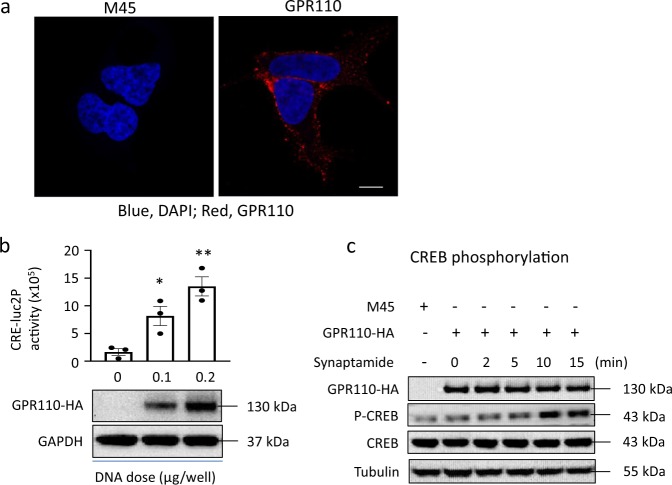
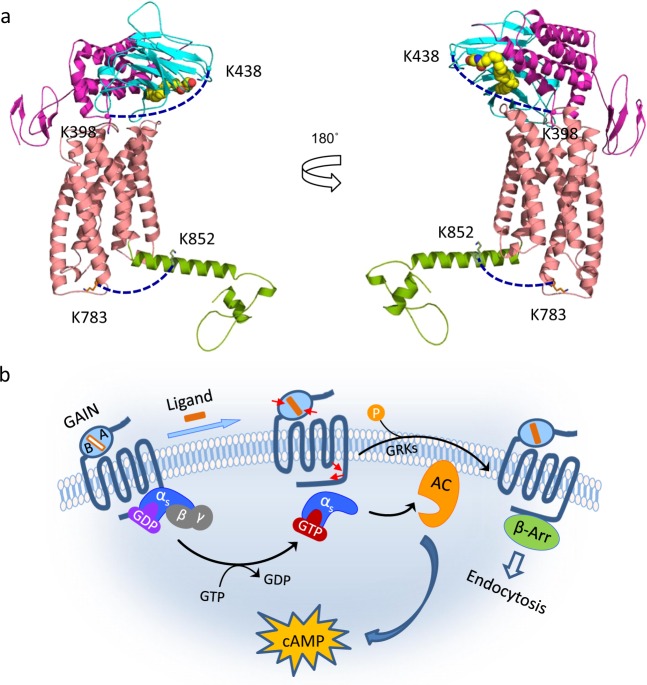
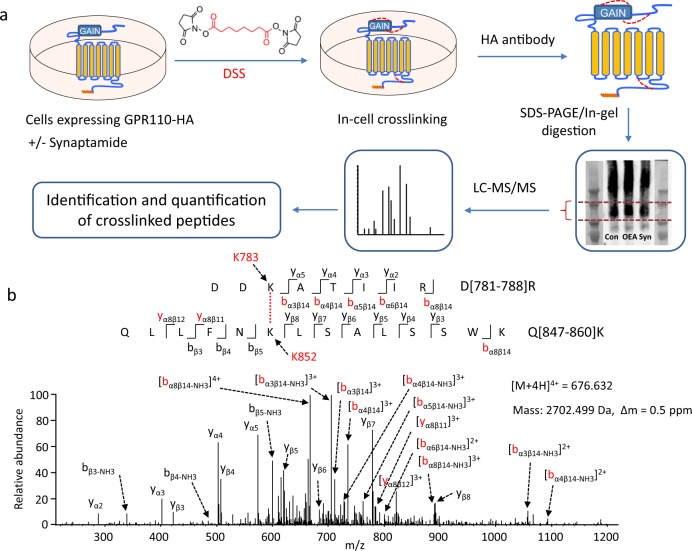
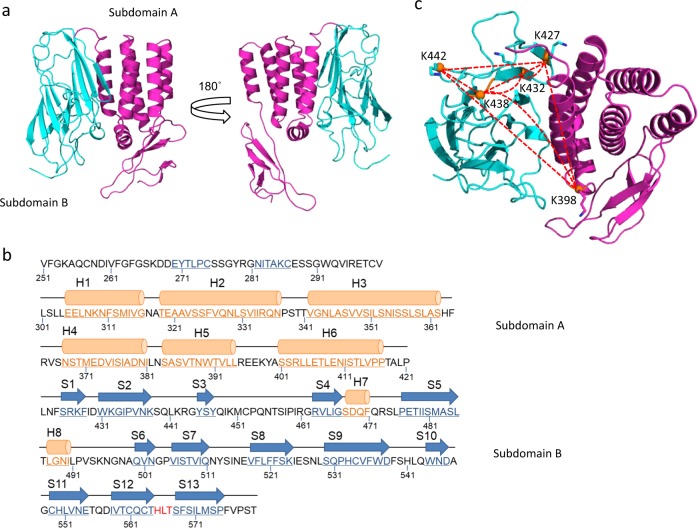
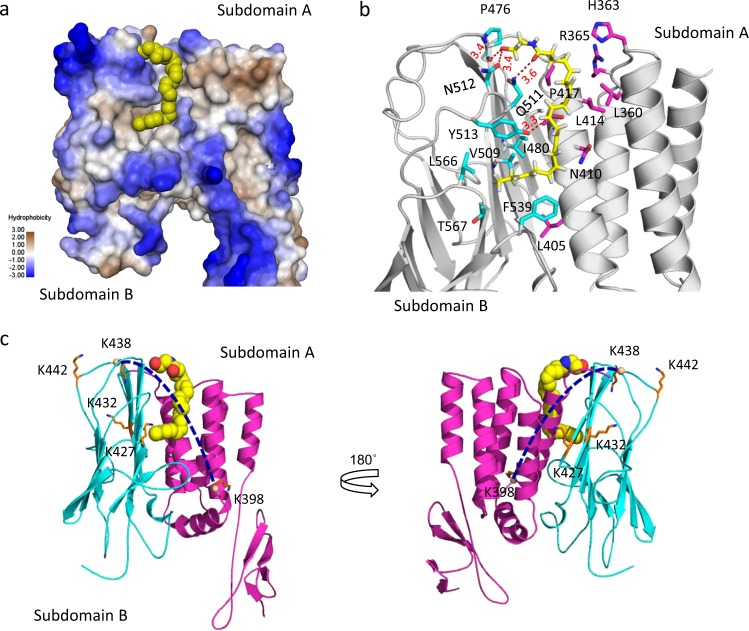
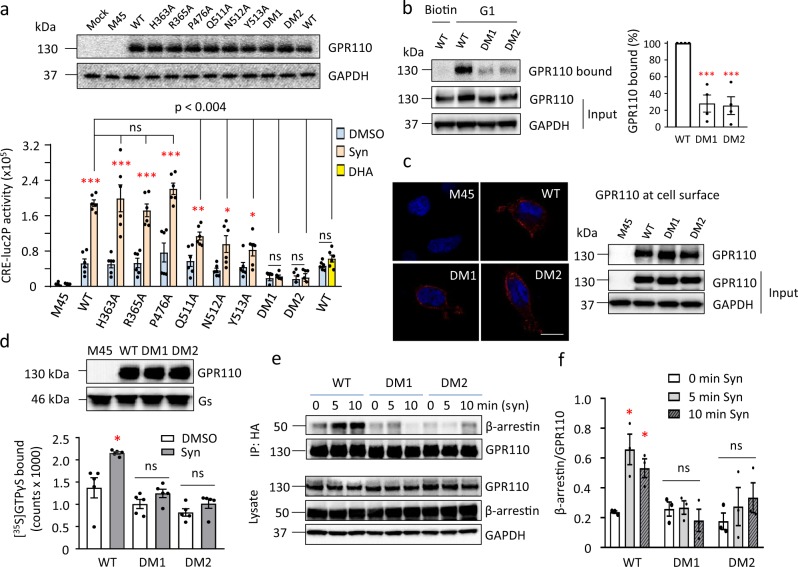
Adhesion G protein-coupled receptors (aGPCR) are characterized by a large extracellular region containing a conserved GPCR-autoproteolysis-inducing (GAIN) domain. Despite their relevance to several disease conditions, we do not understand the molecular mechanism by which aGPCRs are physiologically activated. GPR110 (ADGRF1) was recently deorphanized as the functional receptor of N-docosahexaenoylethanolamine (synaptamide), a potent synaptogenic metabolite of docosahexaenoic acid. Thus far, synaptamide is the first and only small-molecule endogenous ligand of an aGPCR. Here, we demonstrate the molecular basis of synaptamide-induced activation of GPR110 in living cells. Using in-cell chemical cross-linking/mass spectrometry, computational modeling and mutagenesis-assisted functional assays, we discover that synaptamide specifically binds to the interface of GPR110 GAIN subdomains through interactions with residues Q511, N512 and Y513, causing an intracellular conformational change near TM6 that triggers downstream signaling. This ligand-induced GAIN-targeted activation mechanism provides a framework for understanding the physiological function of aGPCRs and therapeutic targeting in the GAIN domain.
粘附G蛋白偶联受体(aGPCR)的特征是具有一个大的细胞外区域,该区域包含一个保守的GPCR自蛋白水解诱导(GAIN)结构域。尽管它们与多种疾病状况相关,但我们并不了解aGPCR在生理上被激活的分子机制。GPR110(ADGRF1)最近被确定为N-二十二碳六烯酰乙醇胺(突触酰胺)的功能性受体,突触酰胺是二十二碳六烯酸的一种有效的促突触代谢产物。到目前为止,突触酰胺是aGPCR的首个也是唯一的小分子内源性配体。在这里,我们展示了活细胞中突触酰胺诱导GPR110激活的分子基础。通过细胞内化学交联/质谱分析、计算建模和诱变辅助功能测定,我们发现突触酰胺通过与Q511、N512和Y513残基相互作用,特异性地结合到GPR110 GAIN亚结构域的界面,导致TM6附近的细胞内构象变化,从而触发下游信号传导。这种配体诱导的靶向GAIN的激活机制为理解aGPCR的生理功能和GAIN结构域中的治疗靶点提供了一个框架。