Li Hui, Chen Guanghui, Pang Hongying, Wang Qiao, Dai Xinren
State Key Laboratory of Tree Genetics and Breeding, Chinese Academy of Forestry, Beijing, China.
Guangzhou Institute of Forestry and Landscape Architecture, Guangzhou, China.
Front Plant Sci. 2021 Jul 2;12:698602. doi: 10.3389/fpls.2021.698602. eCollection 2021.
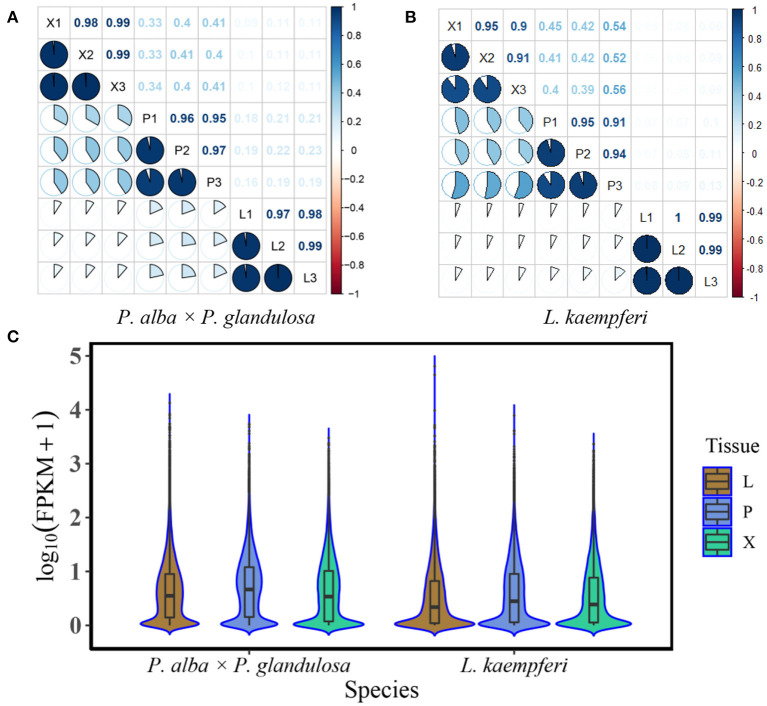
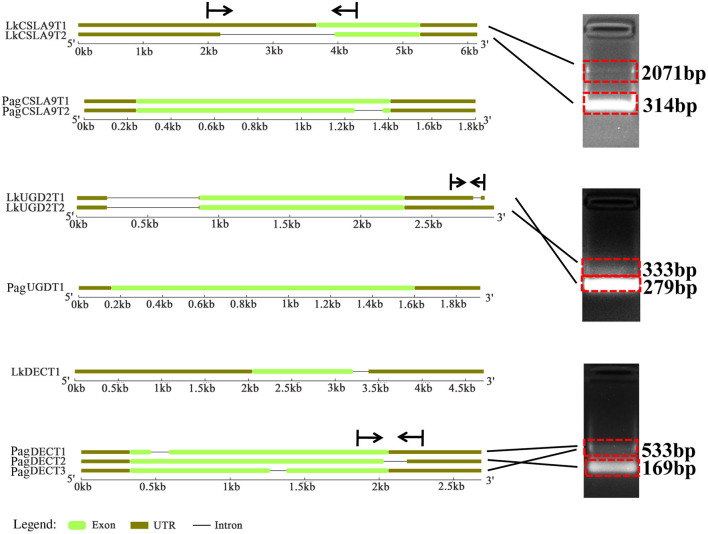
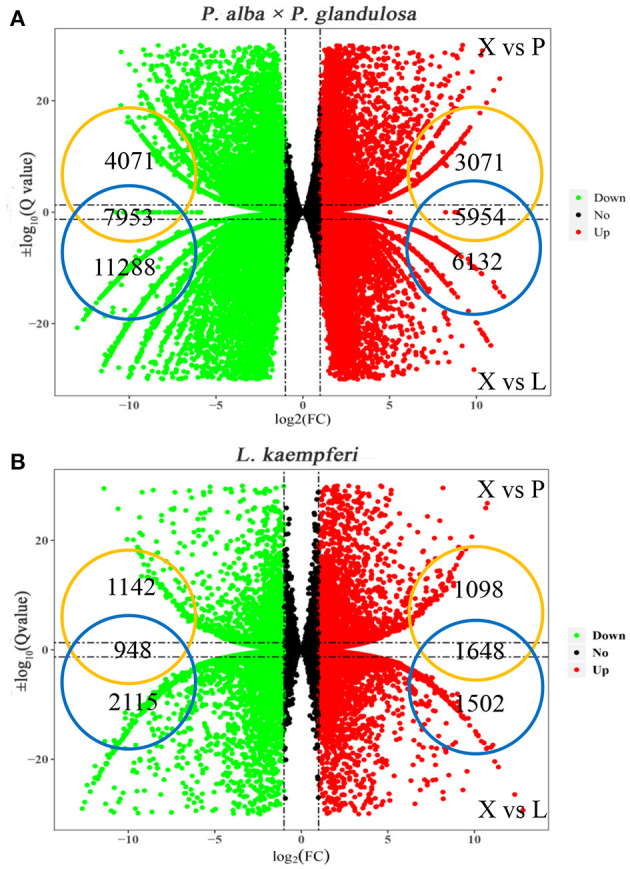
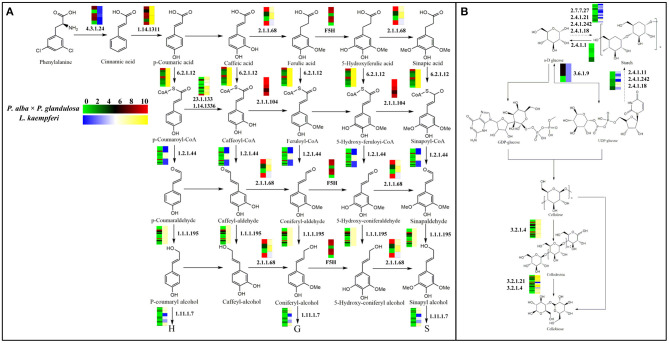
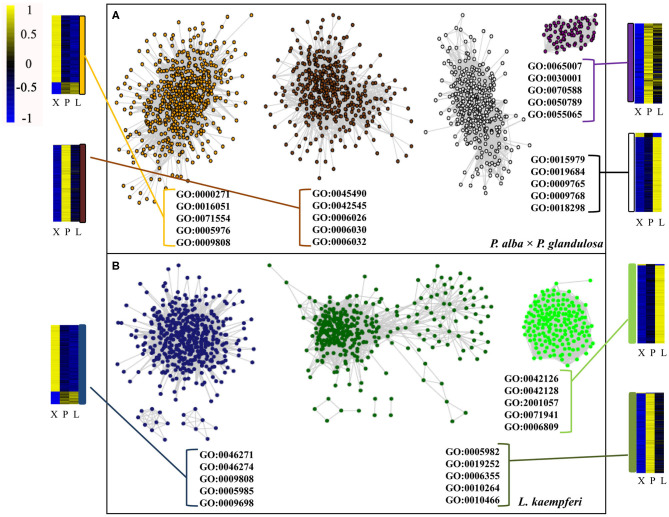
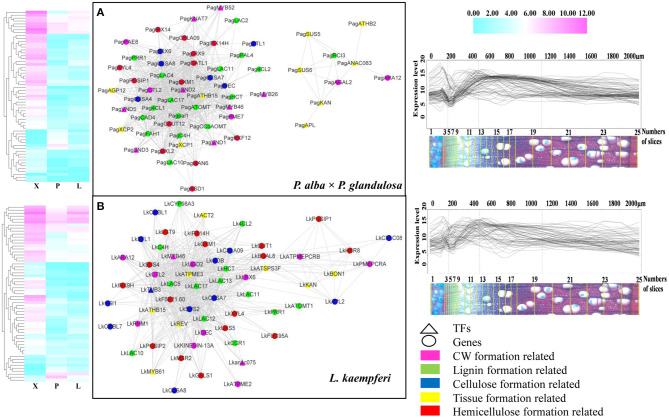
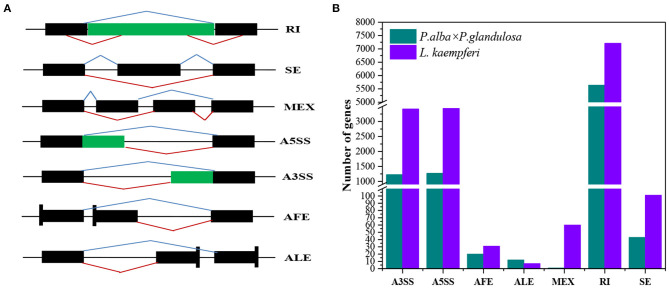
Enormous distinctions of the stem structure and cell types between gymnosperms and angiosperms tree species are expected to cause quite different wood physical and mechanical attributes, however, the molecular mechanisms underlying the differing wood morphology are still unclear. In this study, we compared the transcriptomes obtained by RNA-Seq between × clone 84K, and (Lamb.) Carr trees. Available genome resource served as reference for × and the Iso-Seq results of a three-tissues mixture (xylem, phloem, and leaf) were used as the reference for to compare the xylem-specifically expressed genes and their alternative splicing model. Through screening, we obtained 13,907 xylem-specifically expressed genes (5,954 up-regulated, 7,953 down-regulated) in the xylem of × , and 2,596 xylem-specifically expressed genes (1,648 up-regulated, 948 down-regulated) in the xylem of . From the GO and KEGG analyses, some genes associated with two wood formation-related pathways, namely those for phenylpropanoid biosynthesis, and starch and sucrose metabolism, were successfully screened. Then the distributions and gene expression models between × and in those pathways were compared, which suggested differential wood formation processes between the angiosperm and gymnosperm trees. Furthermore, a Weight Gene Co-expression Network Analysis (WGCNA) for total xylem-specifically expressed genes in two species was conducted, from which wood formation-related modules were selected to build a co-expression network for the two tree species. The genes within this co-expression network showed different co-expression relationships between the angiosperm and gymnosperm woody species. Comparing the alternative splicing events for wood formation-related genes suggests a different post-transcriptional regulation process exists between the angiosperm and gymnosperm trees. Our research thus provides the foundation for the in-depth investigation of different wood formation mechanisms of angiosperm and gymnosperm species.
裸子植物和被子植物树种在茎结构和细胞类型上存在巨大差异,预计会导致木材物理和机械属性有很大不同,然而,不同木材形态背后的分子机制仍不清楚。在本研究中,我们比较了通过RNA测序获得的×克隆84K与(Lamb.)Carr树的转录组。可用的基因组资源作为×的参考,三种组织混合物(木质部、韧皮部和叶片)的Iso-Seq结果用作的参考,以比较木质部特异性表达基因及其可变剪接模型。通过筛选,我们在×的木质部中获得了13907个木质部特异性表达基因(5954个上调,7953个下调),在的木质部中获得了2596个木质部特异性表达基因(1648个上调,948个下调)。通过GO和KEGG分析,成功筛选出了一些与两个木材形成相关途径相关的基因,即苯丙烷生物合成途径以及淀粉和蔗糖代谢途径。然后比较了×和在这些途径中的分布和基因表达模型,这表明被子植物和裸子植物树种之间的木材形成过程存在差异。此外,对两个物种中所有木质部特异性表达基因进行了加权基因共表达网络分析(WGCNA),从中选择与木材形成相关的模块构建两个树种的共表达网络。该共表达网络中的基因在被子植物和裸子植物木本物种之间显示出不同的共表达关系。比较木材形成相关基因的可变剪接事件表明,被子植物和裸子植物树种之间存在不同的转录后调控过程。因此,我们的研究为深入研究被子植物和裸子植物物种不同的木材形成机制奠定了基础。