Gopalakrishnan Jaanam, Tessneer Kandice L, Fu Yao, Pasula Satish, Pelikan Richard C, Kelly Jennifer A, Wiley Graham B, Gaffney Patrick M
Oklahoma Medical Research Foundation and University of Oklahoma Health Sciences Center, Oklahoma City.
Oklahoma Medical Research Foundation, Oklahoma City.
Arthritis Rheumatol. 2022 Jan;74(1):163-173. doi: 10.1002/art.41925. Epub 2021 Dec 13.
Genetic variants spanning UBE2L3 are associated with increased expression of the UBE2L3-encoded E2 ubiquitin-conjugating enzyme H7 (UbcH7), which facilitates activation of proinflammatory NF-κB signaling and susceptibility to autoimmune diseases. We undertook this study to delineate how genetic variants carried on the UBE2L3/YDJC autoimmune risk haplotype function to drive hypermorphic UBE2L3 expression.
We used bioinformatic analyses, electrophoretic mobility shift assays, and luciferase reporter assays to identify and functionally characterize allele-specific effects of risk variants positioned in chromatin accessible regions of immune cells. Chromatin conformation capture with quantitative polymerase chain reaction (3C-qPCR), chromatin immunoprecipitation (ChIP)-qPCR, and small interfering RNA (siRNA) knockdown assays were performed on patient-derived Epstein-Barr virus-transformed B cells homozygous for the UBE2L3/YDJC nonrisk or risk haplotype to determine if the risk haplotype increases UBE2L3 expression by altering the regulatory chromatin architecture in the region.
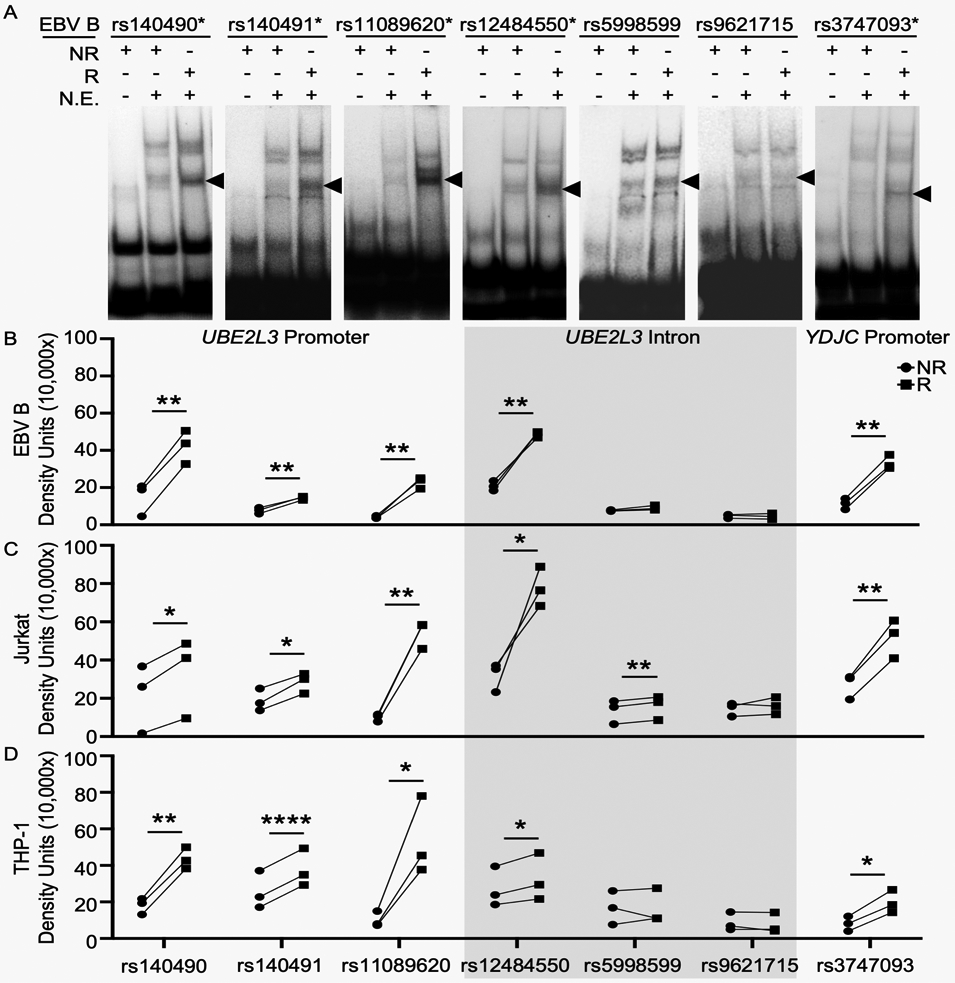
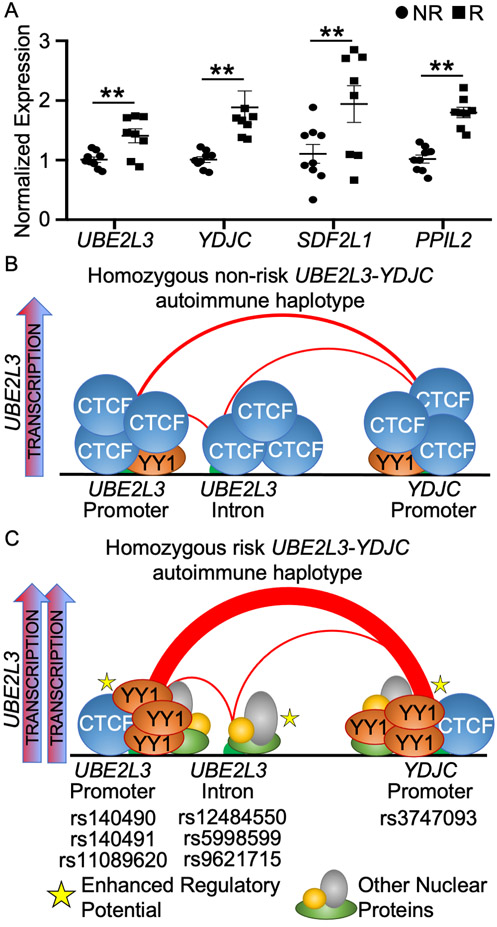
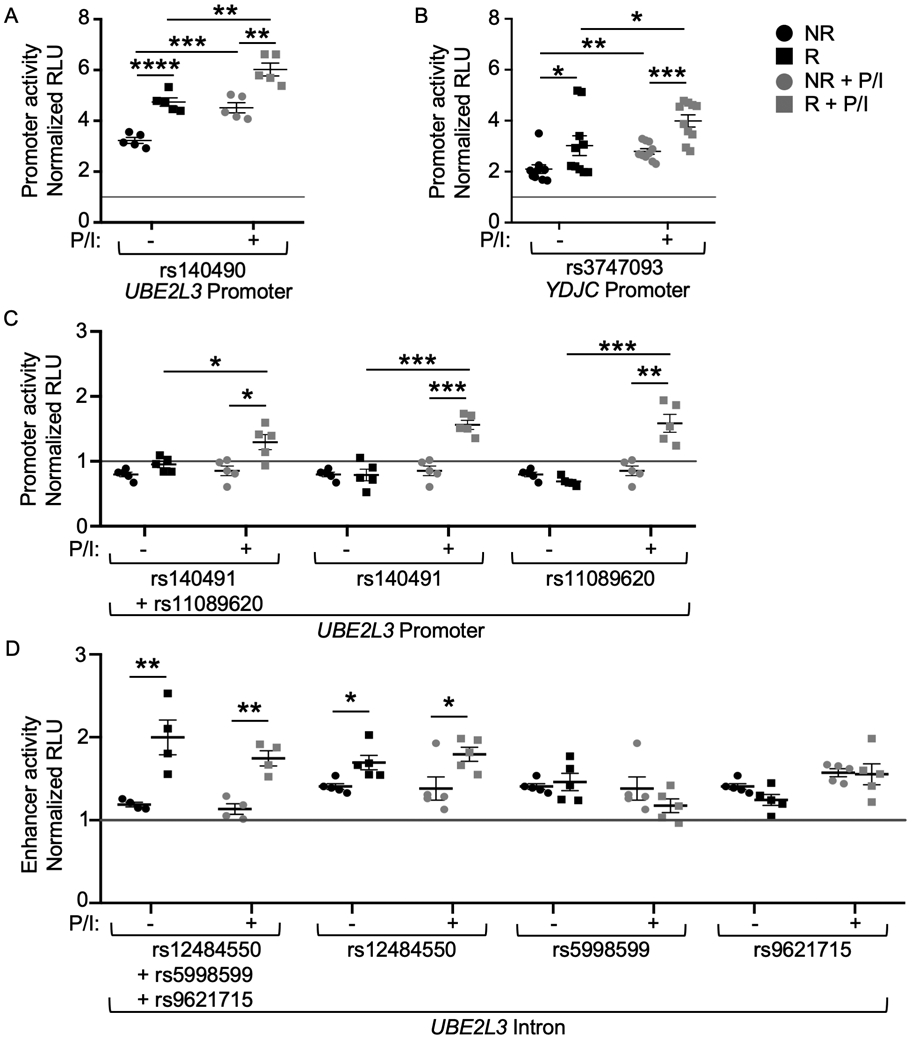
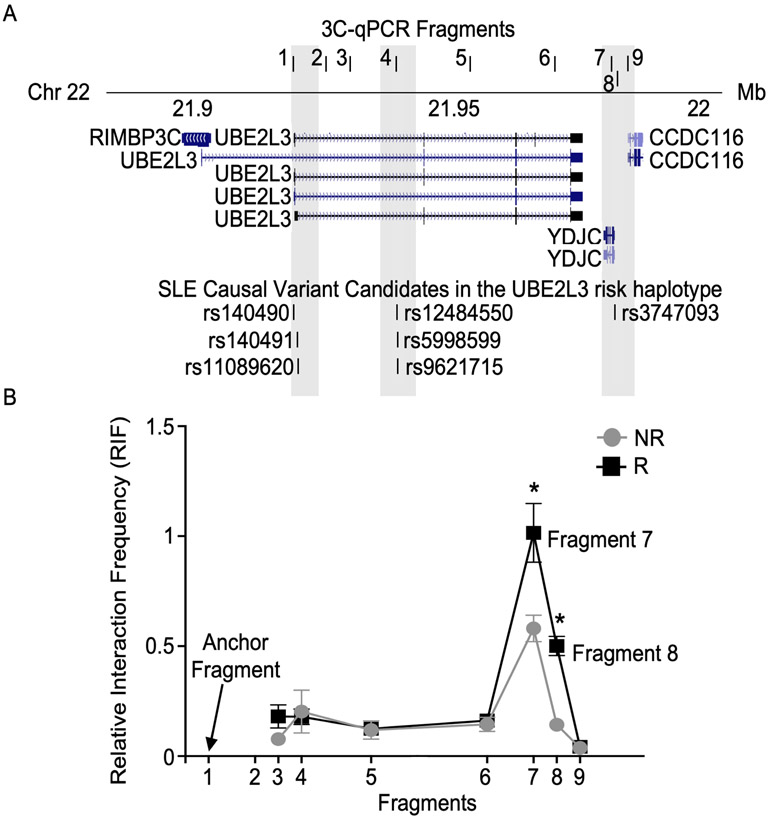
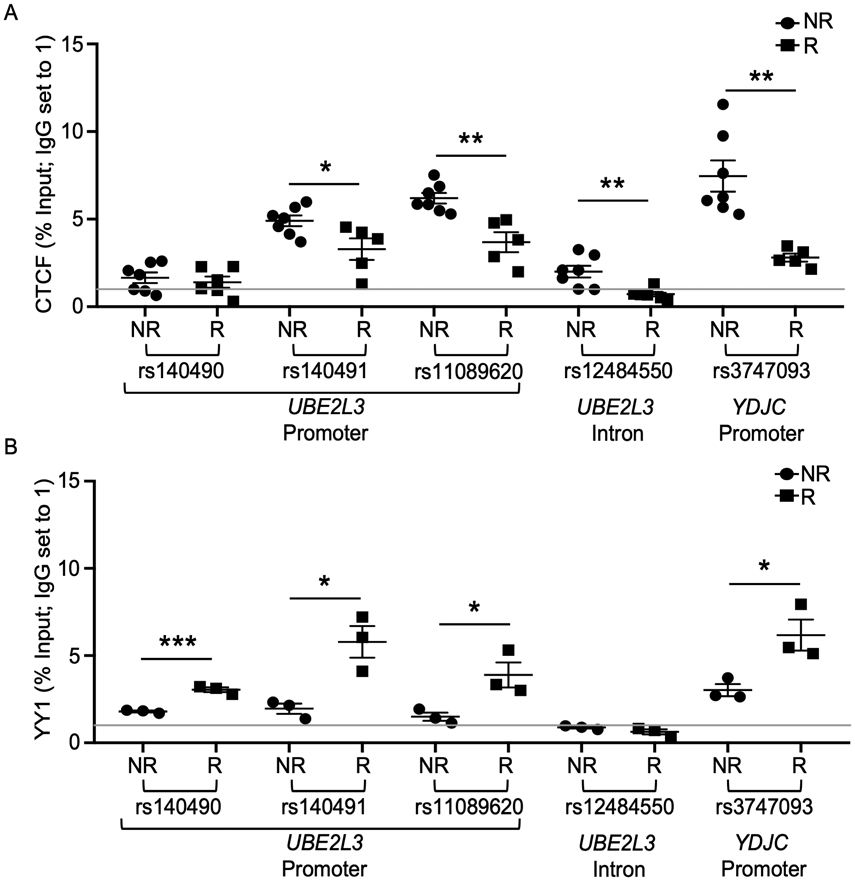
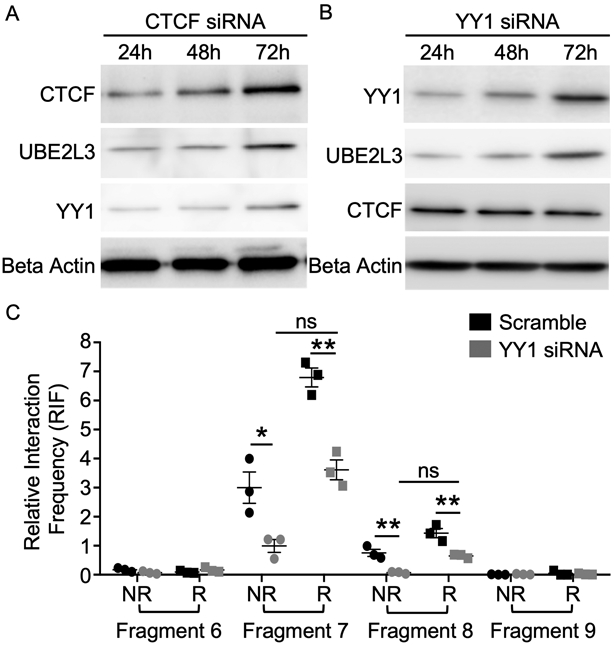
Of the 7 prioritized variants, 5 demonstrated allele-specific increases in nuclear protein binding affinity and regulatory activity. High-throughput sequencing of chromosome conformation capture coupled with ChIP (HiChIP) and 3C-qPCR uncovered a long-range interaction between the UBE2L3 promoter (rs140490, rs140491, rs11089620) and the downstream YDJC promoter (rs3747093) that was strengthened in the presence of the UBE2L3/YDJC risk haplotype, and correlated with the loss of CCCTC-binding factor (CTCF) and gain of YY1 binding at the risk alleles. Depleting YY1 by siRNA disrupted the long-range interaction between the 2 promoters and reduced UBE2L3 expression.
The UBE2L3/YDJC autoimmune risk haplotype increases UBE2L3 expression through strengthening a YY1-mediated interaction between the UBE2L3 and YDJC promoters.
跨越UBE2L3的基因变异与UBE2L3编码的E2泛素结合酶H7(UbcH7)表达增加有关,UbcH7可促进促炎NF-κB信号通路的激活及自身免疫性疾病易感性。我们开展本研究以阐明携带于UBE2L3/YDJC自身免疫风险单倍型上的基因变异如何发挥功能驱动UBE2L3超表达。
我们运用生物信息学分析、电泳迁移率变动分析及荧光素酶报告基因分析,以鉴定并从功能上表征位于免疫细胞染色质可及区域的风险变异的等位基因特异性效应。对源自患者的、纯合携带UBE2L3/YDJC非风险或风险单倍型的爱泼斯坦-巴尔病毒转化B细胞进行定量聚合酶链反应染色质构象捕获(3C-qPCR)、染色质免疫沉淀(ChIP)-qPCR及小干扰RNA(siRNA)敲低分析,以确定风险单倍型是否通过改变该区域的调控染色质结构来增加UBE2L3表达。
在7个优先排序的变异中,5个表现出核蛋白结合亲和力和调控活性的等位基因特异性增加。染色体构象捕获高通量测序结合ChIP(HiChIP)及3C-qPCR揭示了UBE2L3启动子(rs140490、rs140491、rs11089620)与下游YDJC启动子(rs3747093)之间的远程相互作用,该相互作用在存在UBE2L3/YDJC风险单倍型时增强,并与风险等位基因处CCCTC结合因子(CTCF)的缺失及YY1结合的增加相关。通过siRNA消耗YY1破坏了两个启动子之间的远程相互作用并降低了UBE2L3表达。
UBE2L3/YDJC自身免疫风险单倍型通过加强YY1介导的UBE2L3与YDJC启动子之间的相互作用来增加UBE2L3表达。