Bellis Alessandro, Di Gioia Giuseppe, Mauro Ciro, Mancusi Costantino, Barbato Emanuele, Izzo Raffaele, Trimarco Bruno, Morisco Carmine
Unità Operativa Complessa Cardiologia con UTIC ed Emodinamica-Dipartimento Emergenza Accettazione, Azienda Ospedaliera "Antonio Cardarelli", Via A. Cardarelli n. 9, 80131 Napoli, Italy.
Cardiac Catheterization Laboratory, Montevergine Clinic, Via M. Malzoni, 83013 Mercogliano, Italy.
J Clin Med. 2021 Jul 1;10(13):2968. doi: 10.3390/jcm10132968.
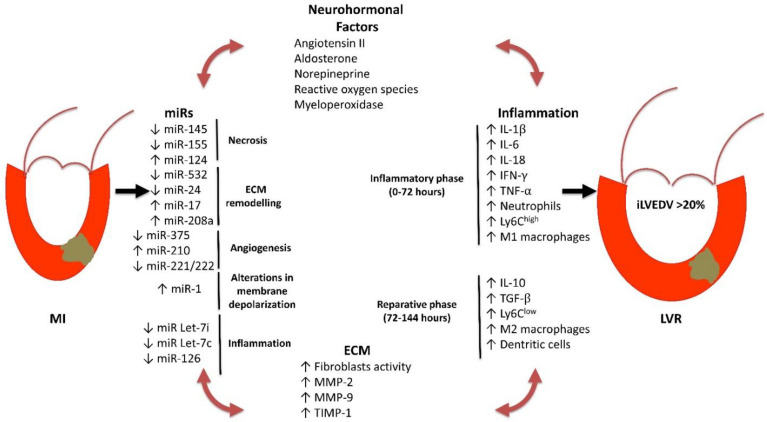
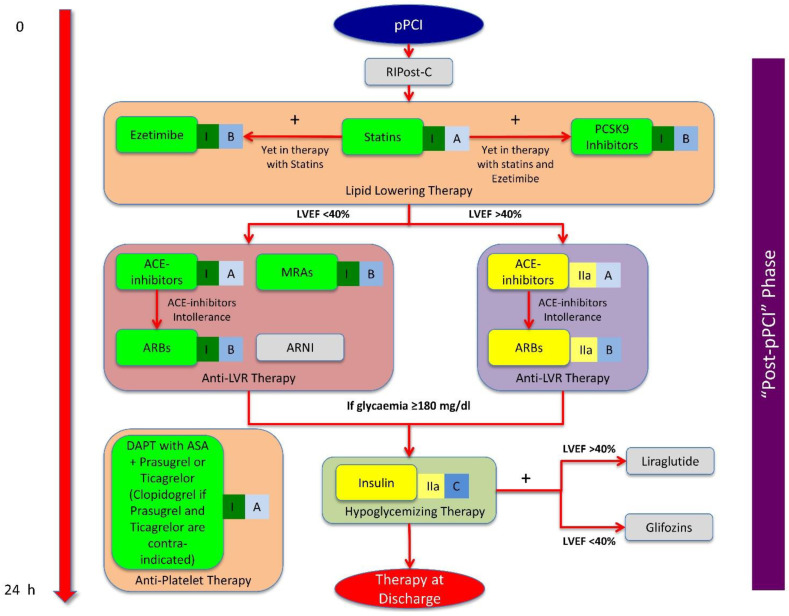
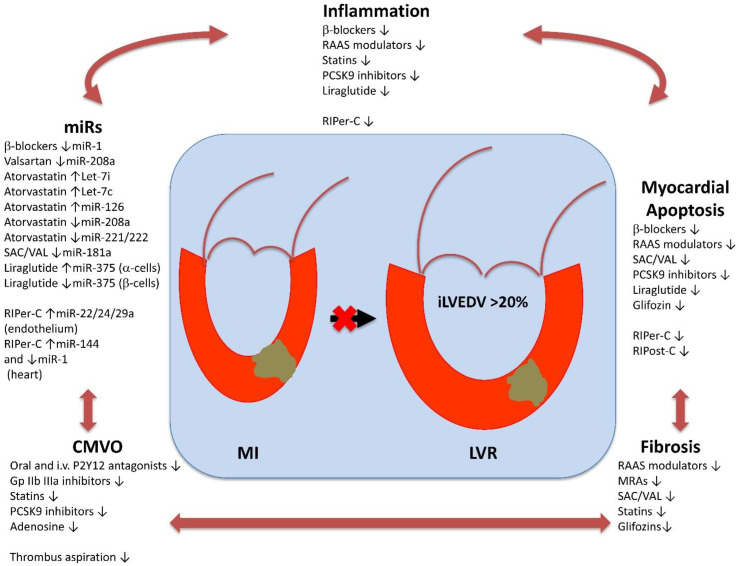
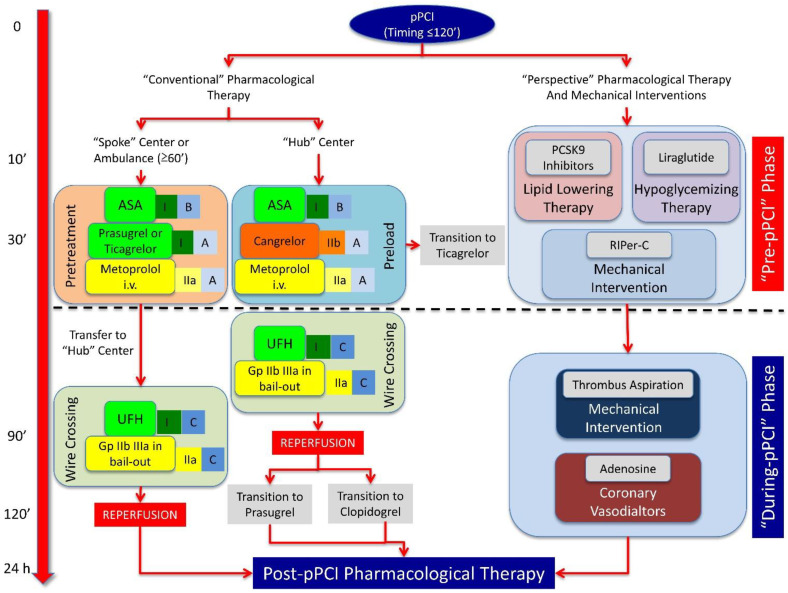
The significant reduction in 'ischemic time' through capillary diffusion of primary percutaneous intervention (pPCI) has rendered myocardial-ischemia reperfusion injury (MIRI) prevention a major issue in order to improve the prognosis of ST elevation myocardial infarction (STEMI) patients. In fact, while the ischemic damage increases with the severity and the duration of blood flow reduction, reperfusion injury reaches its maximum with a moderate amount of ischemic injury. MIRI leads to the development of post-STEMI left ventricular remodeling (post-STEMI LVR), thereby increasing the risk of arrhythmias and heart failure. Single pharmacological and mechanical interventions have shown some benefits, but have not satisfactorily reduced mortality. Therefore, a multitarget therapeutic strategy is needed, but no univocal indications have come from the clinical trials performed so far. On the basis of the results of the consistent clinical studies analyzed in this review, we try to design a randomized clinical trial aimed at evaluating the effects of a reasoned multitarget therapeutic strategy on the prevention of post-STEMI LVR. In fact, we believe that the correct timing of pharmacological and mechanical intervention application, according to their specific ability to interfere with survival pathways, may significantly reduce the incidence of post-STEMI LVR and thus improve patient prognosis.
通过直接经皮冠状动脉介入治疗(pPCI)的毛细血管扩散显著缩短“缺血时间”,这使得预防心肌缺血再灌注损伤(MIRI)成为改善ST段抬高型心肌梗死(STEMI)患者预后的一个主要问题。事实上,虽然缺血损伤会随着血流减少的严重程度和持续时间而增加,但再灌注损伤在中等程度的缺血损伤时达到最大值。MIRI会导致STEMI后左心室重构(post-STEMI LVR)的发生,从而增加心律失常和心力衰竭的风险。单一的药物和机械干预已显示出一些益处,但未能令人满意地降低死亡率。因此,需要一种多靶点治疗策略,但迄今为止进行的临床试验尚未得出明确的结论。基于本综述中分析的一致临床研究结果,我们试图设计一项随机临床试验,旨在评估合理的多靶点治疗策略对预防post-STEMI LVR的效果。事实上,我们认为,根据药物和机械干预干扰生存途径的特定能力,正确安排其应用时机,可能会显著降低post-STEMI LVR的发生率,从而改善患者预后。