Senguttuvan Nagendra Boopathy, Subramanian Vinodhini, Venkatesan Vettriselvi, Muralidharan T R, Sankaranarayanan Kavitha
Department of Cardiology, Sri Ramachandra Institute of Higher Education and Research, Chennai, Tamil Nadu, 600116, India.
Department of Human Genetics, Sri Ramachandra Institute of Higher Education and Research, Chennai, Tamil Nadu, 600116, India.
J Genet Eng Biotechnol. 2021 Jul 19;19(1):105. doi: 10.1186/s43141-021-00205-3.
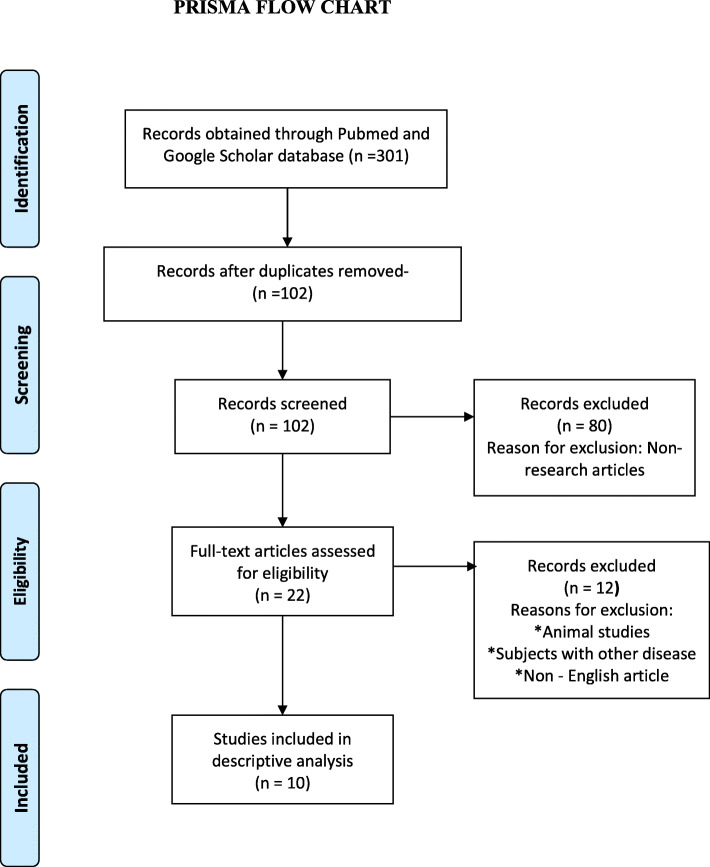
Cardiovascular diseases (CVDs) are the leading cause of mortality in India. Residual risk exists in patients receiving optimal guideline-directed medical therapy. Possession of certain somatic mutations, at a variant allele frequency of ≥ 2% in peripheral blood, driving clonal expansion in the absence of cytopenias and dysplastic hematopoiesis is defined as clonal hematopoiesis of indeterminate potential (CHIP). Recently, it was found that carriers of CHIP had a higher risk to have coronary artery disease (CAD) and early-onset myocardial infarction. Association of CHIP with heart failure and valvular heart diseases is increasingly being considered. The common link that connects CHIP mutations and CVDs is inflammation leading to increased expression of cytokines and chemokines. We intended to do a systematic review about the association of CHIP mutations and CVD along with identifying specific CHIP mutations involved in increasing the risk of having CVDs. We performed an extensive literature search in PubMed and Google Scholar databases. Out of 302 articles, we narrowed it down to 10 studies based on our pre-specified criteria. The methodology adopted for the identification of CHIP mutations in the selected studies included - whole-exome sequencing (n = 3), whole-genome analysis (n = 1), transcriptome profiling analysis (n = 1), whole-genome analysis (n = 1), and single-cell RNA-sequencing (n = 1). We found that the available literature suggested an association between CHIP and CVD. The most commonly described CHIP mutations in patients with CVD are DNMT3A, TET2, ASXL1, TP53, JAK2, and SF3B. We further analyzed the commonly mutated CHIP genes using bioinformatics tools. Protein function and interaction analysis were performed using the g: Profiler and GeneMANIA online tools. The results revealed significant bio grid interactions for molecular functions, biological processes, and biological pathways. Interaction analysis showed significant physical and co-expression interactions.
We conclude that there exists a significant association between CHIP mutations and CVD with DNMT3A, TET2, ASXL1, TP53, JAK2, and SF3B as the commonly implicated genes. The recognition of the link between CHIP and cardiovascular events will expand our understanding of residual risk and will open up new avenues of investigation and therapeutic modalities in the management of patients with CVD.
心血管疾病(CVDs)是印度的主要死因。接受最佳指南指导药物治疗的患者仍存在残余风险。外周血中变异等位基因频率≥2%的某些体细胞突变,在无血细胞减少和发育异常造血的情况下驱动克隆性扩增,被定义为不确定潜能克隆性造血(CHIP)。最近发现,CHIP携带者患冠状动脉疾病(CAD)和早发性心肌梗死的风险更高。CHIP与心力衰竭和心脏瓣膜病的关联也越来越受到关注。连接CHIP突变和CVDs的共同环节是炎症,导致细胞因子和趋化因子表达增加。我们旨在对CHIP突变与CVD的关联进行系统综述,并确定与增加CVD风险相关的特定CHIP突变。我们在PubMed和谷歌学术数据库中进行了广泛的文献检索。在302篇文章中,根据我们预先设定的标准,将范围缩小到10项研究。所选研究中用于鉴定CHIP突变的方法包括——全外显子测序(n = 3)、全基因组分析(n = 1)、转录组谱分析(n = 1)、全基因组分析(n = 1)和单细胞RNA测序(n = 1)。我们发现现有文献表明CHIP与CVD之间存在关联。CVD患者中最常描述的CHIP突变是DNMT3A、TET2、ASXL1、TP53、JAK2和SF3B。我们使用生物信息学工具进一步分析了常见突变的CHIP基因。使用g:Profiler和GeneMANIA在线工具进行蛋白质功能和相互作用分析。结果揭示了分子功能、生物学过程和生物学途径的显著生物网格相互作用。相互作用分析显示了显著的物理和共表达相互作用。
我们得出结论,CHIP突变与CVD之间存在显著关联,DNMT3A、TET2、ASXL1、TP53、JAK2和SF3B是常见的相关基因。认识到CHIP与心血管事件之间的联系将扩展我们对残余风险的理解,并为CVD患者的管理开辟新的研究途径和治疗方式。