School of Communication and Media, Kennesaw State University, Kennesaw, GA 30144, USA.
Int J Environ Res Public Health. 2021 Jul 5;18(13):7179. doi: 10.3390/ijerph18137179.
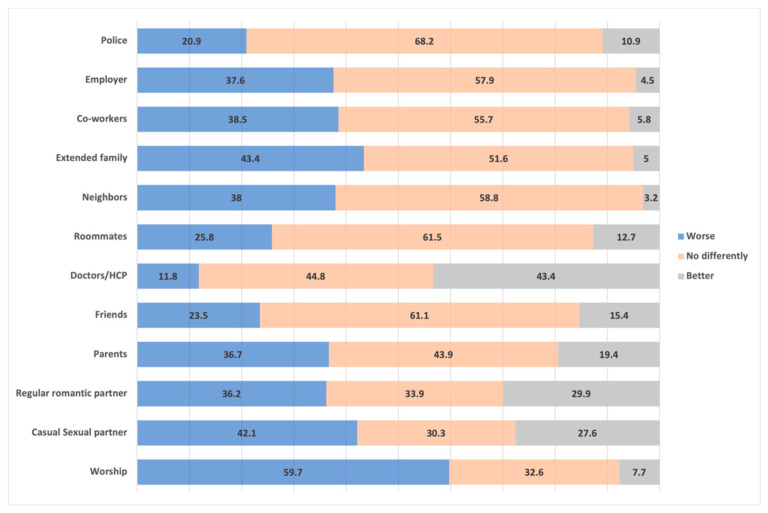
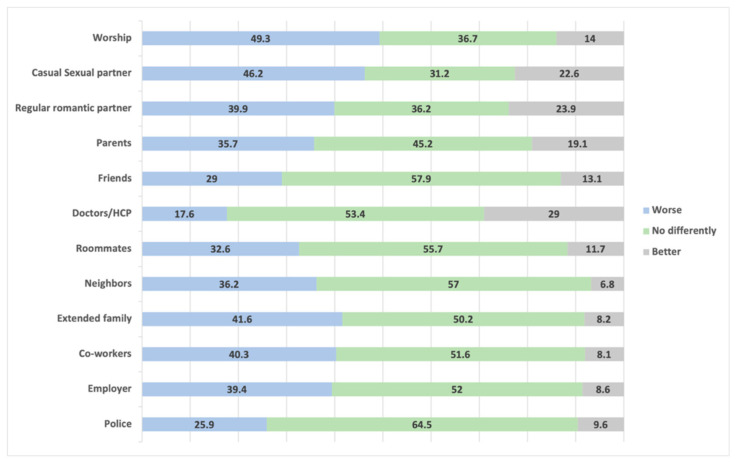
Emerging adulthood is identified as a time of identity exploration, during which emerging adults (EAs) may engage in sexual exploration and risky behaviors, potentially resulting in the contraction of a sexually transmitted infection (STI). Many EAs, do not disclose their status to partners or those who can provide social support, like parents. Nor do they often get tested. This may be due to the changing status of stigma surrounding STIs. This study examines traditional measures of the stigma/shame of STI diagnoses, treatment, and testing, and their relevance alongside both increased opportunities for casual sex and not only heightened education surrounding STIs, but also heightened prevalence of STIs in the U.S. Results show EAs perceived that if their community found out they got tested, they would likely be treated differently. They also felt they would be uncomfortable disclosing an STI to parents as well as to sexual partners. However, disclosing to a monogamous partner yielded less felt shame and stigma by EAs. Lastly, stigma/shame was associated with STI communication, as well as with overall perception of STI knowledge, and getting tested. Further explanation of the results and possible implications of this study are discussed.
成年初显期被认为是一个身份探索的时期,在此期间,成年初显期人群(EAs)可能会进行性探索和冒险行为,从而有可能感染性传播感染(STI)。许多 EAs 不会向伴侣或提供社会支持的人(如父母)透露自己的状况。他们也不经常接受检测。这可能是由于围绕 STI 的耻辱感的地位发生了变化。本研究考察了 STI 诊断、治疗和检测耻辱/羞耻的传统衡量标准,以及它们与以下方面的相关性:随意性行为的机会增加,不仅围绕 STI 的教育程度提高,而且美国的 STI 发病率也有所提高。结果表明,EAs 认为如果他们的社区发现他们接受了检测,他们可能会受到不同的对待。他们还觉得向父母和性伴侣透露 STI 会感到不舒服。然而,向一夫一妻制的伴侣透露病情,EAs 感到的耻辱和污名感较少。最后,耻辱/羞耻感与 STI 沟通以及对 STI 知识的整体认知和接受检测有关。进一步解释了这些结果以及本研究的可能影响。