Department of Immunology, Yokohama City University Graduate School of Medicine, Yokohama, Japan.
Department of Pediatrics, Yokohama City University Graduate School of Medicine, Yokohama, Japan.
Nat Commun. 2021 Jul 19;12(1):4379. doi: 10.1038/s41467-021-24609-4.
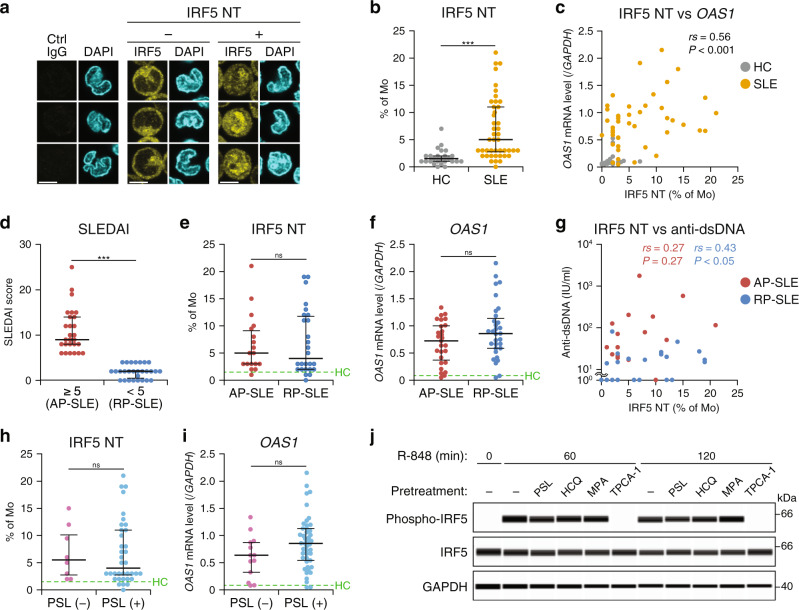
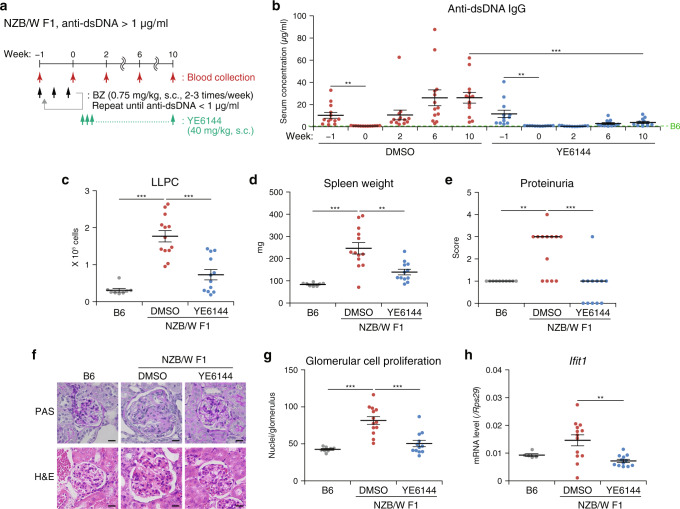
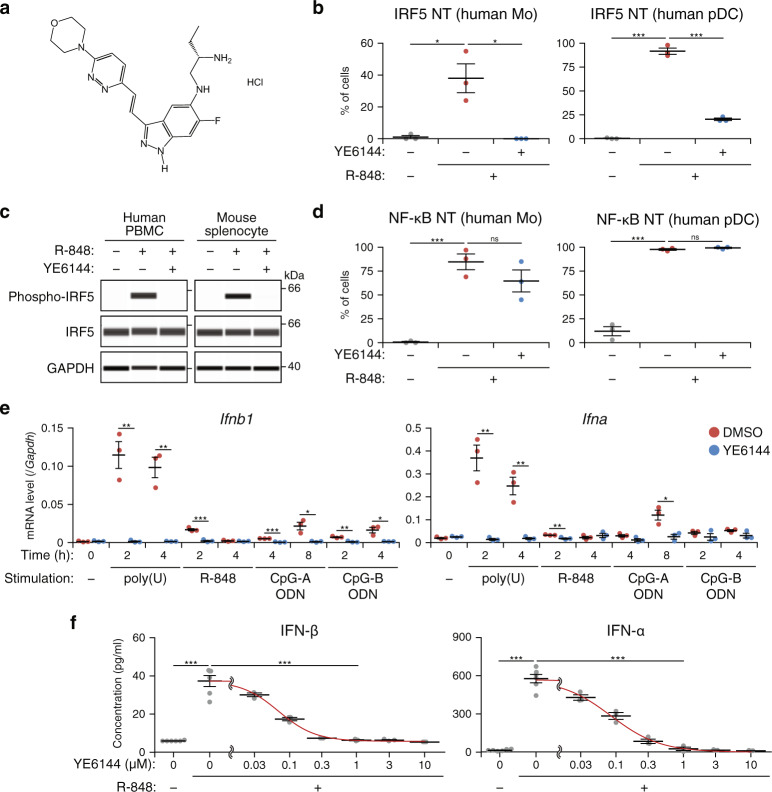
The transcription factor IRF5 has been implicated as a therapeutic target for the autoimmune disease systemic lupus erythematosus (SLE). However, IRF5 activation status during the disease course and the effects of IRF5 inhibition after disease onset are unclear. Here, we show that SLE patients in both the active and remission phase have aberrant activation of IRF5 and interferon-stimulated genes. Partial inhibition of IRF5 is superior to full inhibition of type I interferon signaling in suppressing disease in a mouse model of SLE, possibly due to the function of IRF5 in oxidative phosphorylation. We further demonstrate that inhibition of IRF5 via conditional Irf5 deletion and a newly developed small-molecule inhibitor of IRF5 after disease onset suppresses disease progression and is effective for maintenance of remission in mice. These results suggest that IRF5 inhibition might overcome the limitations of current SLE therapies, thus promoting drug discovery research on IRF5 inhibitors.
转录因子 IRF5 已被认为是治疗自身免疫性疾病系统性红斑狼疮 (SLE) 的靶点。然而,IRF5 在疾病过程中的激活状态以及疾病发作后 IRF5 抑制的效果尚不清楚。在这里,我们发现处于活动期和缓解期的 SLE 患者的 IRF5 和干扰素刺激基因存在异常激活。在 SLE 小鼠模型中,部分抑制 IRF5 比完全抑制 I 型干扰素信号通路更能抑制疾病,这可能是由于 IRF5 在氧化磷酸化中的功能。我们进一步证明,在疾病发作后通过条件性 Irf5 缺失和新开发的 IRF5 小分子抑制剂抑制 IRF5,可抑制疾病进展,并有效维持缓解期小鼠的缓解。这些结果表明,IRF5 抑制可能克服当前 SLE 治疗的局限性,从而促进 IRF5 抑制剂的药物发现研究。