Barber Olivia Williams, Miramontes Iria Mañas, Jain Manu, Ozer Egon A, Hartmann Erica M
Department of Civil and Environmental Engineering, Northwestern Universitygrid.16753.36, Evanston, Illinois, USA.
Division of Pulmonary and Critical Care Medicine, Department of Medicine, Northwestern Universitygrid.16753.36 Feinberg School of Medicine, Chicago, Illinois, USA.
mSystems. 2021 Aug 31;6(4):e0021821. doi: 10.1128/mSystems.00218-21. Epub 2021 Jul 20.
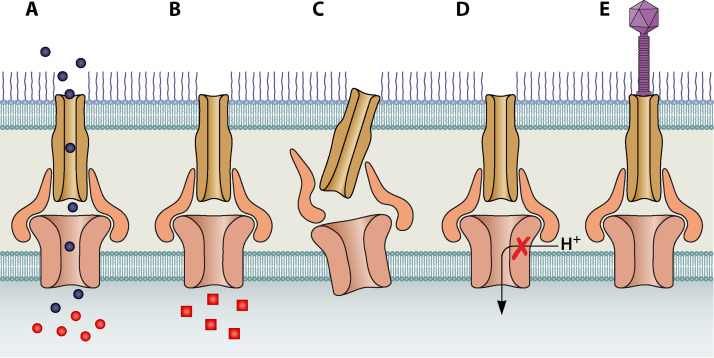
Rising antimicrobial resistance severely limits efforts to treat infections and is a cause for critical concern. Renewed interest in bacteriophage therapy has advanced understanding of the breadth of species capable of targeting bacterial antimicrobial resistance mechanisms, but many questions concerning ideal application remain unanswered. The following minireview examines bacterial resistance mechanisms, the current state of bacteriophage therapy, and how bacteriophage therapy can augment strategies to combat resistance with a focus on the clinically relevant bacterium Pseudomonas aeruginosa, as well as the role of efflux pumps in antimicrobial resistance. Methods to prevent antimicrobial efflux using efflux pump inhibitors and phage steering, a type of bacteriophage therapy, are also covered. The evolutionary context underlying antimicrobial resistance and the need to include theory in the ongoing development of bacteriophage therapy are also discussed.
日益增长的抗菌药物耐药性严重限制了感染治疗的努力,是一个至关重要的关注原因。对噬菌体疗法的重新关注推动了对能够靶向细菌抗菌耐药机制的物种范围的理解,但许多关于理想应用的问题仍未得到解答。以下迷你综述探讨了细菌耐药机制、噬菌体疗法的现状,以及噬菌体疗法如何增强对抗耐药性的策略,重点关注临床相关细菌铜绿假单胞菌,以及外排泵在抗菌耐药性中的作用。还涵盖了使用外排泵抑制剂预防抗菌药物外排的方法以及噬菌体导向(一种噬菌体疗法)。还讨论了抗菌耐药性背后的进化背景以及在噬菌体疗法的持续发展中纳入理论的必要性。