Wu Luyao, Ding Yu, Tong Houchao, Zhuang Xi, Cai Jingsheng, Si Yan, Zhang Hao, Wang Xiaoting, Shen Meiping
Department of General Surgery, the First Affiliated Hospital of Nanjing Medical University, 300 Guangzhou Road, Nanjing, 210029, Jiangsu, China.
Department of Thyroid and Breast Surgery, Changzhou No. 2 People's Hospital Affiliated to Nanjing Medical University, Changzhou, China.
Cancer Cell Int. 2021 Jul 21;21(1):392. doi: 10.1186/s12935-021-02097-2.
Long noncoding RNAs (lncRNAs) have emerged as crucial regulators in various cancers. However, the functional roles of most lncRNA in papillary thyroid cancer (PTC) are not detailly understood. This study aims to investigate the biological function and molecular mechanism of lncRNA Fer-1 like family member 4 (FER1L4) in PTC.
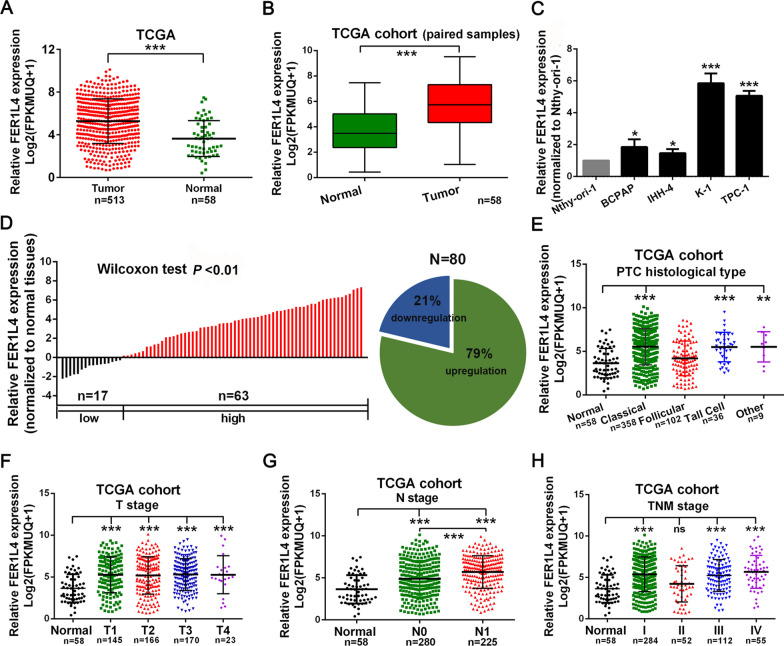
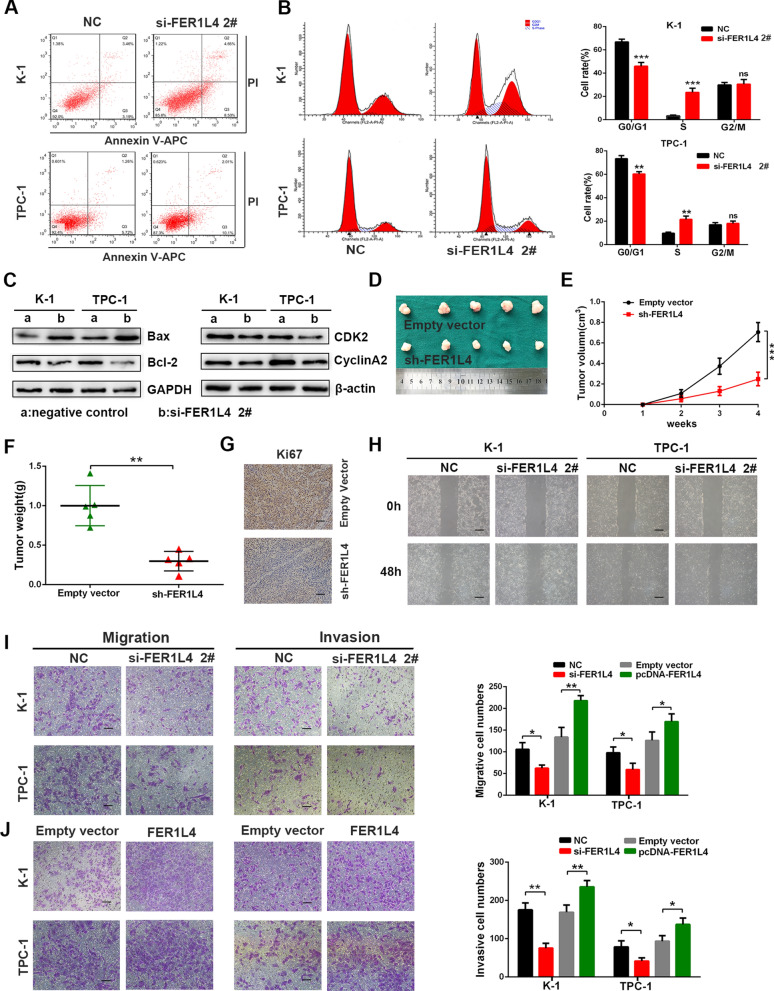
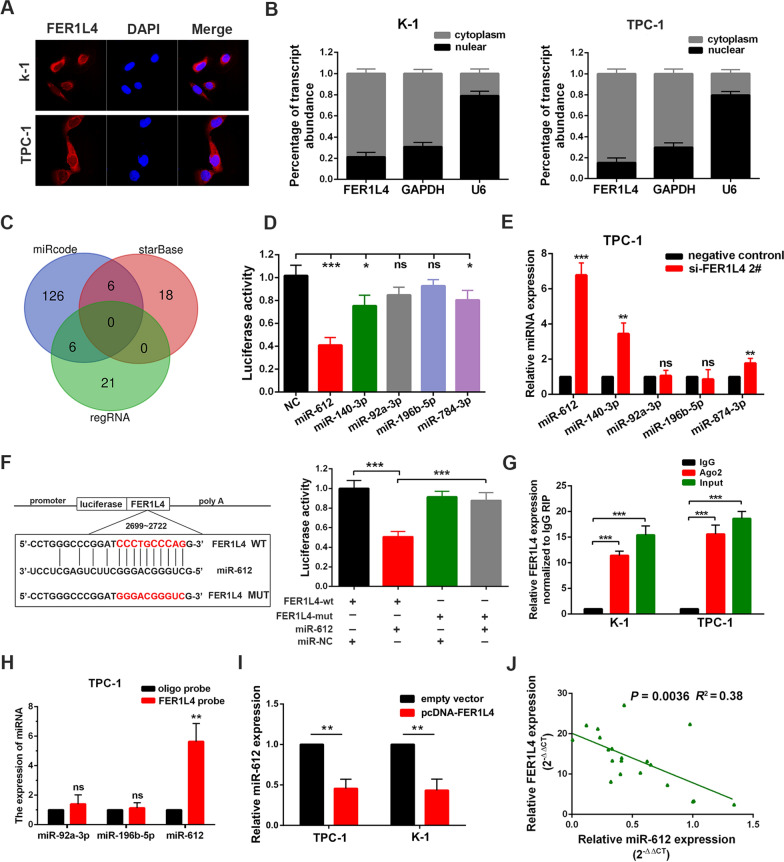
The expression of FER1L4 in PTC was determined via operating quantitative real-time PCR assays. Meanwhile, the clinical significance of FER1L4 in patients with PTC was described. The biological functions of FER1L4 on PTC cells were evaluated by gain and loss of function experiments. Moreover, animal experiments were performed to reveal the effect on tumor growth. Subcellular distribution of FER1L4 was determined by fluorescence in situ hybridization and subcellular localization assays. Luciferase reporter assay and RNA immunoprecipitation assay were applied to define the relationship between FER1L4, miR-612, and Cadherin 4 (CDH4).
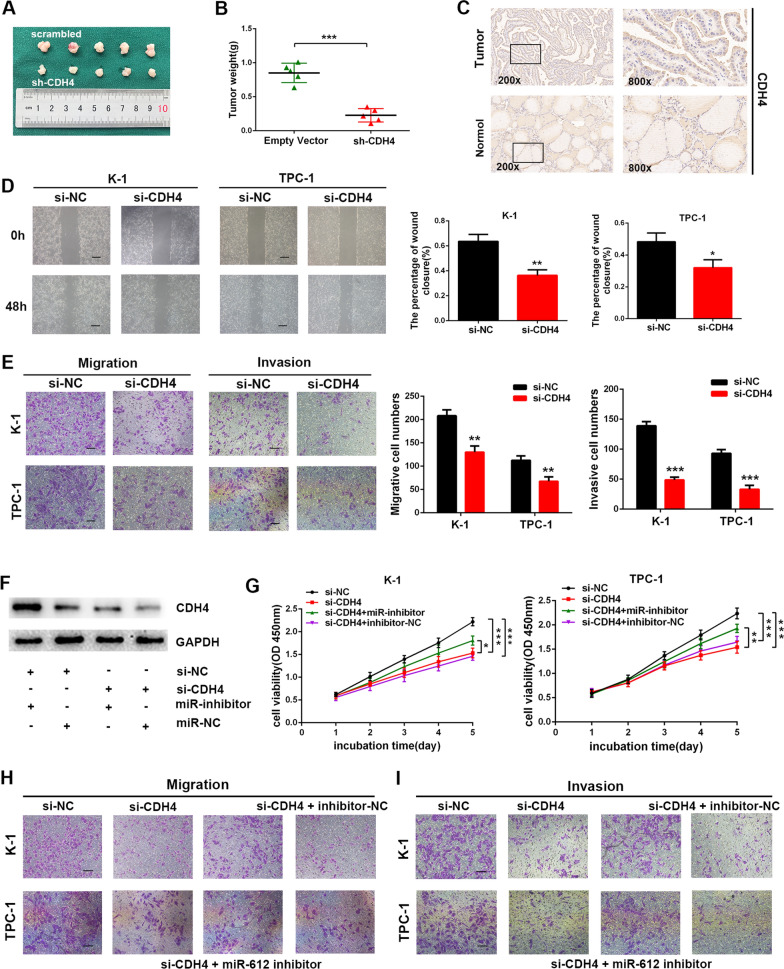
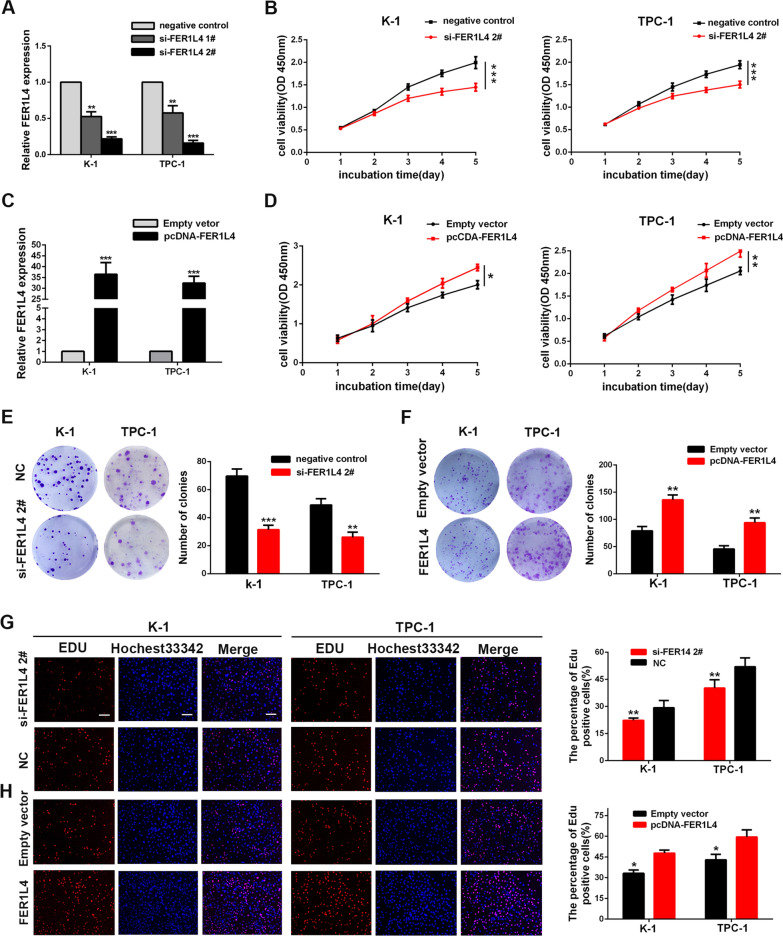
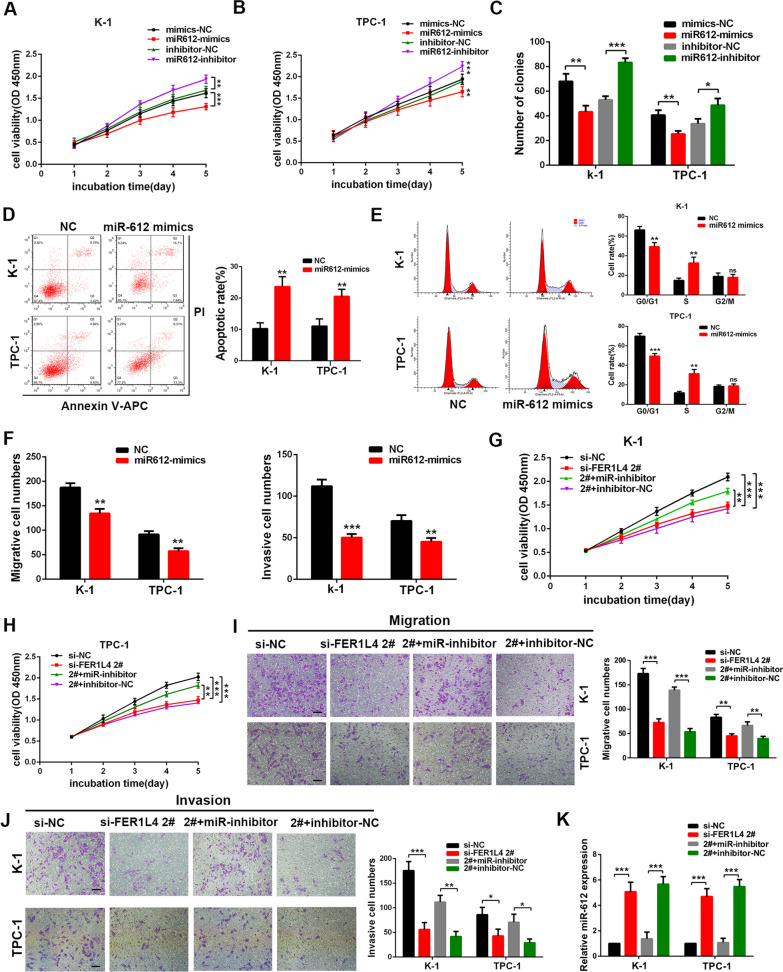
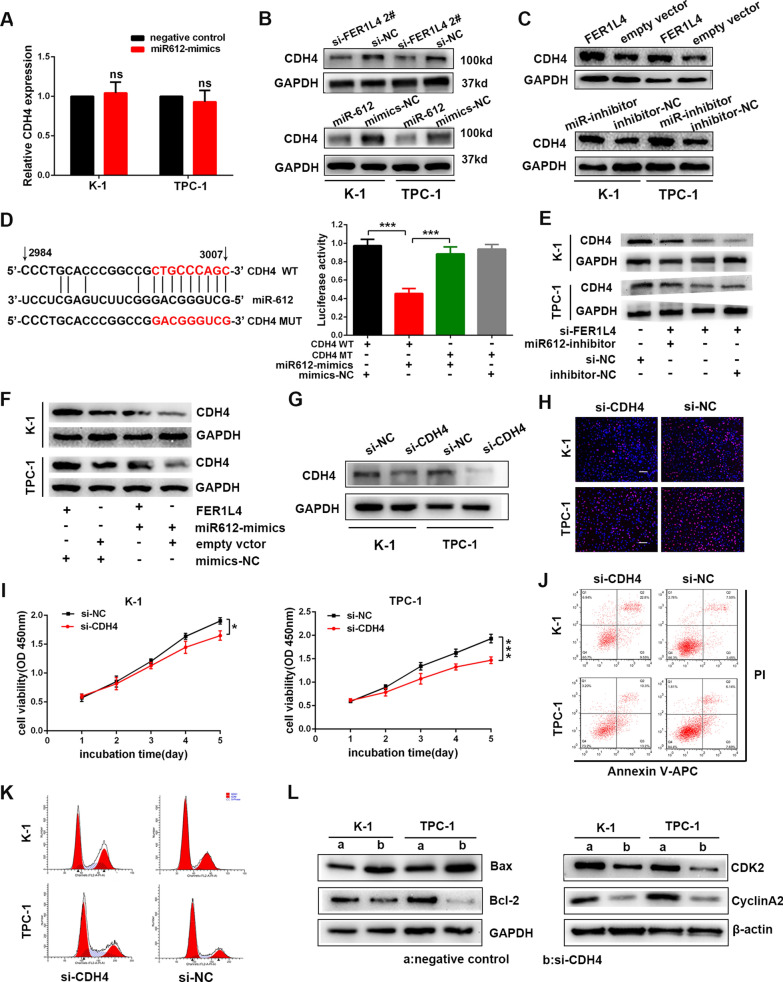
Upregulated expression of FER1L4 in PTC tissues was positively correlated with lymph node metastasis (P = 0.020), extrathyroidal extension (P = 0.013) and advanced TNM stages (P = 0.013). In addition, knockdown of FER1L4 suppressed PTC cell proliferation, migration, and invasion, whereas ectopic expression of FER1L4 inversely promoted these processes. Mechanistically, FER1L4 could competitively bind with miR-612 to prevent the degradation of its target gene CDH4. This condition was further confirmed in the rescue assays.
This study first demonstrates FER1L4 plays an oncogenic role in PTC via a FER1L4-miR-612-CDH4 axis and may provide new therapeutic and diagnostic targets for PTC.
长链非编码RNA(lncRNAs)已成为多种癌症中的关键调节因子。然而,大多数lncRNA在甲状腺乳头状癌(PTC)中的功能作用尚不清楚。本研究旨在探讨lncRNA铁死亡抑制蛋白1样家族成员4(FER1L4)在PTC中的生物学功能及分子机制。
通过定量实时PCR检测FER1L4在PTC中的表达。同时,描述FER1L4在PTC患者中的临床意义。通过功能获得和功能缺失实验评估FER1L4对PTC细胞的生物学功能。此外,进行动物实验以揭示其对肿瘤生长的影响。通过荧光原位杂交和亚细胞定位实验确定FER1L4的亚细胞分布。应用荧光素酶报告基因实验和RNA免疫沉淀实验来确定FER1L4、miR-612和钙黏蛋白4(CDH4)之间的关系。
PTC组织中FER1L4表达上调与淋巴结转移(P = 0.020)、甲状腺外侵犯(P = 0.013)及TNM分期较晚(P = 0.013)呈正相关。此外,敲低FER1L4可抑制PTC细胞增殖、迁移和侵袭,而FER1L4的异位表达则相反地促进这些过程。机制上,FER1L4可与miR-612竞争性结合,以防止其靶基因CDH4的降解。这一情况在挽救实验中得到进一步证实。
本研究首次证明FER1L4通过FER1L4-miR-612-CDH4轴在PTC中发挥致癌作用,并可能为PTC提供新的治疗和诊断靶点。