Founou Raspail C, Blocker Ariel J, Noubom Michel, Tsayem Cedrice, Choukem Siméon P, Dongen Maarten Van, Founou Luria L
Department of Microbiology, Hematology & Immunology, Faculty of Medicine & Pharmaceutical Sciences, University of Dschang, Dschang, Cameroon.
United COVID-19 TaskForce, University of Dschang, Dschang, Cameroon.
Future Sci OA. 2021 Jun 10;7(8):FSO736. doi: 10.2144/fsoa-2021-0012. eCollection 2021 Sep.
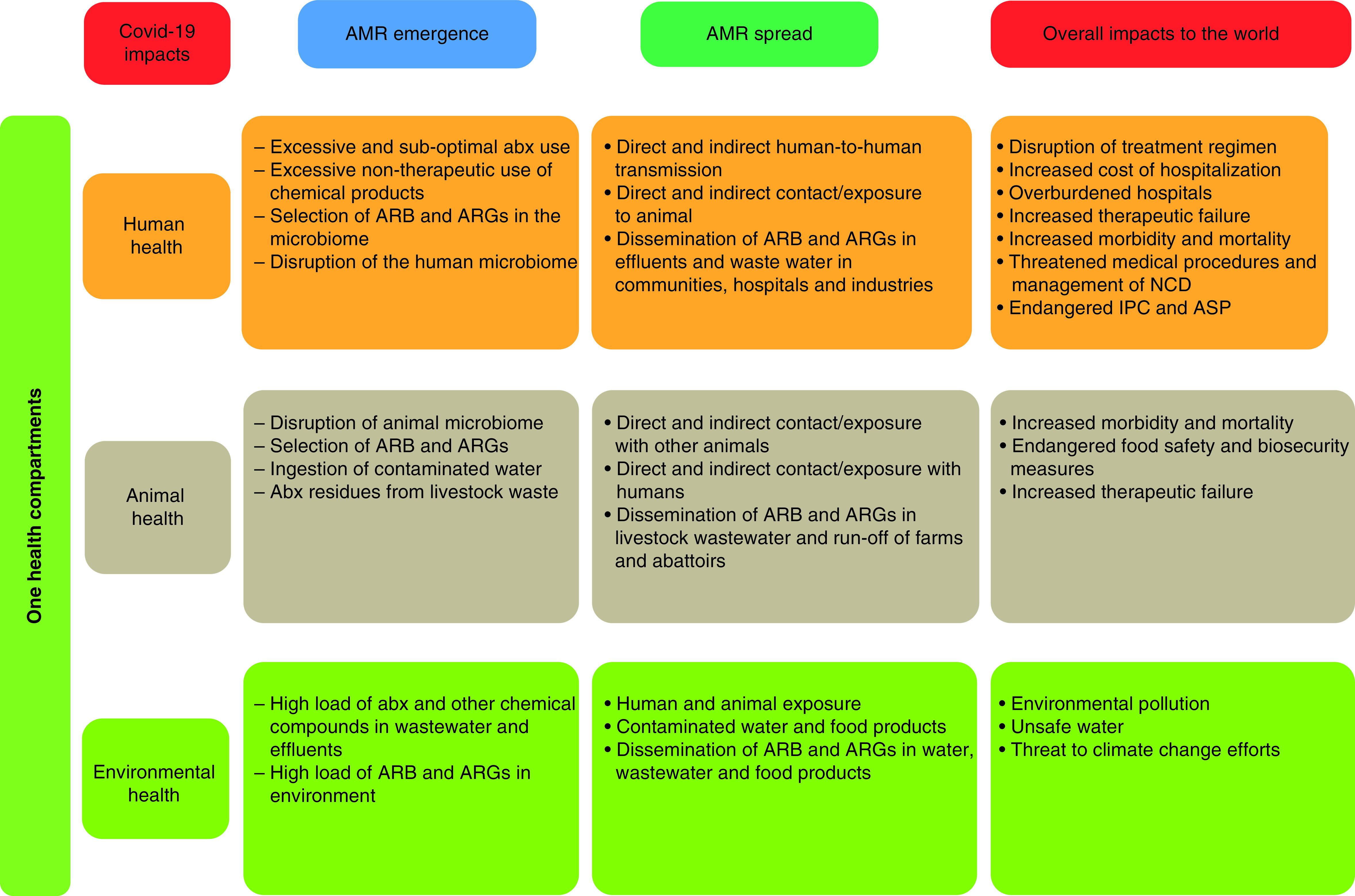
As of 23 April 2021, the outbreak of COVID-19 claimed around 150 million confirmed cases with over 3 million deaths worldwide. Yet, an even more serious but silent pandemic, that of antimicrobial resistance (AMR), is likely complicating the outcome of COVID-19 patients. This study discusses the current knowledge on the emergence of the SARS-CoV-2 and highlights the likely contribution of the COVID-19 pandemic on the escalation of AMR. COVID-19 engenders extensive antibiotic overuse and misuse, and will undoubtedly and substantially increase AMR rates worldwide. Amid the expanding COVID-19 pandemic, policymakers should consider the hidden threat of AMR much more, which may well be enhanced through improper use of antibiotics to treat patients with severe COVID-19 infection.
截至2021年4月23日,新冠疫情在全球造成了约1.5亿确诊病例,超过300万人死亡。然而,一种更为严重但悄无声息的大流行——抗微生物药物耐药性(AMR),可能正在使新冠患者的病情复杂化。本研究讨论了关于严重急性呼吸综合征冠状病毒2(SARS-CoV-2)出现的现有知识,并强调了新冠疫情对AMR升级可能产生的影响。新冠疫情导致了抗生素的广泛过度使用和滥用,无疑将大幅提高全球的AMR发生率。在不断扩大的新冠疫情中,政策制定者应更多地考虑AMR的潜在威胁,这种威胁很可能会因不当使用抗生素治疗重症新冠感染患者而加剧。