Ko Eun Kyung, Capell Brian C
Department of Dermatology, Perelman School of Medicine at the University of Pennsylvania, Philadelphia, PA 19104, USA.
Department of Genetics, Perelman School of Medicine at the University of Pennsylvania, Philadelphia, PA 19104, USA.
Cancers (Basel). 2021 Jul 7;13(14):3402. doi: 10.3390/cancers13143402.
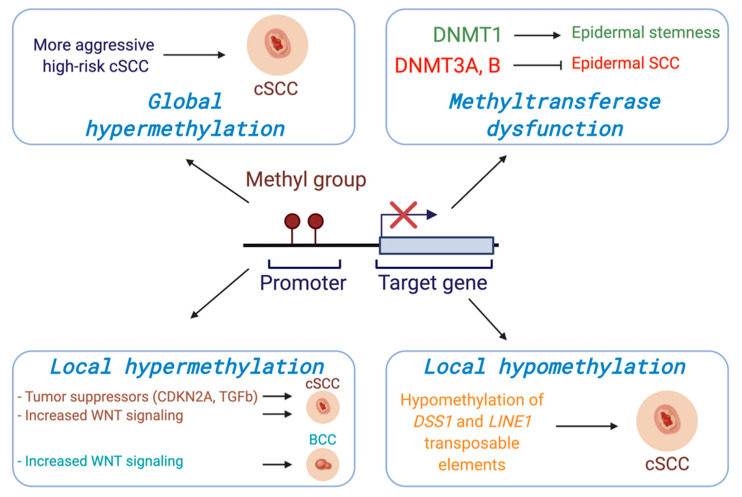
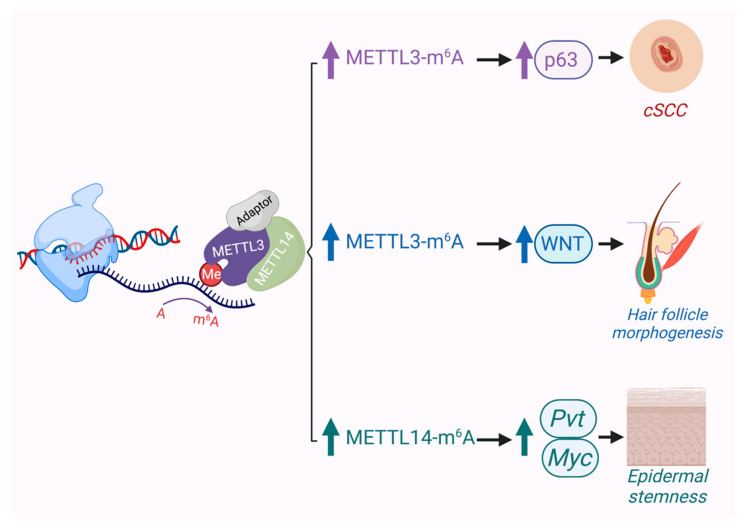
Recent evidence suggests that the disruption of gene expression by alterations in DNA, RNA, and histone methylation may be critical contributors to the pathogenesis of keratinocyte cancers (KCs), made up of basal cell carcinoma (BCC) and cutaneous squamous cell carcinoma (cSCC), which collectively outnumber all other human cancers combined. While it is clear that methylation modifiers are frequently dysregulated in KCs, the underlying molecular and mechanistic changes are only beginning to be understood. Intriguingly, it has recently emerged that there is extensive cross-talk amongst these distinct methylation processes. Here, we summarize and synthesize the latest findings in this space and highlight how these discoveries may uncover novel therapeutic approaches for these ubiquitous cancers.
最近的证据表明,DNA、RNA和组蛋白甲基化改变导致的基因表达紊乱可能是角质形成细胞癌(KCs)发病机制的关键因素,角质形成细胞癌由基底细胞癌(BCC)和皮肤鳞状细胞癌(cSCC)组成,其总数超过了所有其他人类癌症的总和。虽然很明显甲基化修饰因子在KCs中经常失调,但潜在的分子和机制变化才刚刚开始被了解。有趣的是,最近发现这些不同的甲基化过程之间存在广泛的相互作用。在这里,我们总结并综合了这一领域的最新发现,并强调这些发现如何可能揭示针对这些常见癌症的新治疗方法。