Endocrine and Metabolic Diseases Research Center, School of Medicine, University of Zulia, Maracaibo 4004, Venezuela.
Faculty of Medicine, School of Medicine, University of Buenos Aires, Buenos Aires 1121, Argentina.
Int J Environ Res Public Health. 2021 Jul 6;18(14):7236. doi: 10.3390/ijerph18147236.
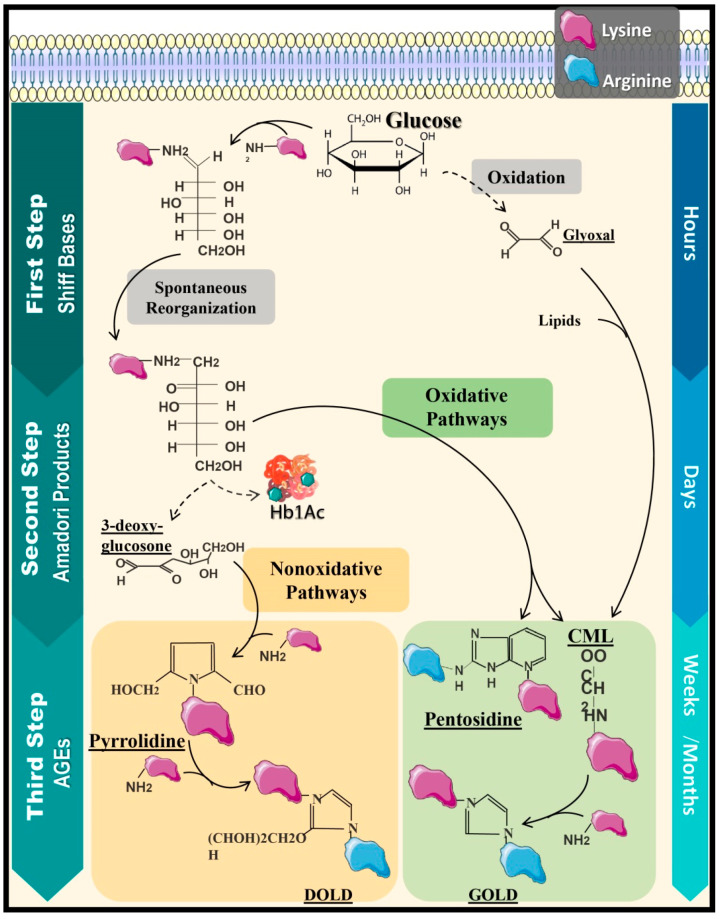
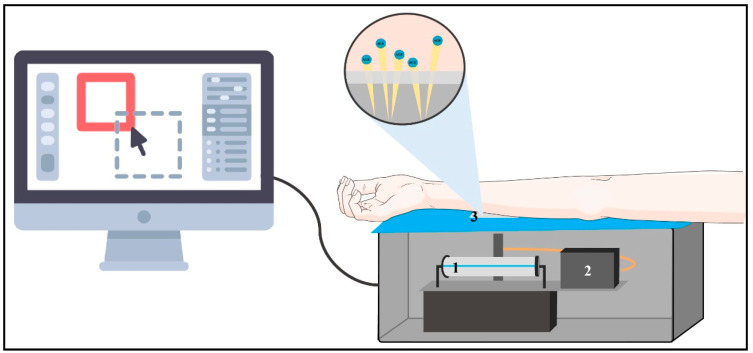
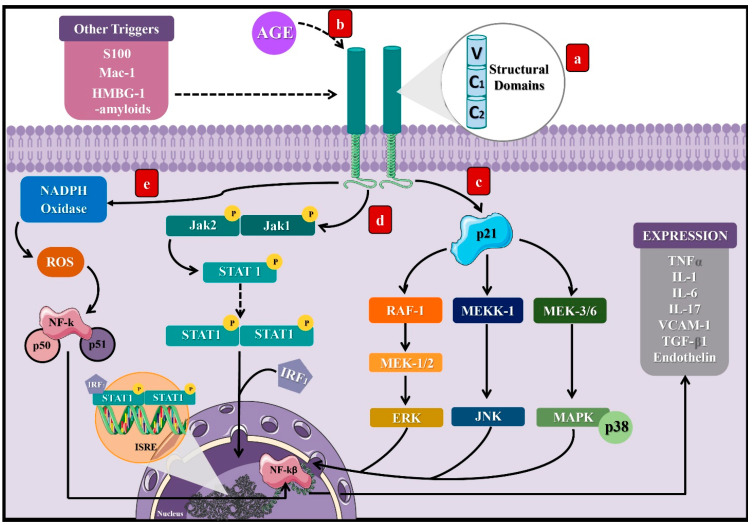
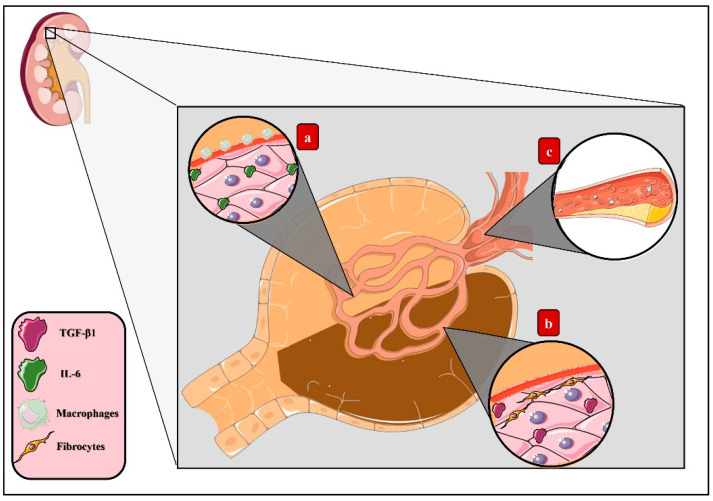
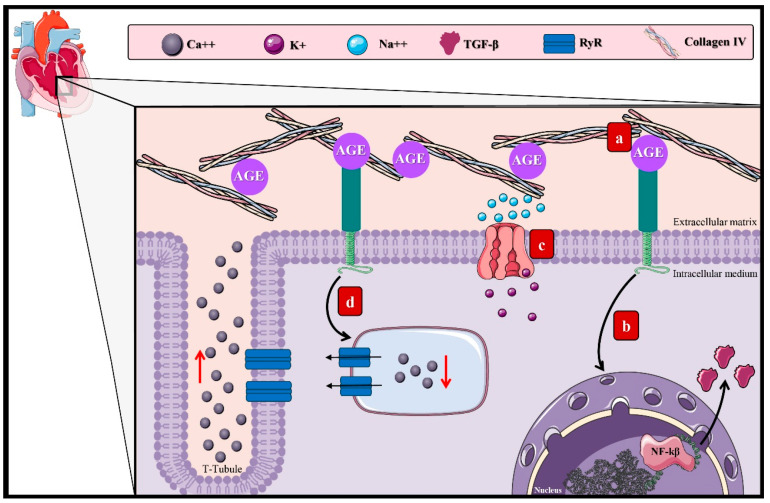
Diabetes mellitus (DM) is considered one of the most massive epidemics of the twenty-first century due to its high mortality rates caused mainly due to its complications; therefore, the early identification of such complications becomes a race against time to establish a prompt diagnosis. The research of complications of DM over the years has allowed the development of numerous alternatives for diagnosis. Among these emerge the quantification of advanced glycation end products (AGEs) given their increased levels due to chronic hyperglycemia, while also being related to the induction of different stress-associated cellular responses and proinflammatory mechanisms involved in the progression of chronic complications of DM. Additionally, the investigation for more valuable and safe techniques has led to developing a newer, noninvasive, and effective tool, termed skin fluorescence (SAF). Hence, this study aimed to establish an update about the molecular mechanisms induced by AGEs during the evolution of chronic complications of DM and describe the newer measurement techniques available, highlighting SAF as a possible tool to measure the risk of developing DM chronic complications.
糖尿病(DM)被认为是 21 世纪最严重的流行疾病之一,主要是由于其并发症导致死亡率高;因此,早期识别这些并发症成为与时间赛跑,以便及时做出诊断。多年来对 DM 并发症的研究为诊断提供了许多替代方案。在这些方案中,由于慢性高血糖,糖基化终产物(AGEs)的水平增加,并且与诱导不同的应激相关细胞反应和涉及 DM 慢性并发症进展的促炎机制相关,因此它们脱颖而出。此外,为了寻找更有价值和更安全的技术,已经开发出一种更新、非侵入性且有效的工具,称为皮肤荧光(SAF)。因此,本研究旨在建立关于 AGEs 在 DM 慢性并发症发展过程中诱导的分子机制的最新信息,并描述现有的新技术测量方法,突出 SAF 作为一种可能的工具来测量发生 DM 慢性并发症的风险。