• 文献检索
  • 文档翻译
  • 深度研究
  • 学术资讯
  • Suppr Zotero 插件Zotero 插件
  • 邀请有礼
  • 套餐&价格
  • 历史记录
应用&插件
Suppr Zotero 插件Zotero 插件浏览器插件Mac 客户端Windows 客户端微信小程序
定价
高级版会员购买积分包购买API积分包
服务
文献检索文档翻译深度研究API 文档MCP 服务
关于我们
关于 Suppr公司介绍联系我们用户协议隐私条款
关注我们

Suppr 超能文献

核心技术专利:CN118964589B侵权必究
粤ICP备2023148730 号-1Suppr @ 2026

文献检索

告别复杂PubMed语法,用中文像聊天一样搜索,搜遍4000万医学文献。AI智能推荐,让科研检索更轻松。

立即免费搜索

文件翻译

保留排版,准确专业,支持PDF/Word/PPT等文件格式,支持 12+语言互译。

免费翻译文档

深度研究

AI帮你快速写综述,25分钟生成高质量综述,智能提取关键信息,辅助科研写作。

立即免费体验

助听设备和其他技术对聋人和重听人的心理社会影响。

Psychosocial Impact of Assistive Devices and Other Technologies on Deaf and Hard of Hearing People.

机构信息

Faculty Padre Ossó (Asociated Center of the University of Oviedo), Degree in Occupational Therapy, University of Oviedo, 33008 Oviedo, Spain.

Institute for Community Inclusion (INICO), University of Salamanca, 37005 Salamanca, Spain.

出版信息

Int J Environ Res Public Health. 2021 Jul 7;18(14):7259. doi: 10.3390/ijerph18147259.

DOI:10.3390/ijerph18147259
PMID:34299710
原文链接:https://pmc.ncbi.nlm.nih.gov/articles/PMC8303859/
Abstract

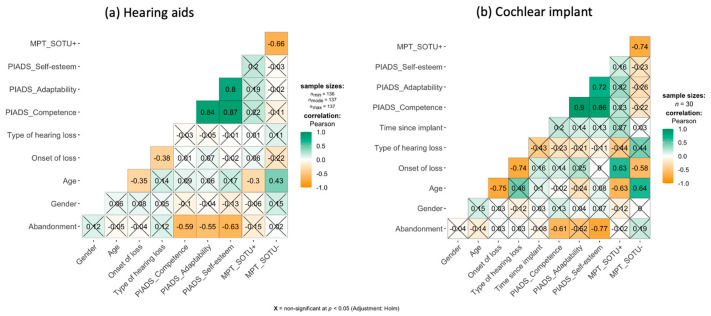
Deaf and hard of hearing people use a variety of assistive devices and technologies as a strategy to mitigate, counter or compensate for life difficulties resulting from hearing loss. Although outcome measures are commonly used with hearing aids, few studies have explored the perceived psychosocial impact of other assistive devices and technologies or the factors leading to their abandonment or lack of use. Therefore, the main aim of this study was to assess the psychosocial impact of different assistive devices on deaf and hard of hearing people using the Psychosocial Impact of Assistive Devices Scale. The sample was made up of 291 individuals, 176 women and 115 men, with an average age of 56.12 years (standard deviation (SD) = 25.11), who were all users of different assistive devices. Overall, the results of the study showed that the use of assistive devices had a positive psychosocial impact, although this impact varied slightly depending on the specific type of device. Moreover, a relationship was identified between the psychosocial impact and the probability of future abandonment of a hearing aid or a cochlear implant. The results point to the importance of considering the psychosocial impact derived from the use of a device as a relevant variable in the adoption process of assistive technologies for deaf and hard of hearing people.

摘要

聋人和重听人士使用各种辅助器具和技术,作为减轻、对抗或补偿因听力损失而导致的生活困难的策略。尽管助听设备通常使用结果测量方法,但很少有研究探讨其他辅助器具和技术的感知心理社会影响,或导致其被放弃或未被使用的因素。因此,本研究的主要目的是使用助听设备心理社会影响量表评估不同辅助器具对聋人和重听人士的心理社会影响。该样本由 291 名个体组成,其中 176 名女性和 115 名男性,平均年龄为 56.12 岁(标准差 (SD) = 25.11),均为不同辅助器具的使用者。总的来说,研究结果表明,辅助器具的使用具有积极的心理社会影响,尽管这种影响因特定类型的设备而略有不同。此外,还确定了心理社会影响与助听器或人工耳蜗未来被放弃的概率之间的关系。研究结果表明,考虑到使用设备带来的心理社会影响作为聋人和重听人士采用辅助技术过程中的一个相关变量非常重要。
https://cdn.ncbi.nlm.nih.gov/pmc/blobs/7875/8303859/81853ba63f64/ijerph-18-07259-g001.jpg

相似文献

1
Psychosocial Impact of Assistive Devices and Other Technologies on Deaf and Hard of Hearing People.助听设备和其他技术对聋人和重听人的心理社会影响。
Int J Environ Res Public Health. 2021 Jul 7;18(14):7259. doi: 10.3390/ijerph18147259.
2
Psychosocial variables related to the adoption of video relay services among deaf or hard-of-hearing employees at the Texas School for the Deaf.与德克萨斯聋人学校失聪或听力有障碍的员工采用视频中继服务相关的社会心理变量。
Assist Technol. 2008 Spring;20(1):36-47. doi: 10.1080/10400435.2008.10131930.
3
Discontinuation or abandonment of mobility assistive technology among people with neurological conditions.神经疾病患者移动辅助技术的停用或放弃。
Rev Neurol. 2021 Jun 16;72(12):426-432. doi: 10.33588/rn.7212.2020655.
4
Users' perspectives on the provision of assistive technologies in Bangladesh: awareness, providers, costs and barriers.孟加拉国用户对辅助技术供应的看法:认知、供应商、成本及障碍
Disabil Rehabil Assist Technol. 2015 Jul;10(4):301-8. doi: 10.3109/17483107.2014.974221. Epub 2014 Oct 27.
5
Novel navigation assistive device for deaf drivers.新型聋人驾驶员导航辅助设备。
Assist Technol. 2022 Mar 4;34(2):129-139. doi: 10.1080/10400435.2020.1712499. Epub 2020 Jan 8.
6
Design and evaluation of a smartphone application for non-speech sound awareness for people with hearing loss.针对听力损失患者的非语音声音感知的智能手机应用程序的设计与评估。
Annu Int Conf IEEE Eng Med Biol Soc. 2015;2015:5008-11. doi: 10.1109/EMBC.2015.7319516.
7
Psychosocial Development in 5-Year-Old Children With Hearing Loss Using Hearing Aids or Cochlear Implants.助听或植入人工耳蜗的 5 岁听力损失儿童的心理社会发展。
Trends Hear. 2017 Jan-Dec;21:2331216517710373. doi: 10.1177/2331216517710373.
8
Evidence for the use of hearing assistive technology by adults: the role of the FM system.成人使用听力辅助技术的证据:调频系统的作用。
Trends Amplif. 2007 Jun;11(2):73-89. doi: 10.1177/1084713807300879.
9
An internet survey of individuals with hearing loss regarding assistive listening devices.一项针对听力损失患者关于助听设备的网络调查。
Trends Amplif. 2007 Jun;11(2):91-100. doi: 10.1177/1084713807301322.
10
Objective and perceptual comparisons of two bluetooth hearing aid assistive devices.两种蓝牙助听器辅助设备的客观和感知比较。
Disabil Rehabil Assist Technol. 2017 Aug;12(6):614-617. doi: 10.1080/17483107.2016.1201153. Epub 2016 Jul 4.

引用本文的文献

1
Psychological Health of Deaf Pre-Teens and Teenagers with Cochlear Implants and Maternal Psychological Features: A Pilot Study.植入人工耳蜗的失聪青少年及儿童的心理健康状况与母亲心理特征:一项初步研究。
Healthcare (Basel). 2025 Feb 25;13(5):498. doi: 10.3390/healthcare13050498.
2
The psychosocial impact of eye-gaze assistive technology on everyday life of children and adults.眼控辅助技术对儿童和成人日常生活的心理社会影响。
Ann Med. 2024 Dec;56(1):2318397. doi: 10.1080/07853890.2024.2318397. Epub 2024 Mar 5.
3
Available Assistive Technology Outcome Measures: Systematic Review.

本文引用的文献

1
Psychometric Properties of the Spanish Version of Psychosocial Impact of Assistive Devices Scale in a Large Sample of People With Neuromuscular, Neurological, or Hearing Disabilities.辅助设备心理社会影响量表西班牙语版在大量神经肌肉、神经或听力残疾人群样本中的心理测量特性。
Front Psychol. 2021 Jun 10;12:659562. doi: 10.3389/fpsyg.2021.659562. eCollection 2021.
2
Cochlear implants in adults with partial deafness: subjective benefits but associated psychological distress.成人部分耳聋患者的人工耳蜗植入:主观获益与相关心理困扰。
Eur Arch Otorhinolaryngol. 2021 May;278(5):1387-1394. doi: 10.1007/s00405-020-06199-x. Epub 2020 Jul 15.
3
可用的辅助技术成果测量方法:系统评价。
JMIR Rehabil Assist Technol. 2023 Nov 15;10:e51124. doi: 10.2196/51124.
4
Promoting active aging through assistive product design innovation: a preference-based integrated design framework.通过辅助产品设计创新促进积极老龄化:基于偏好的综合设计框架。
Front Public Health. 2023 Jun 19;11:1203830. doi: 10.3389/fpubh.2023.1203830. eCollection 2023.
5
Factors Influencing Utilization of Assistive Devices by Tibetan Seniors on the Qinghai-Tibet Plateau: Based on Research Strategy of Triangulation.影响青藏高原藏族老年人辅助器具使用的因素:基于三角互证研究策略
Patient Prefer Adherence. 2023 Feb 15;17:401-411. doi: 10.2147/PPA.S400346. eCollection 2023.
6
Effectiveness of a Self-Fitting Tool for User-Driven Fitting of Hearing Aids.用户驱动式助听器适配自助工具的效果评估。
Int J Environ Res Public Health. 2021 Oct 10;18(20):10596. doi: 10.3390/ijerph182010596.
7
Psychometric Properties of the Spanish Version of Psychosocial Impact of Assistive Devices Scale in a Large Sample of People With Neuromuscular, Neurological, or Hearing Disabilities.辅助设备心理社会影响量表西班牙语版在大量神经肌肉、神经或听力残疾人群样本中的心理测量特性。
Front Psychol. 2021 Jun 10;12:659562. doi: 10.3389/fpsyg.2021.659562. eCollection 2021.
Cochlear Implant Nonuse: Insight from Deaf Adults.
人工耳蜗植入不使用者:聋人成年人的观点。
J Deaf Stud Deaf Educ. 2020 May 30;25(3):270-282. doi: 10.1093/deafed/enaa002.
4
Frequency change detection and speech perception in cochlear implant users.人工耳蜗使用者的频率变化检测与言语感知
Hear Res. 2019 Aug;379:12-20. doi: 10.1016/j.heares.2019.04.007. Epub 2019 Apr 17.
5
Self-esteem in the deaf who have become cochlear implant users as adults.成年后使用人工耳蜗的聋人自尊心。
PLoS One. 2018 Sep 11;13(9):e0203680. doi: 10.1371/journal.pone.0203680. eCollection 2018.
6
Improving access to assistive technologies: challenges and solutions in low- and middle-income countries.改善辅助技术的可及性:低收入和中等收入国家面临的挑战与解决方案
WHO South East Asia J Public Health. 2018 Sep;7(2):84-89. doi: 10.4103/2224-3151.239419.
7
Safety and outcomes of cochlear implantation in the elderly: A review of recent literature.老年人人工耳蜗植入的安全性与效果:近期文献综述
J Otol. 2016 Mar;11(1):1-6. doi: 10.1016/j.joto.2016.03.004. Epub 2016 Apr 2.
8
Quality of life and cochlear implant: results in adults with postlingual hearing loss.生活质量与人工耳蜗植入:成人语后聋患者的结果
Braz J Otorhinolaryngol. 2018 Jul-Aug;84(4):494-499. doi: 10.1016/j.bjorl.2017.06.005. Epub 2017 Jul 5.
9
Influence of Telecommunication Modality, Internet Transmission Quality, and Accessories on Speech Perception in Cochlear Implant Users.电信方式、互联网传输质量及配件对人工耳蜗使用者言语感知的影响
J Med Internet Res. 2017 Apr 24;19(4):e135. doi: 10.2196/jmir.6954.
10
Audiological Rehabilitation for Facilitating Hearing Aid Use: A Review.促进助听器使用的听力学康复:综述
J Am Acad Audiol. 2017 Mar;28(3):248-260. doi: 10.3766/jaaa.16035.