• 文献检索
  • 文档翻译
  • 深度研究
  • 学术资讯
  • Suppr Zotero 插件Zotero 插件
  • 邀请有礼
  • 套餐&价格
  • 历史记录
应用&插件
Suppr Zotero 插件Zotero 插件浏览器插件Mac 客户端Windows 客户端微信小程序
定价
高级版会员购买积分包购买API积分包
服务
文献检索文档翻译深度研究API 文档MCP 服务
关于我们
关于 Suppr公司介绍联系我们用户协议隐私条款
关注我们

Suppr 超能文献

核心技术专利:CN118964589B侵权必究
粤ICP备2023148730 号-1Suppr @ 2026

文献检索

告别复杂PubMed语法,用中文像聊天一样搜索,搜遍4000万医学文献。AI智能推荐,让科研检索更轻松。

立即免费搜索

文件翻译

保留排版,准确专业,支持PDF/Word/PPT等文件格式,支持 12+语言互译。

免费翻译文档

深度研究

AI帮你快速写综述,25分钟生成高质量综述,智能提取关键信息,辅助科研写作。

立即免费体验

新冠疫情爆发前后韩国青少年成瘾性网络游戏使用情况:2018年与2020年潜在概况比较

Addictive Internet Gaming Usage among Korean Adolescents before and after the Outbreak of the COVID-19 Pandemic: A Comparison of the Latent Profiles in 2018 and 2020.

作者信息

Kim Dongil, Lee Junwon

机构信息

Department of Education, College of Education, Seoul National University, Seoul 08826, Korea.

出版信息

Int J Environ Res Public Health. 2021 Jul 7;18(14):7275. doi: 10.3390/ijerph18147275.

DOI:10.3390/ijerph18147275
PMID:34299725
原文链接:https://pmc.ncbi.nlm.nih.gov/articles/PMC8305932/
Abstract

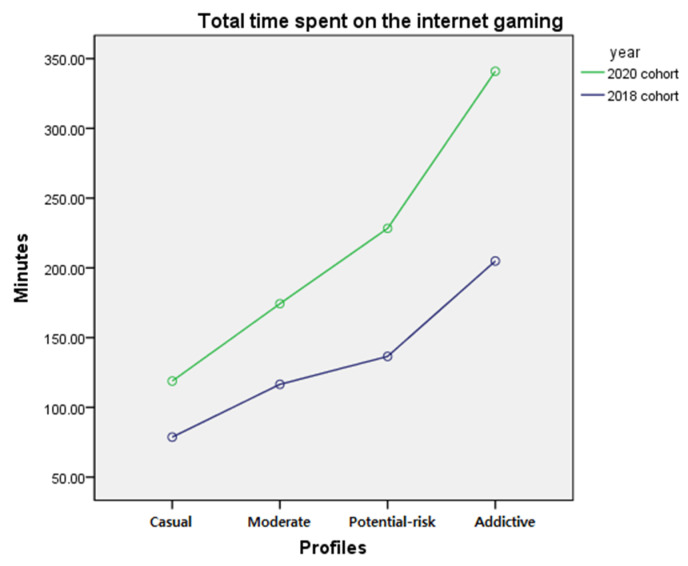
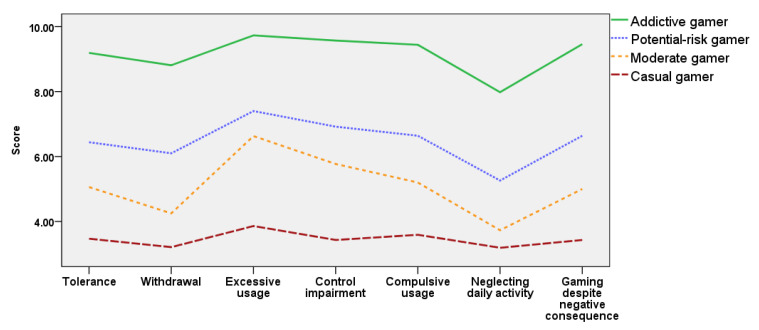
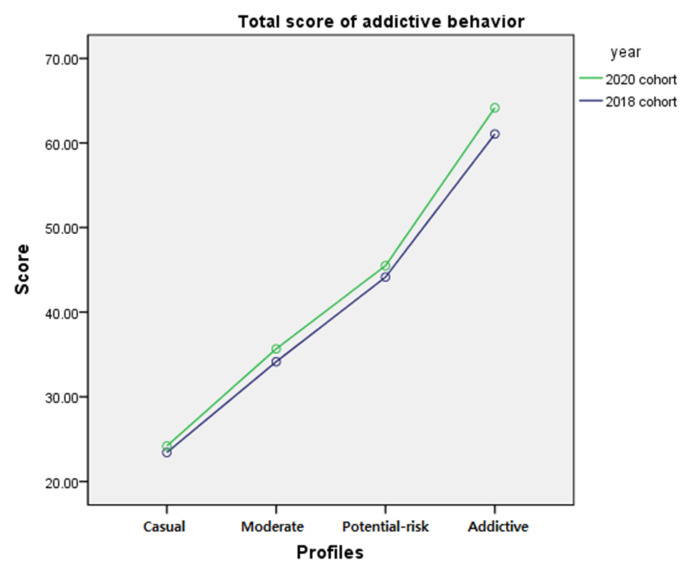
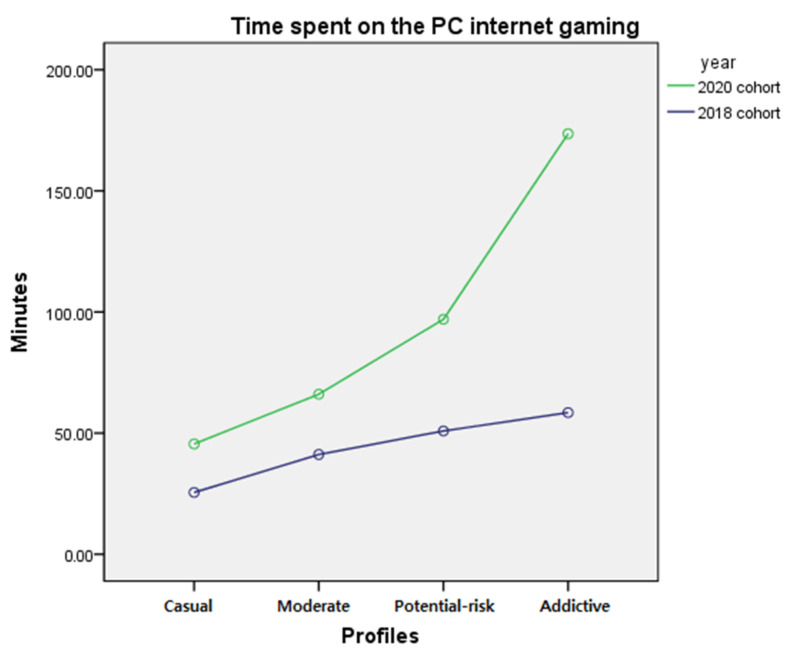
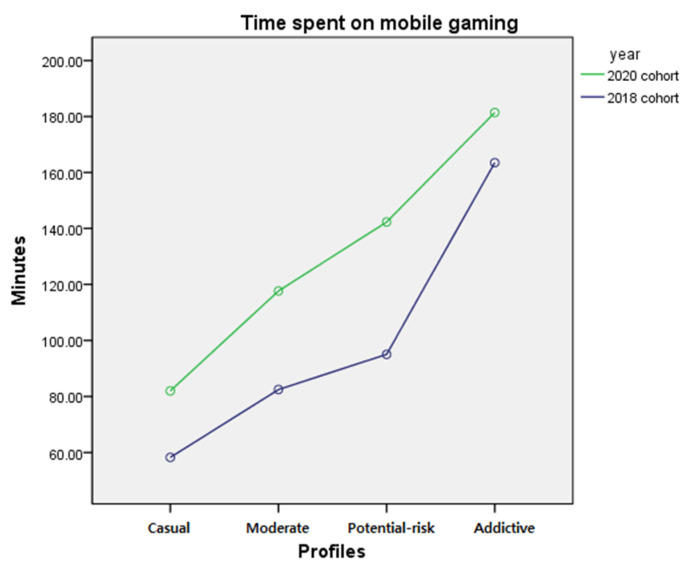
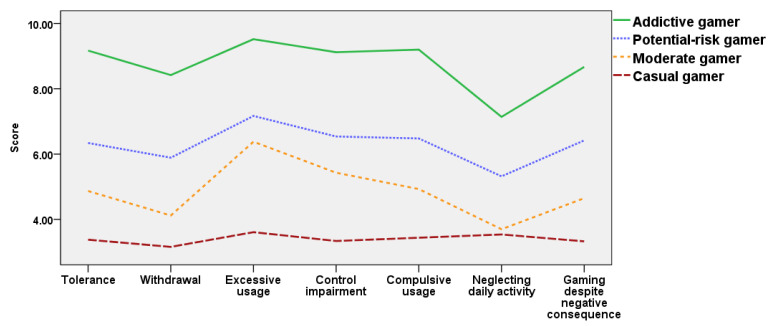
Since the outbreak of the COVID-19 pandemic, the heightened risk of school closures and mental disorders has made adolescents particularly vulnerable to developing internet gaming disorder (IGD). There have been reports of increased time spent playing games on the internet among adolescents during the pandemic, and the risk of developing IGD may be higher for adolescents in South Korea as the majority of them play games on the internet. However, to the best of our knowledge, no studies have examined the impact of the pandemic on adolescents' internet gaming behavior in South Korea. This study aimed to explore the different profiles of addictive internet gaming behavior among adolescents before and after the outbreak of the COVID-19 pandemic and examine how the pandemic influenced addictive internet gaming usage and time spent playing games on the internet. Nationally representative survey data from the Ministry of Gender Equality and Family with 3040 and 2906 responses from 2018 and 2020, respectively, were analyzed. Using seven factors of a maladaptive gaming usage scale (tolerance, withdrawal, excessive usage, control impairment, compulsive usage, neglecting daily activity, and gaming despite negative consequence), a four-profile model was selected in both 2018 and 2020 for latent profile analysis: 'casual' gamer, 'moderate' gamer, 'potential-risk' gamer and 'addictive' gamer. The results from the two-way ANCOVA showed significant interaction between the cohorts (2018 cohort vs. 2020 cohort) and the four profiles on addictive internet gaming usage (F = 119.747, < 0.001, η = 0.05), including time spent playing internet games on a PC (F = 22.893, < 0.001, η = 0.013), and time spent playing games on a mobile phone (F = 3.245, < 0.05, η = 0.02). The results indicated that the increase of addictive internet gaming usage and gameplay time differed by profile. The results imply that the increase in gameplay time was higher for profiles with higher scores in addictive internet gaming usage for internet games played on a PC while the relationship was not obvious for games played on a mobile phone. Despite the statistical significance, there was only 1.2% to 4.9% of mean difference in addictive internet gaming usage between the 2018 and 2020 cohorts, which implies little clinical significance. While adolescents of the four profiles showed no significant signs of increased addictive internet gaming usage, the addictive gamer profile demonstrated a significant increase in game time after COVID-19.

摘要

自新冠疫情爆发以来,学校关闭和出现精神障碍的风险增加,这使得青少年特别容易患上网络游戏障碍(IGD)。有报道称,疫情期间青少年上网玩游戏的时间增加,而韩国的青少年患IGD的风险可能更高,因为他们大多数人都在网上玩游戏。然而,据我们所知,尚无研究考察疫情对韩国青少年网络游戏行为的影响。本研究旨在探讨新冠疫情爆发前后青少年成瘾性网络游戏行为的不同特征,并研究疫情如何影响成瘾性网络游戏的使用情况以及上网玩游戏的时间。我们分析了来自性别平等和家庭部的具有全国代表性的调查数据,2018年和2020年分别有3040份和2906份回复。使用适应不良游戏使用量表的七个因素(耐受性、戒断反应、过度使用、控制障碍、强迫性使用、忽视日常活动以及不顾负面后果仍继续游戏),在2018年和2020年都选择了一个四特征模型进行潜在特征分析:“休闲”玩家、“中度”玩家、“潜在风险”玩家和“成瘾”玩家。双向协方差分析的结果显示,不同队列(2018年队列与2020年队列)与成瘾性网络游戏使用的四个特征之间存在显著交互作用(F = 119.747,< 0.001,η = 0.05),包括在电脑上玩网络游戏的时间(F = 22.893,< 0.001,η = 0.013)以及在手机上玩游戏的时间(F = 3.245,< 0.05,η = 0.02)。结果表明,成瘾性网络游戏使用和游戏时长的增加因特征而异。结果意味着,对于在电脑上玩的网络游戏,成瘾性网络游戏使用得分较高的特征,其游戏时长的增加幅度更大,而对于在手机上玩的游戏,这种关系并不明显。尽管具有统计学意义,但2018年和2020年队列之间成瘾性网络游戏使用的平均差异仅为1.2%至4.9%,这意味着临床意义不大。虽然这四个特征的青少年成瘾性网络游戏使用增加没有显著迹象,但“成瘾”玩家特征在新冠疫情后游戏时间有显著增加。
https://cdn.ncbi.nlm.nih.gov/pmc/blobs/fa88/8305932/f2a28ff9ecb5/ijerph-18-07275-g006.jpg
https://cdn.ncbi.nlm.nih.gov/pmc/blobs/fa88/8305932/fec26aca008b/ijerph-18-07275-g001.jpg
https://cdn.ncbi.nlm.nih.gov/pmc/blobs/fa88/8305932/dad77a3bcd46/ijerph-18-07275-g002.jpg
https://cdn.ncbi.nlm.nih.gov/pmc/blobs/fa88/8305932/6a4c571ed62b/ijerph-18-07275-g003.jpg
https://cdn.ncbi.nlm.nih.gov/pmc/blobs/fa88/8305932/f25f11c4f1d8/ijerph-18-07275-g004.jpg
https://cdn.ncbi.nlm.nih.gov/pmc/blobs/fa88/8305932/0fe3e8a9e22d/ijerph-18-07275-g005.jpg
https://cdn.ncbi.nlm.nih.gov/pmc/blobs/fa88/8305932/f2a28ff9ecb5/ijerph-18-07275-g006.jpg
https://cdn.ncbi.nlm.nih.gov/pmc/blobs/fa88/8305932/fec26aca008b/ijerph-18-07275-g001.jpg
https://cdn.ncbi.nlm.nih.gov/pmc/blobs/fa88/8305932/dad77a3bcd46/ijerph-18-07275-g002.jpg
https://cdn.ncbi.nlm.nih.gov/pmc/blobs/fa88/8305932/6a4c571ed62b/ijerph-18-07275-g003.jpg
https://cdn.ncbi.nlm.nih.gov/pmc/blobs/fa88/8305932/f25f11c4f1d8/ijerph-18-07275-g004.jpg
https://cdn.ncbi.nlm.nih.gov/pmc/blobs/fa88/8305932/0fe3e8a9e22d/ijerph-18-07275-g005.jpg
https://cdn.ncbi.nlm.nih.gov/pmc/blobs/fa88/8305932/f2a28ff9ecb5/ijerph-18-07275-g006.jpg

相似文献

1
Addictive Internet Gaming Usage among Korean Adolescents before and after the Outbreak of the COVID-19 Pandemic: A Comparison of the Latent Profiles in 2018 and 2020.新冠疫情爆发前后韩国青少年成瘾性网络游戏使用情况:2018年与2020年潜在概况比较
Int J Environ Res Public Health. 2021 Jul 7;18(14):7275. doi: 10.3390/ijerph18147275.
2
Latent Profile of Internet and Internet Game Usage Among South Korean Adolescents During the COVID-19 Pandemic.新冠疫情期间韩国青少年的互联网及网络游戏使用潜在概况
Front Psychiatry. 2021 Sep 23;12:714301. doi: 10.3389/fpsyt.2021.714301. eCollection 2021.
3
Relationship between the experience of online game genre and high risk of Internet gaming disorder in Korean adolescents.网络游戏类型体验与韩国青少年网络游戏障碍高危因素的关系。
Epidemiol Health. 2020;42:e2020016. doi: 10.4178/epih.e2020016. Epub 2020 Apr 7.
4
Time Spent Gaming, Device Type, Addiction Scores, and Well-being of Adolescent English Gamers in the 2021 OxWell Survey: Latent Profile Analysis.2021年OxWell调查中青少年英国游戏玩家的游戏时长、设备类型、成瘾得分与幸福感:潜在剖面分析
JMIR Pediatr Parent. 2022 Nov 18;5(4):e41480. doi: 10.2196/41480.
5
Video Game Playing and Internet Gaming Disorder: A Profile of Young Adolescents.视频游戏和网络成瘾障碍:青少年特征。
Int J Environ Res Public Health. 2023 Dec 8;20(24):7155. doi: 10.3390/ijerph20247155.
6
A latent profile approach for classifying internet gamers based on motives for online gaming.基于在线游戏动机的网络玩家分类的潜在剖面分析方法。
J Behav Addict. 2023 Feb 10;12(1):148-158. doi: 10.1556/2006.2022.00092. Print 2023 Mar 30.
7
Gaming Device Usage Patterns Predict Internet Gaming Disorder: Comparison across Different Gaming Device Usage Patterns.游戏设备使用模式预测网络游戏障碍:不同游戏设备使用模式的比较。
Int J Environ Res Public Health. 2017 Dec 5;14(12):1512. doi: 10.3390/ijerph14121512.
8
Factors associated with severity, incidence or persistence of internet gaming disorder in children and adolescents: a 2-year longitudinal study.与儿童和青少年网络游戏障碍严重程度、发生率或持续性相关的因素:一项为期 2 年的纵向研究。
Addiction. 2021 Jul;116(7):1828-1838. doi: 10.1111/add.15366. Epub 2021 Jan 28.
9
Gaming among Children and Adolescents during the COVID-19 Lockdown: The Role of Parents in Time Spent on Video Games and Gaming Disorder Symptoms.儿童和青少年在 COVID-19 封锁期间玩游戏:父母在视频游戏时间和游戏障碍症状方面的作用。
Int J Environ Res Public Health. 2021 Jun 21;18(12):6642. doi: 10.3390/ijerph18126642.
10
Changes of internet behavior of adolescents across the period of COVID-19 pandemic in China.中国青少年在新冠疫情期间网络行为的变化。
Psychol Health Med. 2023 Jan;28(1):37-47. doi: 10.1080/13548506.2021.2019809. Epub 2022 Jan 4.

引用本文的文献

1
Contextual adaptation of digital wellbeing interventions for young people: insights from a project in Saudi Arabia.针对年轻人的数字健康干预措施的情境适应性:来自沙特阿拉伯一个项目的见解。
Front Psychiatry. 2025 Jan 31;15:1455962. doi: 10.3389/fpsyt.2024.1455962. eCollection 2024.
2
Changes in Internet Activities and Influencing Factors for Problematic Internet Use During the COVID-19 Pandemic in Korean Adolescents: Repeated Cross-Sectional Study.韩国青少年在新冠疫情期间网络活动的变化及网络使用问题的影响因素:重复横断面研究
JMIR Pediatr Parent. 2025 Feb 11;8:e66448. doi: 10.2196/66448.
3
Playing online videogames-more than just entertainment? A qualitative study of virtual social participation in persons with spinal cord injury.

本文引用的文献

1
Online Gaming and Prolonged Self-Isolation: Evidence from Italian Gamers During the Covid-19 Outbreak.在线游戏与长期自我隔离:来自意大利玩家在新冠疫情爆发期间的证据。
Clin Neuropsychiatry. 2021 Feb;18(1):65-74. doi: 10.36131/cnfioritieditore20210106.
2
Prevalence and risk factors of internet gaming disorder and problematic internet use before and during the COVID-19 pandemic: A large online survey of Japanese adults.新冠疫情前后日本成年人中网络游戏障碍和问题性网络使用的流行率及其危险因素:一项大型在线调查。
J Psychiatr Res. 2021 Oct;142:218-225. doi: 10.1016/j.jpsychires.2021.07.054. Epub 2021 Aug 4.
3
Gaming among Children and Adolescents during the COVID-19 Lockdown: The Role of Parents in Time Spent on Video Games and Gaming Disorder Symptoms.
玩在线电子游戏——不仅仅是娱乐?一项关于脊髓损伤患者虚拟社交参与的定性研究。
Front Rehabil Sci. 2024 May 16;5:1395678. doi: 10.3389/fresc.2024.1395678. eCollection 2024.
4
Impulsivity and aggression as risk factors for internet gaming disorder among university students.冲动和攻击性是大学生网络游戏障碍的危险因素。
Sci Rep. 2024 Feb 14;14(1):3712. doi: 10.1038/s41598-024-53807-5.
5
Efficacy of Methylphenidate for Internet Gaming Disorder and Internet Addiction in Patients with Attention-Deficit/Hyperactivity Disorder.哌醋甲酯治疗注意缺陷多动障碍患者网络成瘾和网络游戏障碍的疗效。
Curr Pharm Des. 2024;30(6):477-483. doi: 10.2174/0113816128281014240124074845.
6
Problematic Gaming during COVID-19 Pandemic: A Systematic Review, Meta-Analysis, and Meta-Regression.新冠疫情期间的问题性游戏行为:一项系统评价、荟萃分析和元回归分析
Healthcare (Basel). 2023 Dec 15;11(24):3176. doi: 10.3390/healthcare11243176.
7
The Relationship Between Lockdowns and Video Game Playtime: Multilevel Time-Series Analysis Using Massive-Scale Data Telemetry.封锁措施与视频游戏时间的关系:利用大规模数据遥测的多层次时间序列分析。
J Med Internet Res. 2023 Nov 8;25:e40190. doi: 10.2196/40190.
8
Investigating gaming structural features associated with gaming disorder and proposing a revised taxonomical model: A scoping review.探讨与游戏障碍相关的游戏结构特征,并提出一个修订的分类模型:范围综述。
J Behav Addict. 2023 May 30;12(2):352-374. doi: 10.1556/2006.2023.00019. Print 2023 Jun 29.
9
Effect of COVID-19 pandemic on internet gaming disorder among general population: A systematic review and meta-analysis.2019年冠状病毒病大流行对普通人群网络游戏障碍的影响:一项系统评价和荟萃分析。
PLOS Glob Public Health. 2023 Apr 7;3(4):e0001783. doi: 10.1371/journal.pgph.0001783. eCollection 2023.
10
Sedentary Behaviour and Physical Activity Levels during Second Period of Lockdown in Chilean's Schoolchildren: How Bad Is It?智利学童第二次封锁期间的久坐行为和身体活动水平:情况有多糟糕?
Children (Basel). 2023 Mar 1;10(3):481. doi: 10.3390/children10030481.
儿童和青少年在 COVID-19 封锁期间玩游戏:父母在视频游戏时间和游戏障碍症状方面的作用。
Int J Environ Res Public Health. 2021 Jun 21;18(12):6642. doi: 10.3390/ijerph18126642.
4
Leisure and Problem Gaming Behaviors Among Children and Adolescents During School Closures Caused by COVID-19 in Hong Kong: Quantitative Cross-sectional Survey Study.香港因新冠疫情学校停课期间儿童及青少年的休闲与问题游戏行为:定量横断面调查研究
JMIR Serious Games. 2021 May 7;9(2):e26808. doi: 10.2196/26808.
5
Internet-Related Behaviors and Psychological Distress Among Schoolchildren During the COVID-19 School Hiatus.新冠疫情学校停课后,中小学生的网络相关行为与心理困扰。
Cyberpsychol Behav Soc Netw. 2021 Oct;24(10):654-663. doi: 10.1089/cyber.2020.0497. Epub 2021 Apr 20.
6
Online Videogames Use and Anxiety in Children during the COVID-19 Pandemic.新冠疫情期间儿童在线电子游戏的使用与焦虑
Children (Basel). 2021 Mar 8;8(3):205. doi: 10.3390/children8030205.
7
Depression and anxiety symptoms associated with internet gaming disorder before and during the COVID-19 pandemic: A longitudinal study.新冠肺炎疫情前后与网络游戏障碍相关的抑郁和焦虑症状:一项纵向研究。
J Behav Addict. 2021 Mar 10;10(1):169-180. doi: 10.1556/2006.2021.00016.
8
Increase in suicide following an initial decline during the COVID-19 pandemic in Japan.日本 COVID-19 大流行初期自杀人数下降后增加。
Nat Hum Behav. 2021 Feb;5(2):229-238. doi: 10.1038/s41562-020-01042-z. Epub 2021 Jan 15.
9
Psychological Symptoms and Behavioral Changes in Children and Adolescents During the Early Phase of COVID-19 Quarantine in Three European Countries.欧洲三个国家新冠疫情隔离初期儿童和青少年的心理症状及行为变化
Front Psychiatry. 2020 Dec 3;11:570164. doi: 10.3389/fpsyt.2020.570164. eCollection 2020.
10
Prevalence of Internet Gaming Disorder and Its Association With Personality Traits and Gaming Characteristics Among Chinese Adolescent Gamers.中国青少年游戏玩家中网络成瘾障碍的患病率及其与人格特质和游戏特征的关联。
Front Psychiatry. 2020 Nov 17;11:598585. doi: 10.3389/fpsyt.2020.598585. eCollection 2020.