Dabral Aman, Shamoon Arzoo, Meena Rajendra K, Kant Rama, Pandey Shailesh, Ginwal Harish S, Bhandari Maneesh S
Division of Genetics & Tree Improvement, Forest Research Institute, Dehradun, Uttarakhand 248 195 India.
Forest Pathology Discipline, Division of Forest Protection, Forest Research Institute, Dehradun, Uttarakhand 248 006 India.
Physiol Mol Biol Plants. 2021 Jul;27(7):1623-1638. doi: 10.1007/s12298-021-01035-w. Epub 2021 Jul 17.
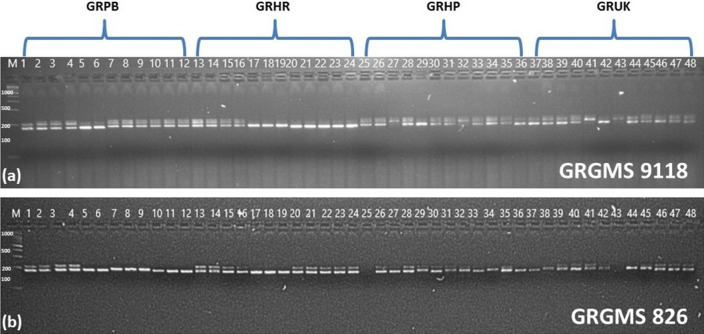
Proteaceae, a largely southern hemisphere family consisting of 80 genera distributed in Australia and southern Africa as its centres of greatest diversity, also extends well in northern and southern America. Under this family, is a fast-growing species got popularity in farm and avenue plantations. Despite the ecological and economic importance, the species has not yet been investigated for its genetic improvement and genome-based studies. Only a few molecular markers are available for the species or its close relatives, which hinders genomic and population genetics studies. Genetic markers have been intensively applied for the main strategies in breeding programs, especially for the economically important traits. Hence, it is of utmost priority to develop genomic database resources and species-specific markers for studying quantitative genetics in . Given this, the present study aimed to develop de novo genome sequencing, robust microsatellites markers, sequence annotation and their validation in different stands of in northern India. Library preparation and sequencing were carried out using Illumina paired-end sequencing technology. Approximately, ten gigabases (Gb) sequence data with 70.87 million raw reads assembled into 425,923 contigs (read mapped to 76.48%) comprising 455 Mb genome size (23 × coverage) generated through genome skimming approach. In total, 9421 simple sequence repeat (SSR) primer pairs were successfully designed from 13,335 microsatellite repeats. Afterward, a subset of 161 primer pairs was randomly selected, synthesized and validated. All the tested primers showed successful amplification but only 13 showed polymorphisms. The polymorphic SSRs were further used to estimate the measures of genetic diversity in 12 genotypes each from the states of Punjab, Haryana, Himachal Pradesh and Uttarakhand. Importantly, the average number of alleles (N), observed heterozygosity (H), expected heterozygosity (H), and the polymorphism information content (PIC) were recorded as 2.69, 0.356, 0.557 and 0.388, respectively. The availability of sequence information and newly developed SSR markers could potentially be used in various genetic analyses and improvements through molecular breeding strategies for .
The online version contains supplementary material available at 10.1007/s12298-021-01035-w.
山龙眼科是一个主要分布在南半球的科,由80个属组成,其多样性中心分布在澳大利亚和南部非洲,在北美洲和南美洲也有广泛分布。在这个科下,有一种生长迅速的物种,在农场和行道树种植中很受欢迎。尽管该物种具有生态和经济重要性,但尚未对其进行遗传改良和基于基因组的研究。该物种或其近缘种仅有少数分子标记可用,这阻碍了基因组和群体遗传学研究。遗传标记已被广泛应用于育种计划的主要策略中,特别是对于经济上重要的性状。因此,开发基因组数据库资源和物种特异性标记以研究该物种的数量遗传学至关重要。鉴于此,本研究旨在对印度北部不同林分的该物种进行从头基因组测序、开发可靠的微卫星标记、序列注释及其验证。使用Illumina双端测序技术进行文库制备和测序。通过基因组鸟枪法,大约100亿碱基(Gb)的序列数据和7087万个原始读数组装成425923个重叠群(读数映射率为76.48%),基因组大小为455 Mb(23倍覆盖)。总共从13335个微卫星重复序列中成功设计了9421对简单序列重复(SSR)引物对。随后,随机选择161对引物进行合成和验证。所有测试引物均显示成功扩增,但只有13对显示多态性。这些多态性SSR进一步用于估计来自旁遮普邦、哈里亚纳邦、喜马偕尔邦和北阿坎德邦的12个基因型的遗传多样性指标。重要的是,等位基因平均数(N)、观察杂合度(H)、期望杂合度(H)和多态性信息含量(PIC)分别记录为2.69、0.356、0.557和0.388。序列信息和新开发的SSR标记的可用性可能通过该物种的分子育种策略用于各种遗传分析和改良。
在线版本包含可在10.1007/s12298-021-01035-w获取的补充材料。