Salatino Adriana, Iacono Claudio, Gammeri Roberto, Chiadò Stefano T, Lambert Julien, Sulcova Dominika, Mouraux André, George Mark S, Roberts Donna R, Berti Anna, Ricci Raffaella
Department of Psychology, University of Turin, Turin, Italy.
Institute of Neuroscience (IoN), Université Catholique de Louvain Brussels, Brussels, Belgium.
NPJ Microgravity. 2021 Jul 27;7(1):29. doi: 10.1038/s41526-021-00159-3.
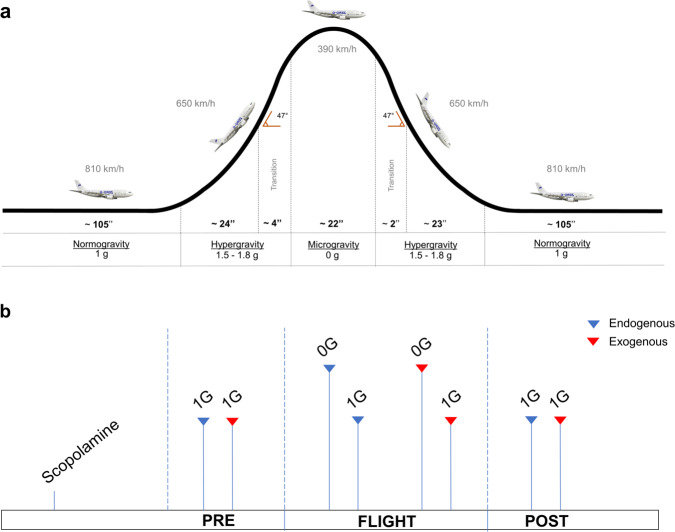
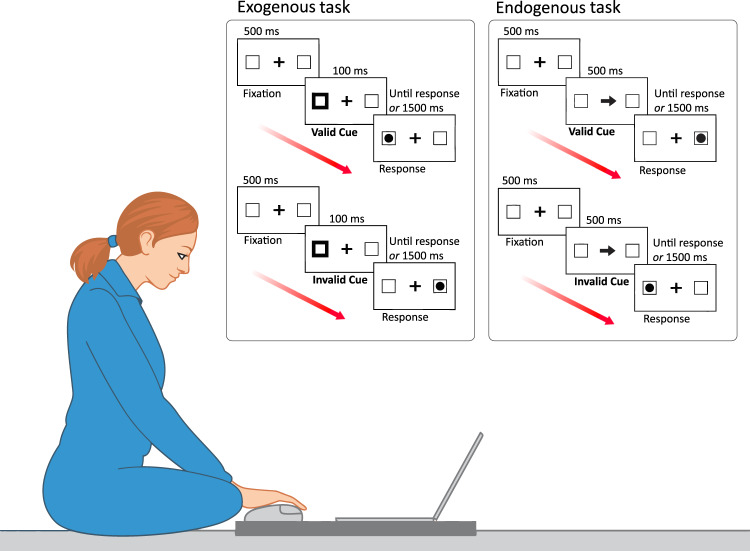
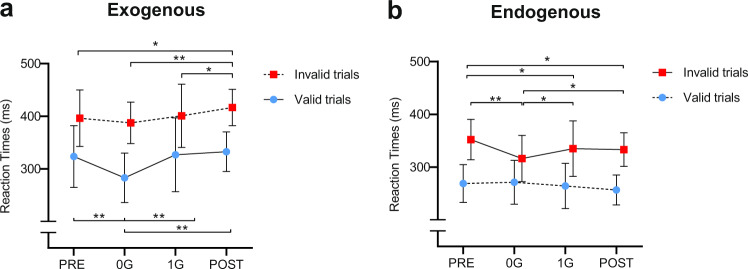
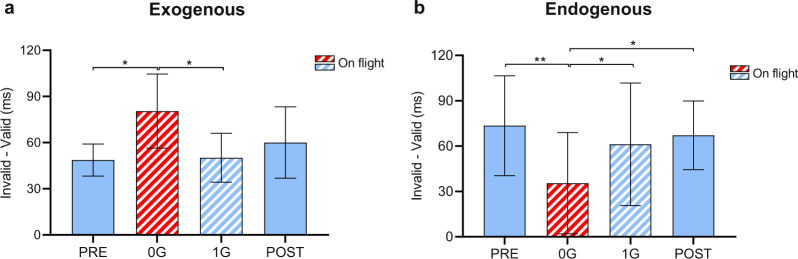
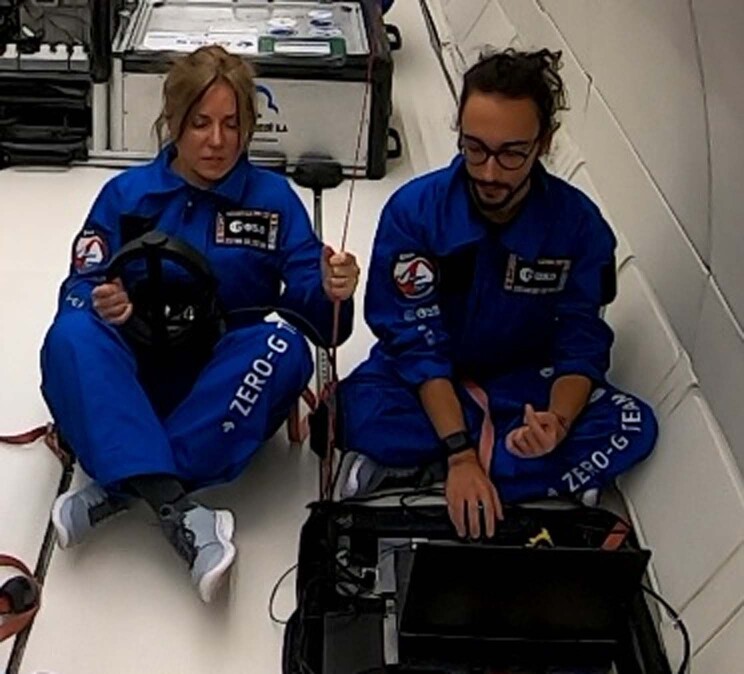
Orienting attention in the space around us is a fundamental prerequisite for willed actions. On Earth, at 1 g, orienting attention requires the integration of vestibular signals and vision, although the specific vestibular contribution to voluntary and automatic components of visuospatial attention remains largely unknown. Here, we show that unweighting of the otolith organ in zero gravity during parabolic flight, selectively enhances stimulus-driven capture of automatic visuospatial attention, while weakening voluntary maintenance of covert attention. These findings, besides advancing our comprehension of the basic influence of the vestibular function on voluntary and automatic components of visuospatial attention, may have operational implications for the identification of effective countermeasures to be applied in forthcoming human deep space exploration and habitation, and on Earth, for patients' rehabilitation.
引导我们对周围空间的注意力是有意行动的基本前提。在地球上,重力为1g时,引导注意力需要整合前庭信号和视觉信息,尽管前庭对视觉空间注意力的自主和自动成分的具体贡献在很大程度上仍不清楚。在这里,我们表明,在抛物线飞行期间处于零重力状态时耳石器官的失重,有选择地增强了刺激驱动的自动视觉空间注意力捕获,同时削弱了隐蔽注意力的自主维持。这些发现,除了推进我们对前庭功能对视觉空间注意力的自主和自动成分的基本影响的理解之外,可能对识别即将到来的人类深空探索和居住中要应用的有效对策具有操作意义,在地球上,也对患者的康复具有操作意义。