State Key Laboratory of Animal Nutrition, Ministry of Agriculture Key Laboratory of Animal Genetics Breeding and Reproduction, Institute of Animal Science, Chinese Academy of Agricultural Sciences, Beijing, China.
Gembloux Agro-Bio Tech, University of Liège, Gembloux, Belgium.
Front Immunol. 2021 Jul 12;12:690069. doi: 10.3389/fimmu.2021.690069. eCollection 2021.
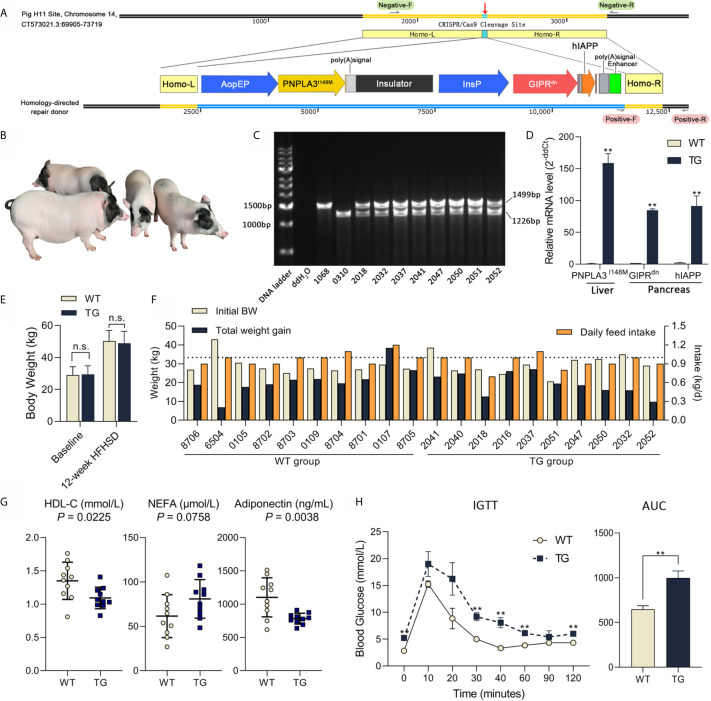
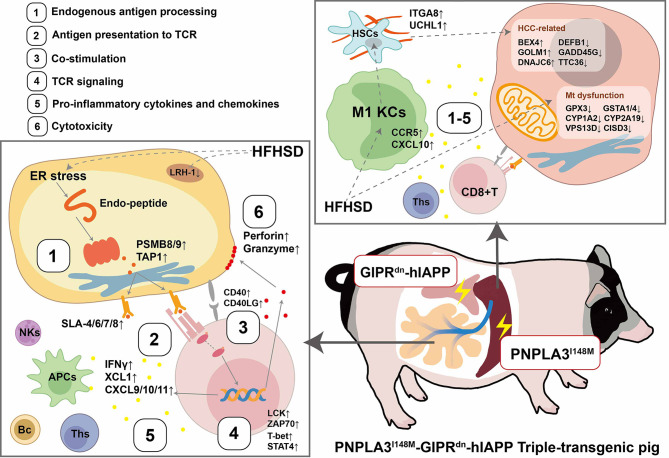
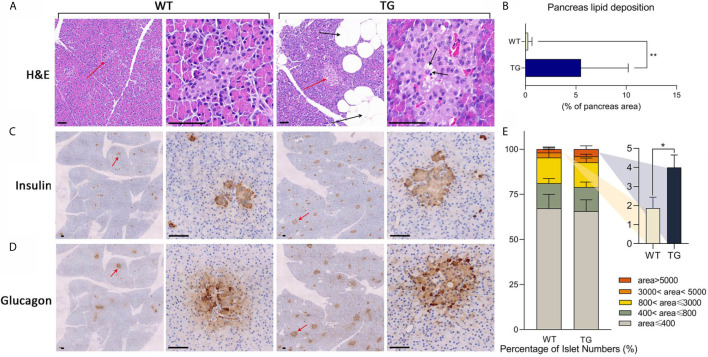
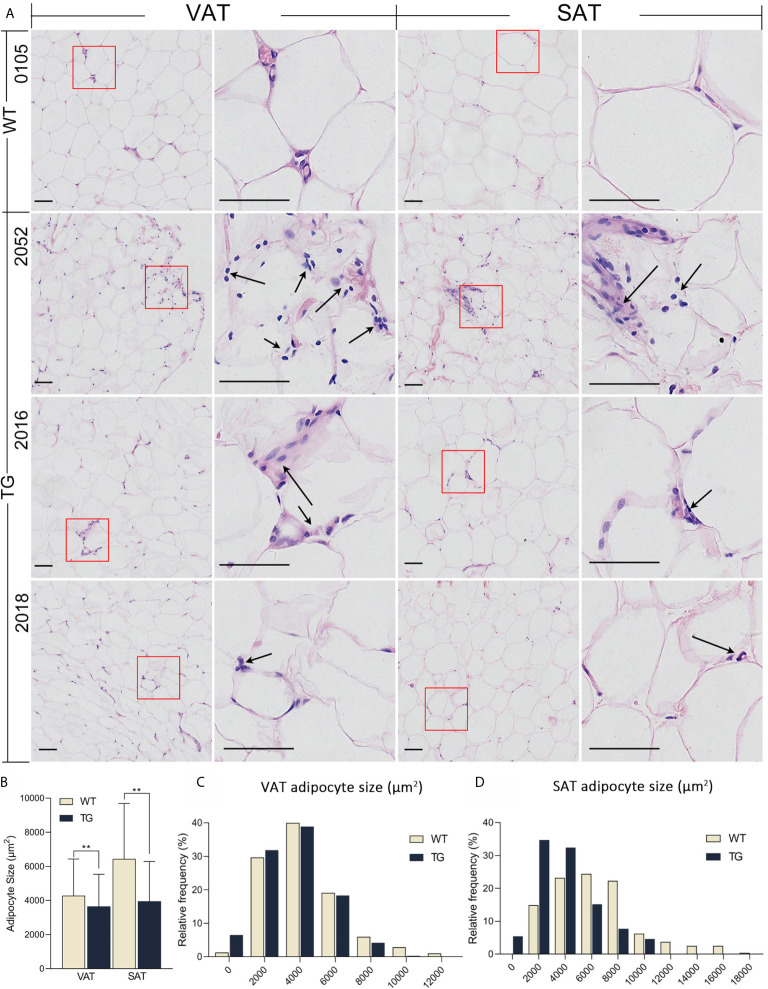
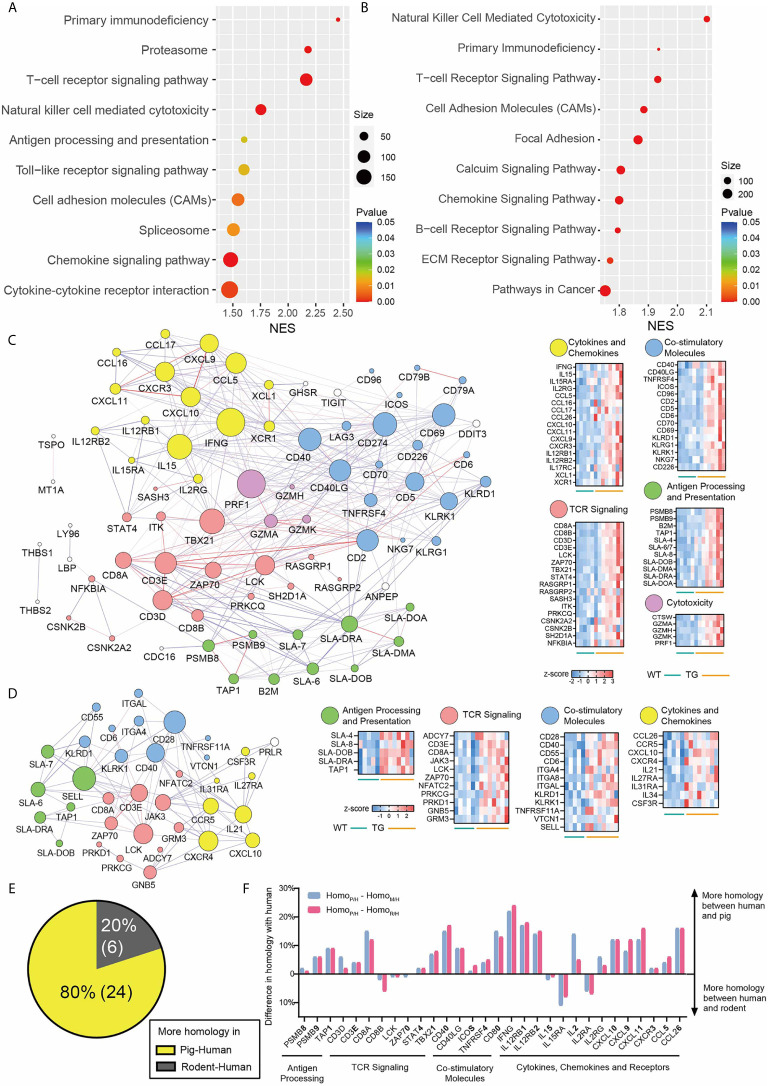
Anti-inflammatory therapies have the potential to become an effective treatment for obesity-related diseases. However, the huge gap of immune system between human and rodent leads to limitations of drug discovery. This work aims at constructing a transgenic pig model with higher risk of metabolic diseases and outlining the immune responses at the early stage of metaflammation by transcriptomic strategy. We used CRISPR/Cas9 techniques to targeted knock-in three humanized disease risk genes, , and . Transgenic effect increased the risk of metabolic disorders. Triple-transgenic pigs with short-term diet intervention showed early symptoms of type 2 diabetes, including glucose intolerance, pancreatic lipid infiltration, islet hypertrophy, hepatic lobular inflammation and adipose tissue inflammation. Molecular pathways related to CD8 T cell function were significantly activated in the liver and visceral adipose samples from triple-transgenic pigs, including antigen processing and presentation, T-cell receptor signaling, co-stimulation, cytotoxicity, and cytokine and chemokine secretion. The similar pro-inflammatory signaling in liver and visceral adipose tissue indicated that there might be a potential immune crosstalk between the two tissues. Moreover, genes that functionally related to liver antioxidant activity, mitochondrial function and extracellular matrix showed distinct expression between the two groups, indicating metabolic stress in transgenic pigs' liver samples. We confirmed that triple-transgenic pigs had high coincidence with human metabolic diseases, especially in the scope of inflammatory signaling at early stage metaflammation. Taken together, this study provides a valuable large animal model for the clinical study of metaflammation and metabolic diseases.
抗炎疗法有可能成为治疗肥胖相关疾病的有效方法。然而,人类和啮齿动物之间巨大的免疫系统差异导致了药物发现的局限性。本研究旨在通过转录组学策略构建一种代谢疾病风险更高的转基因猪模型,并概述亚炎症早期的免疫反应。我们使用 CRISPR/Cas9 技术靶向敲入三个人类疾病风险基因、、和。转基因效应增加了代谢紊乱的风险。经过短期饮食干预的三转基因猪表现出 2 型糖尿病的早期症状,包括葡萄糖耐量降低、胰腺脂质浸润、胰岛肥大、肝小叶炎症和脂肪组织炎症。肝和内脏脂肪组织中与 CD8 T 细胞功能相关的分子途径明显激活,包括抗原加工和呈递、T 细胞受体信号转导、共刺激、细胞毒性以及细胞因子和趋化因子的分泌。肝和内脏脂肪组织中相似的促炎信号表明这两种组织之间可能存在潜在的免疫串扰。此外,与肝抗氧化活性、线粒体功能和细胞外基质功能相关的基因在两组之间表现出明显的差异表达,表明转基因猪肝脏样本存在代谢应激。我们证实三转基因猪与人代谢性疾病高度吻合,特别是在亚炎症早期炎症信号方面。综上所述,该研究为亚炎症和代谢性疾病的临床研究提供了一种有价值的大动物模型。