Institute of Inflammation and Ageing, College of Medical and Dental Science, University of Birmingham, Edgbaston, Birmingham, B15 2TT, UK.
Surgical Reconstruction and Microbiology Research Centre, National Institute for Health Research, Queen Elizabeth Hospital, Birmingham, B15 2TH, UK.
Eur J Trauma Emerg Surg. 2022 Jun;48(3):1723-1735. doi: 10.1007/s00068-021-01762-5. Epub 2021 Jul 31.
Tracheal tube introducers and stylets remain some of the most widely used devices for aiding practitioners in performing endotracheal intubation (ETI). The purpose of this systematic review is to evaluate the efficacy of tracheal tube introducers and stylets for ETI in the prehospital setting.
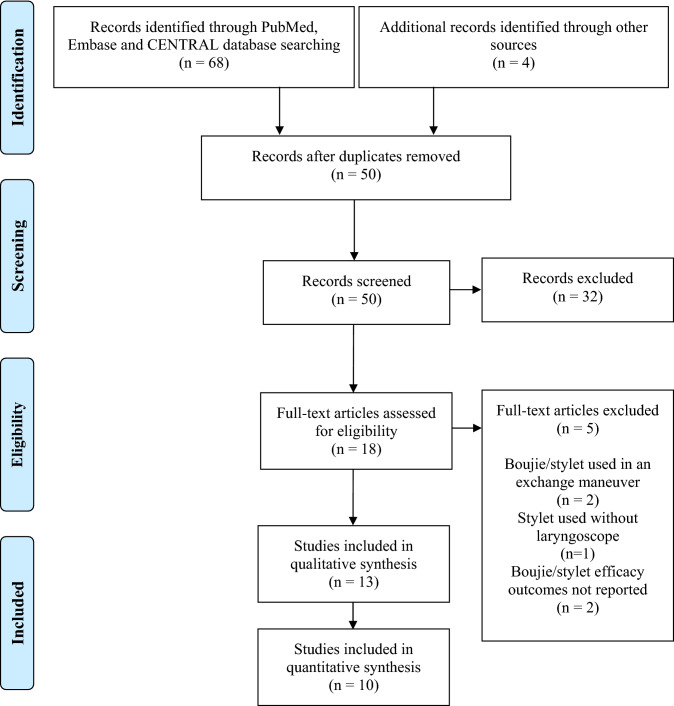
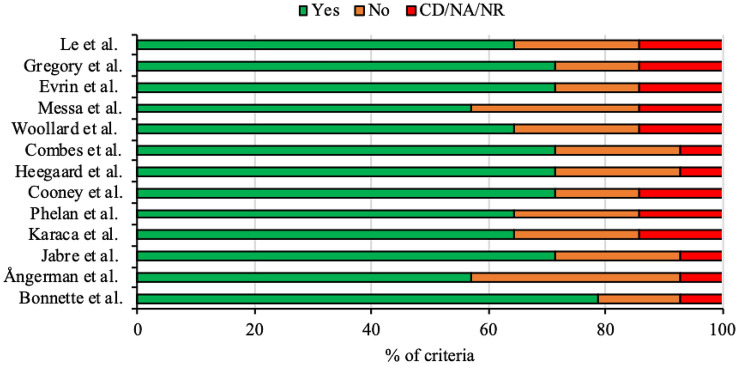
A literature search was conducted on the 2nd of March 2021 across PubMed, Embase (Ovid) and the Cochrane Central Register of Controlled Trials (CENTRAL) to identify relevant studies. Included studies had their data extracted and both a quality assessment and statistical analysis were performed.
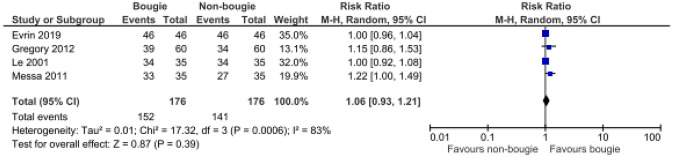
The summary estimate of prehospital studies with video technology showed a statistically significant increase in first pass ETI success in favour of bougies (RR 1.15, CI 1.10-1.21, p < 0.0001). The summary estimates of prehospital studies without video technology and simulation studies with and without video technology showed no statistical difference between methods for first pass or overall ETI success. Some of the highest success rates were recorded by devices that incorporated video technology. Stylets lead to a shorter time to ETI while bougies were easier to use. Neither device was associated with a higher rate of ETI complications than the other.
Both tracheal tube introducers and stylets function as efficacious aids to intubation in the prehospital environment. Where video technology is available, bougies could offer a statistically significant advantage in terms of first pass ETI success. Where video technology is unavailable, a combination of clinical scenario, practitioner expertise and personal preference might ultimately guide the choice of device.
气管导管引导器和管芯仍然是一些最广泛用于帮助从业者进行气管内插管(ETI)的设备。本系统评价的目的是评估在院前环境中使用气管导管引导器和管芯进行 ETI 的效果。
于 2021 年 3 月 2 日在 PubMed、Embase(Ovid)和 Cochrane 中央对照试验注册库(CENTRAL)上进行文献检索,以确定相关研究。纳入的研究提取了数据,并进行了质量评估和统计分析。
使用视频技术的院前研究的综合估计表明,在支持管芯的情况下,首次 ETI 成功率有统计学意义的增加(RR 1.15,CI 1.10-1.21,p<0.0001)。没有视频技术的院前研究以及有和没有视频技术的模拟研究的综合估计表明,首次或整体 ETI 成功率在方法之间没有统计学差异。一些成功率最高的设备都结合了视频技术。管芯可缩短 ETI 时间,而管芯更容易使用。两种设备都没有比另一种设备导致更高的 ETI 并发症发生率。
气管导管引导器和管芯在院前环境中都是有效的插管辅助工具。在有视频技术的情况下,管芯在首次 ETI 成功率方面可能具有统计学上的显著优势。在没有视频技术的情况下,临床情况、从业者专业知识和个人偏好的结合可能最终会指导设备的选择。