Department of Zoology, Faculty of Science, Kasetsart University, Bangkok 10900, Thailand.
Functional Ingredient and Food Innovation Research Group, National Center for Genetic Engineering and Biotechnology (BIOTEC), National Science and Technology Development Agency, Pathum Thani 12120, Thailand.
J Vet Med Sci. 2021 Sep 15;83(9):1425-1434. doi: 10.1292/jvms.21-0268. Epub 2021 Jul 31.
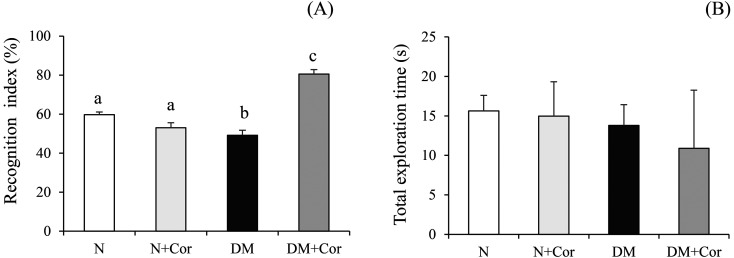
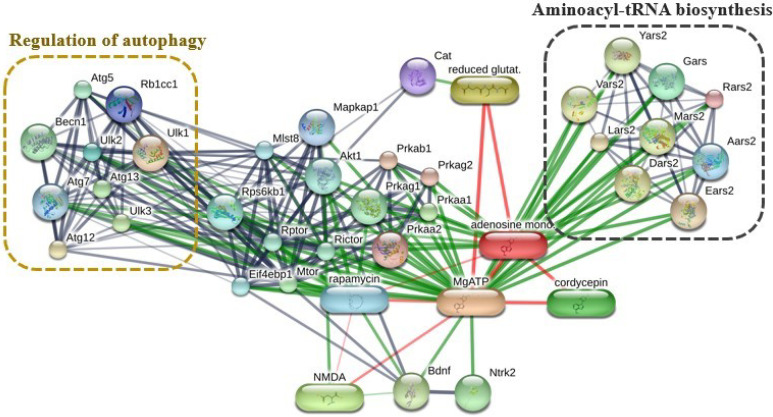
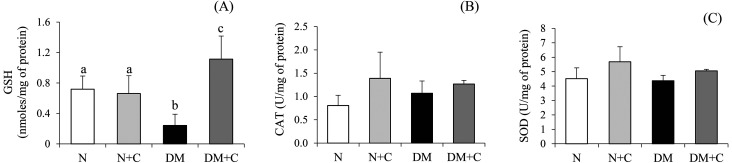
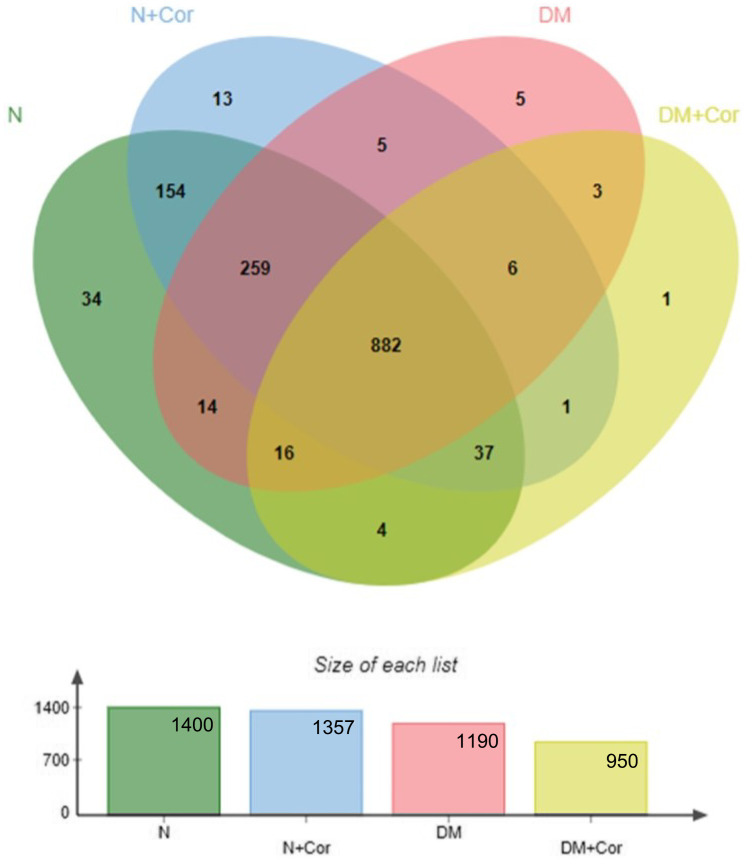
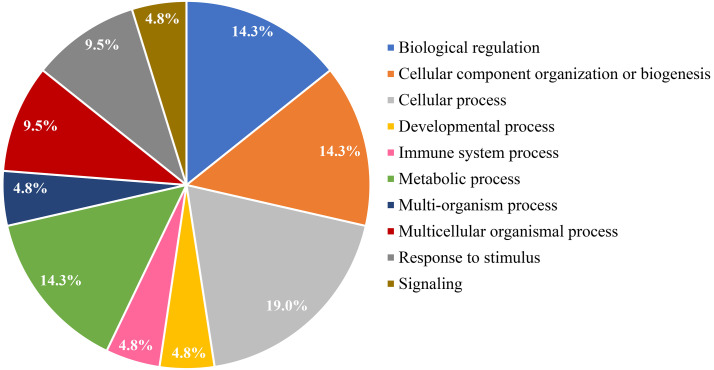
Diabetes mellitus (DM) is characterized by metabolic disorders and psychological deficits, including cognitive decline. Here, we investigated the effect of cordycepin on oxidative stress and protein expression in the brains of diabetic mice. Twenty-four mice were divided into four groups, one comprising untreated healthy mice (N); one comprising healthy mice treated with cordycepin (24 mg/kg body weight) (N+Cor); one comprising untreated DM mice; and one comprising DM mice treated with cordycepin (24 mg/kg body weight) (DM+Cor). After 14 days of treatment, cognitive behavior was assessed using the novel object recognition (NOR) test. The brain levels of oxidative stress markers (glutathione, catalase, and superoxide dismutase) were examined using the respective detection kits. Protein expression in brain tissues was assessed by liquid chromatography with tandem mass spectrometry (LC-MS/MS); the functions of the identified proteins were annotated by PANTHER, while major protein-protein interactions were assessed using STITCH. We found that cordycepin treatment significantly decreased body weight and food and water intake in the DM+Cor group compared with that in the DM group; however, no differences in blood glucose levels were found between the two groups. Cordycepin treatment significantly reversed cognitive decline in diabetic mice in the NOR test and ameliorated antioxidant defenses. Additionally, we identified ULK1 isoform 2, a protein associated with cognitive function via the activated AMPK and autophagic pathways, as being uniquely expressed in the DM+Cor group. Our findings provide novel insights into the cellular mechanisms underlying how cordycepin improves cognitive decline in diabetic mice.
糖尿病(DM)的特征是代谢紊乱和心理缺陷,包括认知能力下降。在这里,我们研究了蛹虫草素对糖尿病小鼠大脑氧化应激和蛋白质表达的影响。将 24 只小鼠分为四组,一组为未经处理的健康小鼠(N);一组为用蛹虫草素(24mg/kg 体重)处理的健康小鼠(N+Cor);一组为未经处理的 DM 小鼠;一组为用蛹虫草素(24mg/kg 体重)处理的 DM 小鼠(DM+Cor)。治疗 14 天后,使用新物体识别(NOR)测试评估认知行为。使用相应的检测试剂盒检测大脑氧化应激标志物(谷胱甘肽、过氧化氢酶和超氧化物歧化酶)的水平。通过液相色谱与串联质谱(LC-MS/MS)评估脑组织中的蛋白质表达;通过 PANTHER 注释鉴定蛋白的功能,通过 STITCH 评估主要的蛋白-蛋白相互作用。我们发现,与 DM 组相比,蛹虫草素治疗显著降低了 DM+Cor 组的体重、食物和水的摄入量,但两组的血糖水平无差异。蛹虫草素治疗显著逆转了 NOR 测试中糖尿病小鼠的认知能力下降,并改善了抗氧化防御。此外,我们发现与认知功能相关的 ULK1 同工型 2 蛋白在 DM+Cor 组中独特表达,该蛋白通过激活 AMPK 和自噬途径。我们的研究结果为蛹虫草素改善糖尿病小鼠认知能力下降的细胞机制提供了新的见解。