Courbon Guillaume, Francis Connor, Gerber Claire, Neuburg Samantha, Wang Xueyan, Lynch Emily, Isakova Tamara, Babitt Jodie L, Wolf Myles, Martin Aline, David Valentin
Division of Nephrology and Hypertension, Department of Medicine, and Center for Translational Metabolism and Health, Institute for Public Health and Medicine, Northwestern University Feinberg School of Medicine, Chicago, IL, USA.
Nephrology Division, Program in Membrane Biology, Massachusetts General Hospital, Harvard Medical School, Boston, MA, USA.
Bone Res. 2021 Aug 2;9(1):35. doi: 10.1038/s41413-021-00154-0.
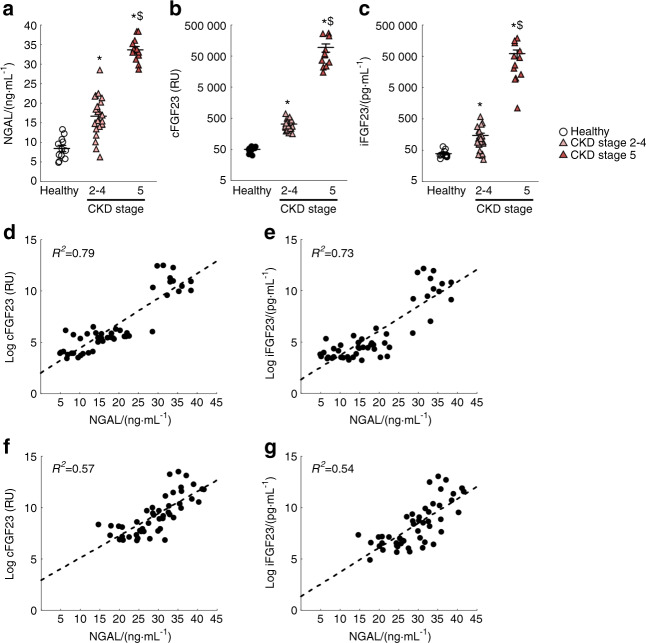
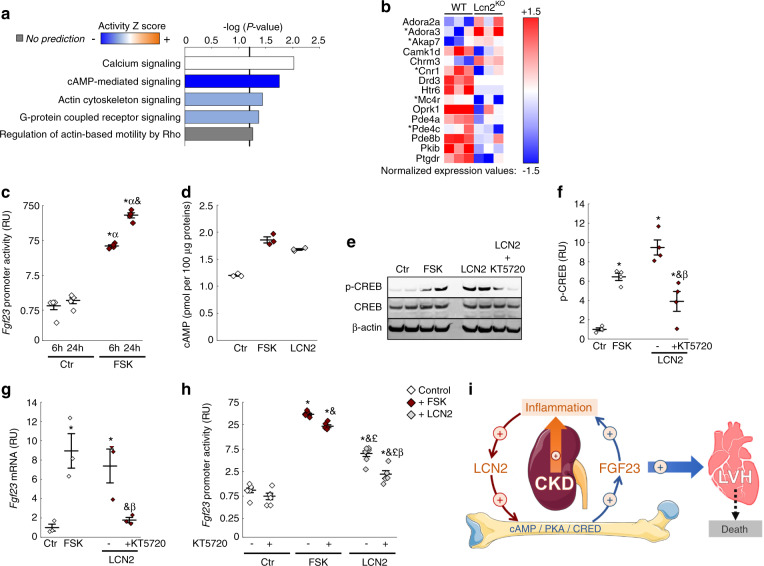
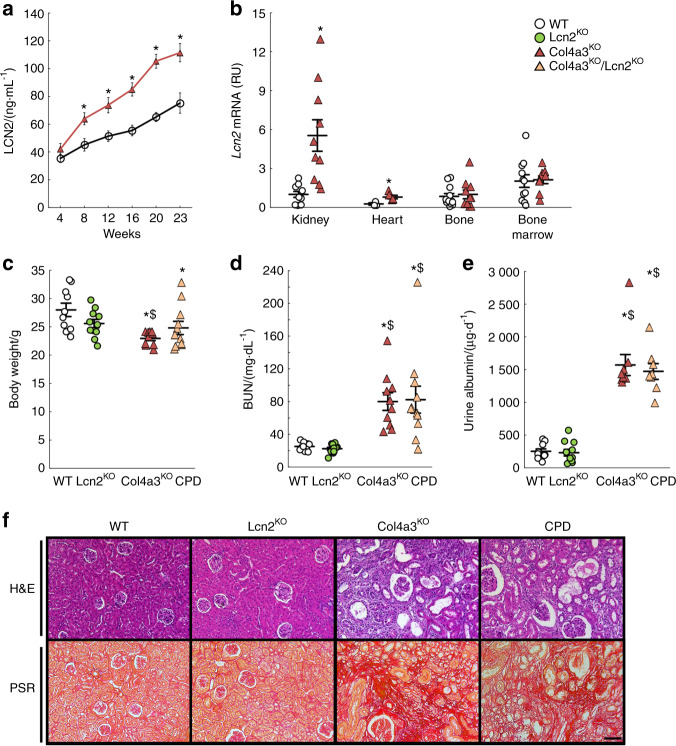
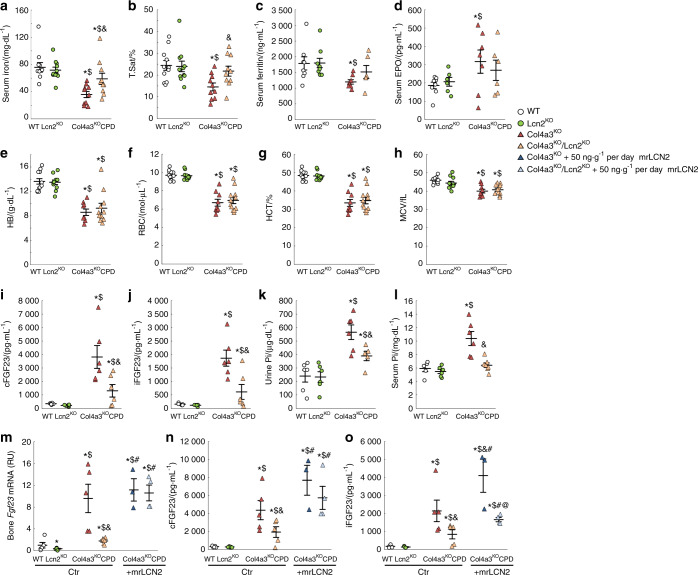
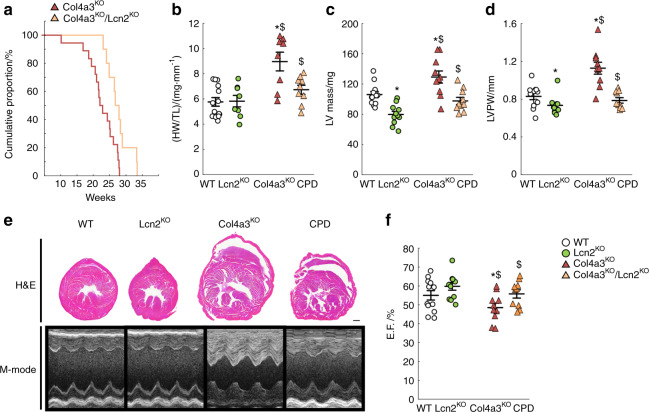
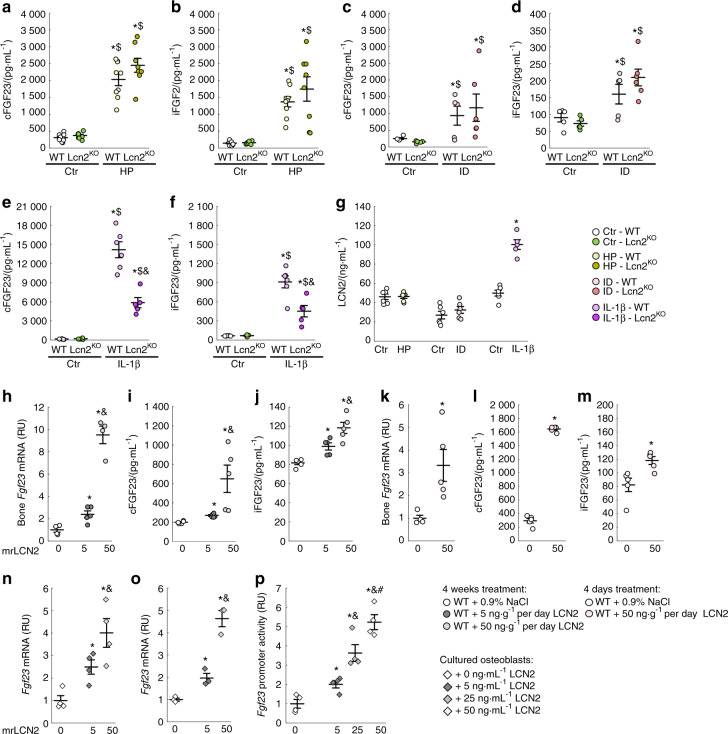
Bone-produced fibroblast growth factor 23 (FGF23) increases in response to inflammation and iron deficiency and contributes to cardiovascular mortality in chronic kidney disease (CKD). Neutrophil gelatinase-associated lipocalin (NGAL or lipocalin 2; LCN2 the murine homolog) is a pro-inflammatory and iron-shuttling molecule that is secreted in response to kidney injury and may promote CKD progression. We investigated bone FGF23 regulation by circulating LCN2. At 23 weeks, Col4a3 mice showed impaired kidney function, increased levels of kidney and serum LCN2, increased bone and serum FGF23, anemia, and left ventricular hypertrophy (LVH). Deletion of Lcn2 in CKD mice did not improve kidney function or anemia but prevented the development of LVH and improved survival in association with marked reductions in serum FGF23. Lcn2 deletion specifically prevented FGF23 elevations in response to inflammation, but not iron deficiency or phosphate, and administration of LCN2 increased serum FGF23 in healthy and CKD mice by stimulating Fgf23 transcription via activation of cAMP-mediated signaling in bone cells. These results show that kidney-produced LCN2 is an important mediator of increased FGF23 production by bone in response to inflammation and in CKD. LCN2 inhibition might represent a potential therapeutic approach to lower FGF23 and improve outcomes in CKD.
骨源性成纤维细胞生长因子23(FGF23)会随着炎症和缺铁而增加,并导致慢性肾脏病(CKD)患者的心血管死亡。中性粒细胞明胶酶相关脂质运载蛋白(NGAL或脂质运载蛋白2;小鼠同源物为LCN2)是一种促炎和铁转运分子,在肾脏损伤时分泌,可能促进CKD进展。我们研究了循环LCN2对骨FGF23的调节作用。23周时,Col4a3小鼠出现肾功能受损、肾脏和血清LCN2水平升高、骨和血清FGF23升高、贫血以及左心室肥厚(LVH)。CKD小鼠中Lcn2基因缺失并未改善肾功能或贫血,但可预防LVH的发生并提高生存率,同时血清FGF23显著降低。Lcn2基因缺失特异性地阻止了FGF23因炎症而升高,但对缺铁或磷酸盐引起的升高无影响,并且在健康小鼠和CKD小鼠中,给予LCN2可通过激活骨细胞中cAMP介导的信号传导刺激Fgf23转录,从而增加血清FGF23。这些结果表明,肾脏产生的LCN2是炎症和CKD状态下骨中FGF23产生增加的重要介质。抑制LCN2可能是降低FGF23水平并改善CKD患者预后的一种潜在治疗方法。