Fan Meng-Ke, Zhang Guo-Chuan, Chen Wei, Qi Li-Li, Xie Ming-Fang, Zhang Yue-Yao, Wang Ling, Zhang Qi
Department of Orthopedic Research Center, The Third Hospital of Hebei Medical University, Shijiazhuang, China.
Department of Orthopedic Oncology, The Third Hospital of Hebei Medical University, Shijiazhuang, China.
Front Oncol. 2021 Jul 16;11:710689. doi: 10.3389/fonc.2021.710689. eCollection 2021.
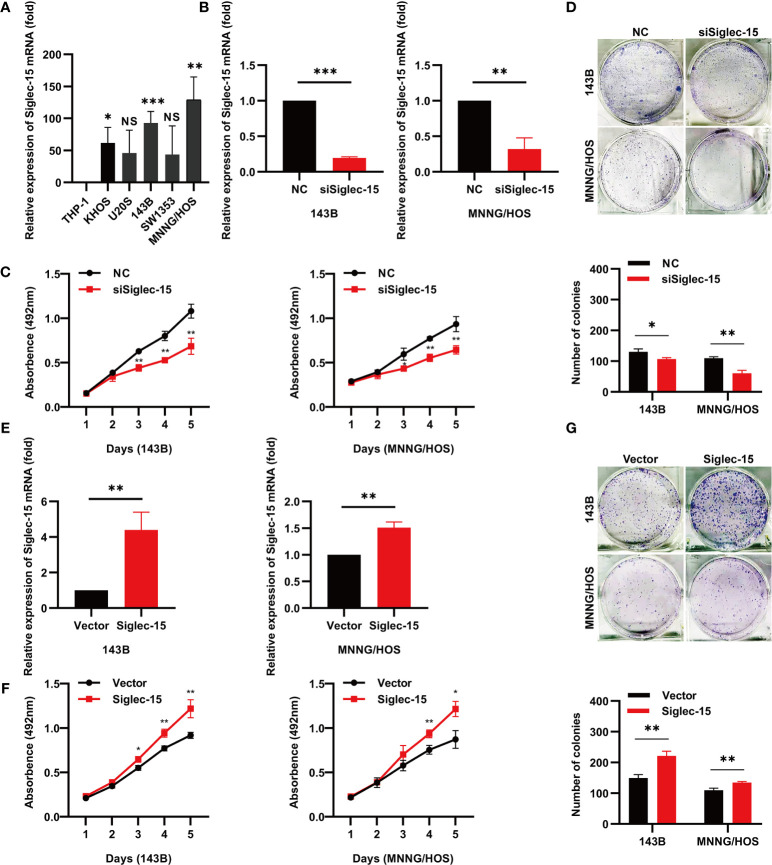
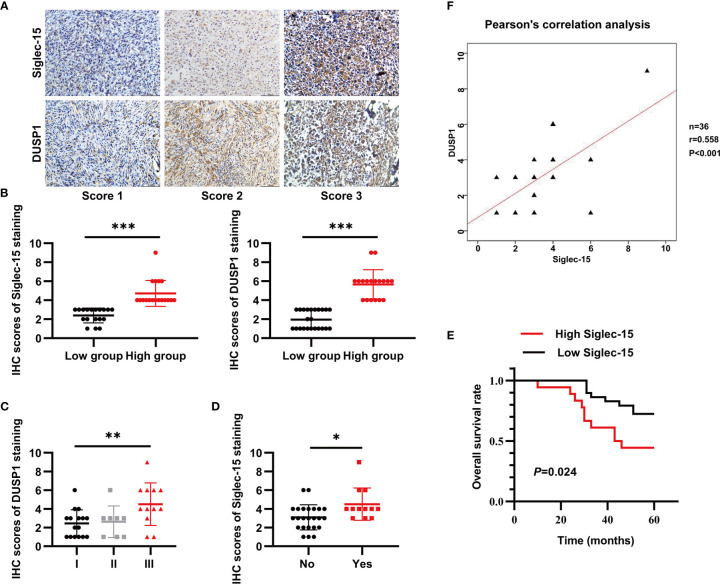
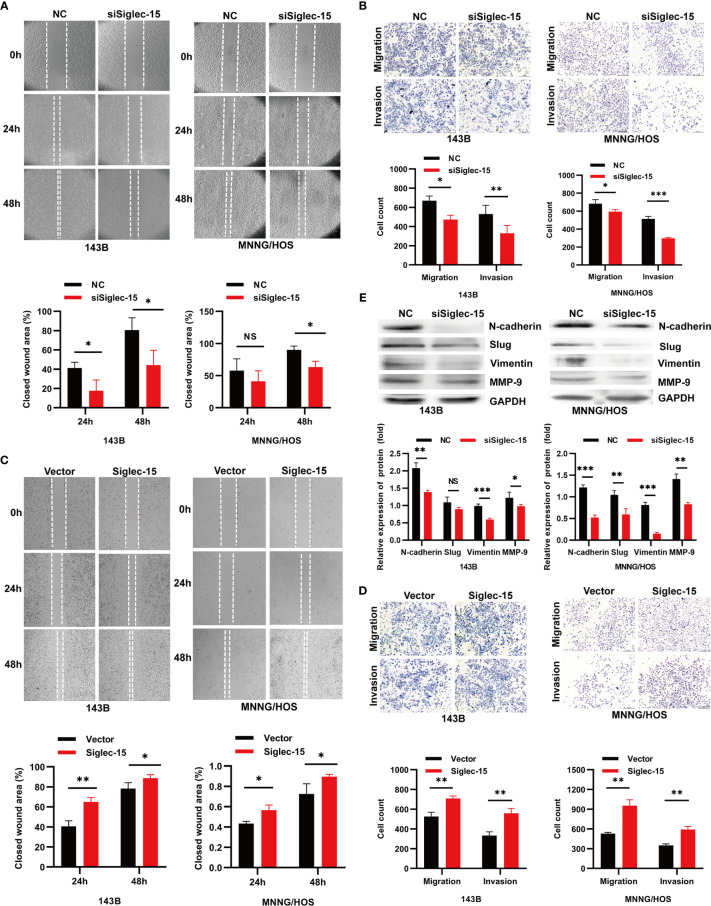
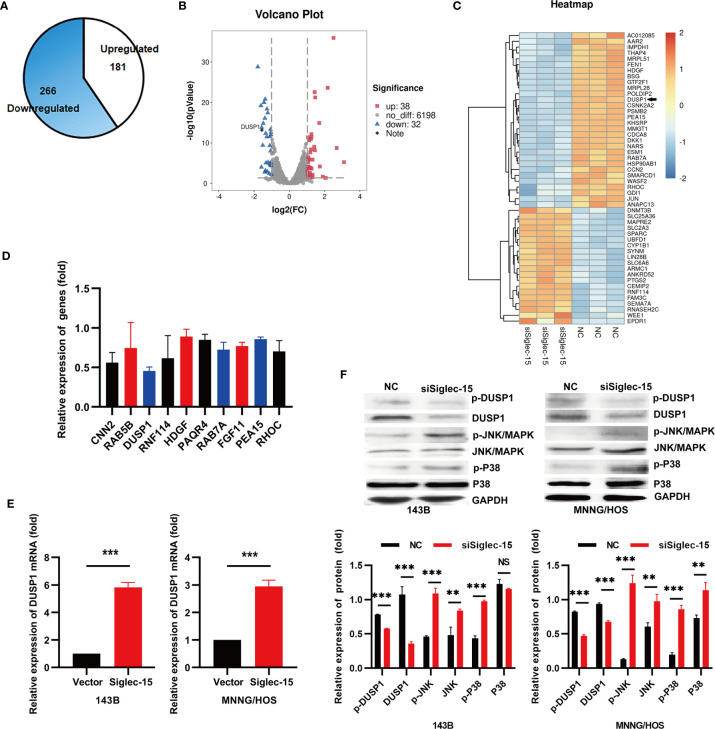
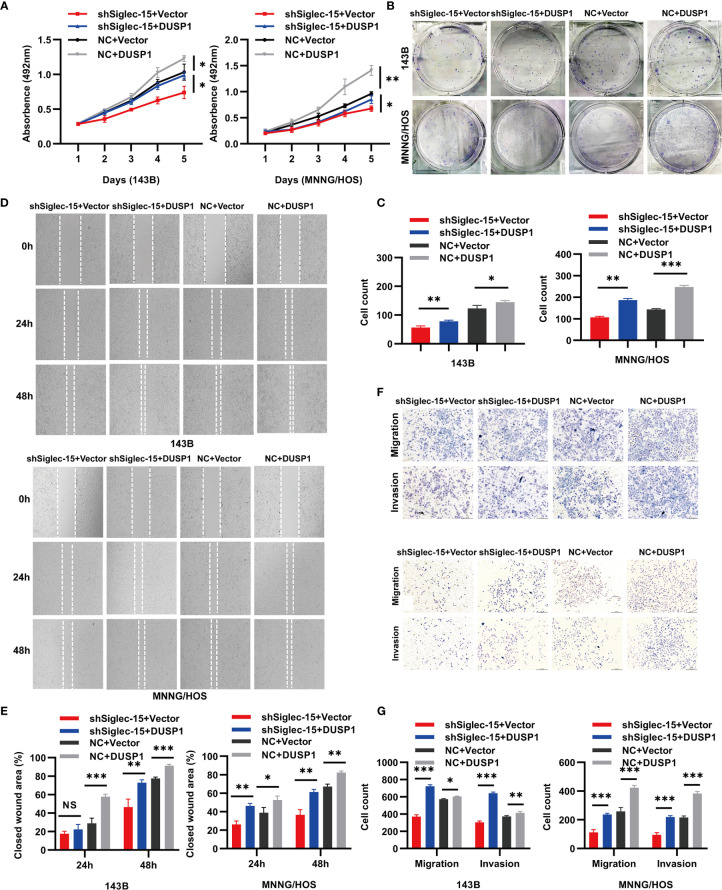
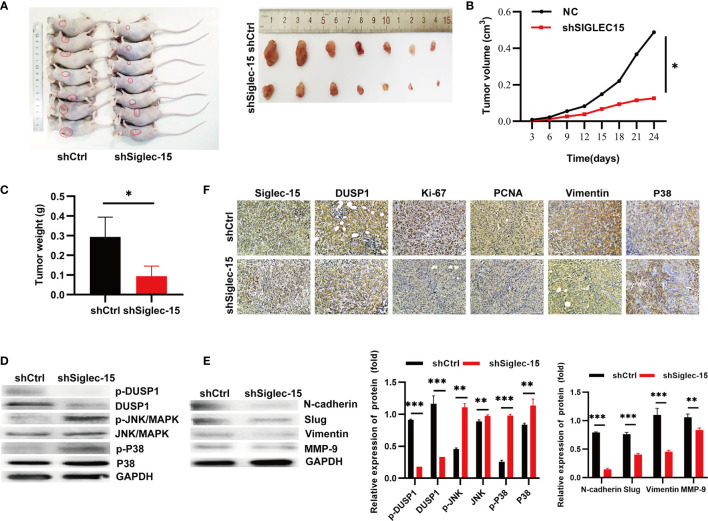
Recurrence and metastasis are important features of osteosarcoma (OS) that cause its poor prognosis. Aberrant expression of Sialic acid-binding immunoglobulin-like lectin 15 (Siglec-15) has been reported in various kinds of cancers. However, the expression and function of Siglec-15 in OS remain unclear. In cultured OS cells (143B cells and MNNG/HOS cells) and their xenograft mouse models, we found that downregulation of Siglec-15 could inhibit the proliferation, migration and invasion of by inducing epithelial-mesenchymal transition (EMT) and . Conversely, Siglec-15 overexpression promoted the growth, migration and invasion of OS cells in a significant manner. Then, we screened a number of differentially expressed genes (DEGs) between Siglec-15-knockdown group and control group by RNA-Seq assay. Among these DEGs, we found that dual-specificity phosphatase 1 (DUSP1/MKP1) was significantly downregulated after Siglec-15 silencing. We investigated the DUSP1 functions in influencing OS cells' biology, and found that the proliferation, migration and invasion of OS cells were promoted by overexpressing DUSP1 and crucially, the proliferation, migration and invasion of Siglec-15-knockdown OS cells were rescued by overexpressing DUSP1. Mechanically, we further showed that DUSP1-mediated inhibition of p38/MAPK and JNK/MAPK expression was attenuated when Siglec-15 expression was inhibited, suggesting that Siglec-15 promotes the malignant progression of OS cells by suppressing DUSP1-mediated suppression of the MAPK pathway. Moreover, we showed that both Siglec-15 and DUSP1 were highly expressed in human OS tissues by immunohistochemistry. High Siglec-15 expression was associated with OS lung metastasis, and high DUSP1 expression was associated with the high Enneking stage. Kaplan-Meier analysis indicated that high expression of Siglec-15 could predict poor prognosis of OS patients. Altogether, these results showed that Siglec-15 expression promoted OS development and progression by activating DUSP1 and might be a novel target in OS treatment.
复发和转移是骨肉瘤(OS)的重要特征,导致其预后不良。据报道,唾液酸结合免疫球蛋白样凝集素15(Siglec-15)在多种癌症中存在异常表达。然而,Siglec-15在骨肉瘤中的表达和功能仍不清楚。在培养的骨肉瘤细胞(143B细胞和MNNG/HOS细胞)及其异种移植小鼠模型中,我们发现下调Siglec-15可通过诱导上皮-间质转化(EMT)来抑制其增殖、迁移和侵袭。相反,Siglec-15过表达显著促进了骨肉瘤细胞的生长、迁移和侵袭。然后,我们通过RNA测序分析筛选了Siglec-15敲低组和对照组之间的一些差异表达基因(DEG)。在这些DEG中,我们发现双特异性磷酸酶1(DUSP1/MKP1)在Siglec-15沉默后显著下调。我们研究了DUSP1在影响骨肉瘤细胞生物学方面的功能,发现过表达DUSP1可促进骨肉瘤细胞的增殖、迁移和侵袭,至关重要的是,过表达DUSP1可挽救Siglec-15敲低的骨肉瘤细胞的增殖、迁移和侵袭。从机制上讲,我们进一步表明,当Siglec-15表达受到抑制时,DUSP1介导的p38/MAPK和JNK/MAPK表达的抑制作用减弱,这表明Siglec-15通过抑制DUSP1介导的MAPK途径抑制作用来促进骨肉瘤细胞的恶性进展。此外,我们通过免疫组织化学显示,Siglec-15和DUSP1在人骨肉瘤组织中均高表达。Siglec-15高表达与骨肉瘤肺转移相关,DUSP1高表达与Enneking分期高相关。Kaplan-Meier分析表明,Siglec-15高表达可预测骨肉瘤患者的不良预后。总之,这些结果表明,Siglec-15表达通过激活DUSP1促进骨肉瘤的发展和进展,可能是骨肉瘤治疗的一个新靶点。