Choudhury Shubhranshu Shekhar, Jena Subhrakant, Sahoo Dipak Kumar, Shekh Shamasoddin, Kar Rajiv K, Dhakad Ambuj, Gowd Konkallu Hanumae, Biswal Himansu S
School of Chemical Sciences, National Institute of Science Education and Research (NISER), PO-Bhimpur-Padanpur, Via-Jatni, Khurda, 752050 Bhubaneswar, India.
Homi Bhabha National Institute, Training School Complex, Anushakti Nagar, Mumbai 400094, India.
ACS Omega. 2021 Jul 12;6(29):19304-19313. doi: 10.1021/acsomega.1c02798. eCollection 2021 Jul 27.
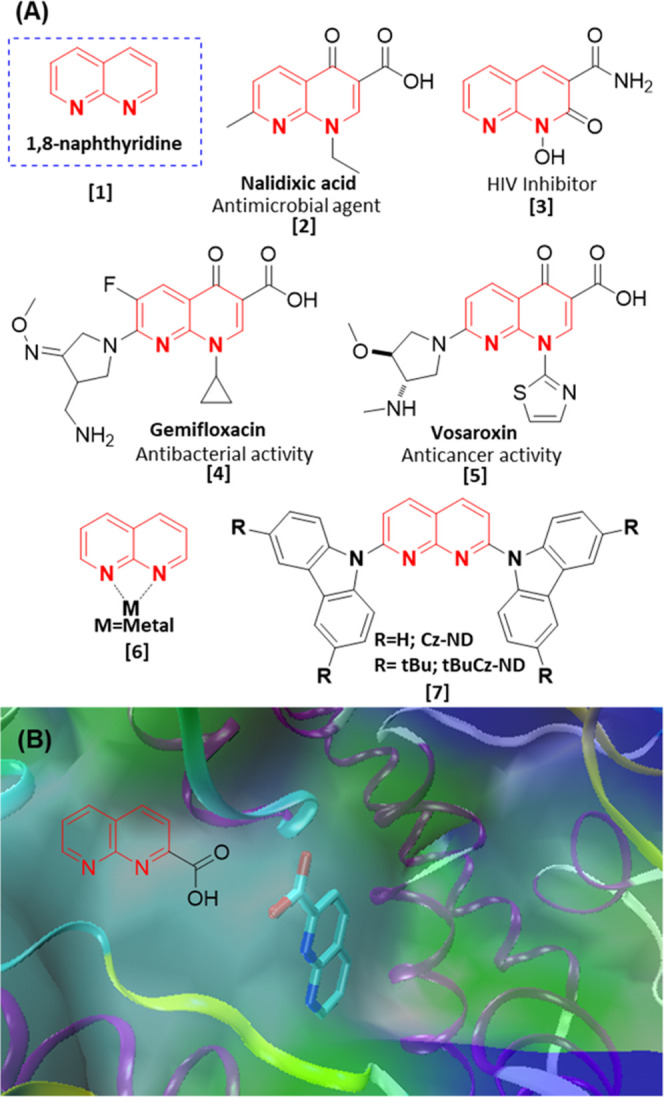
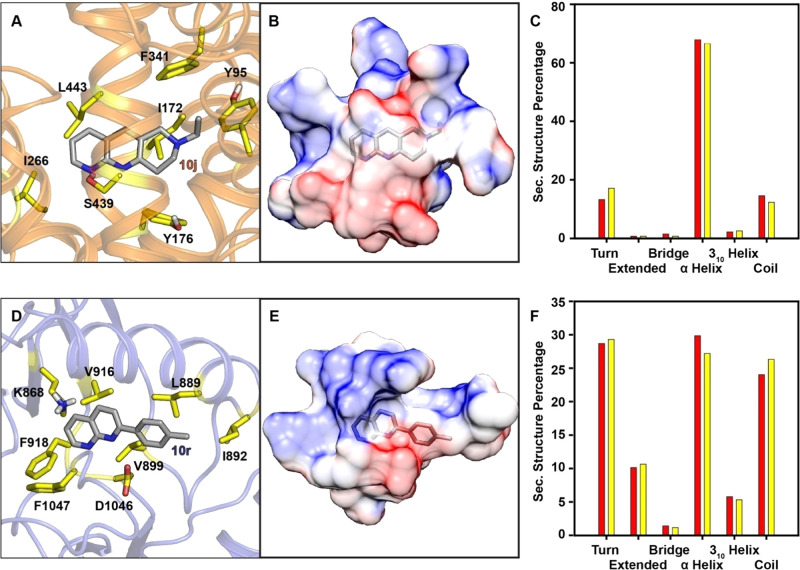
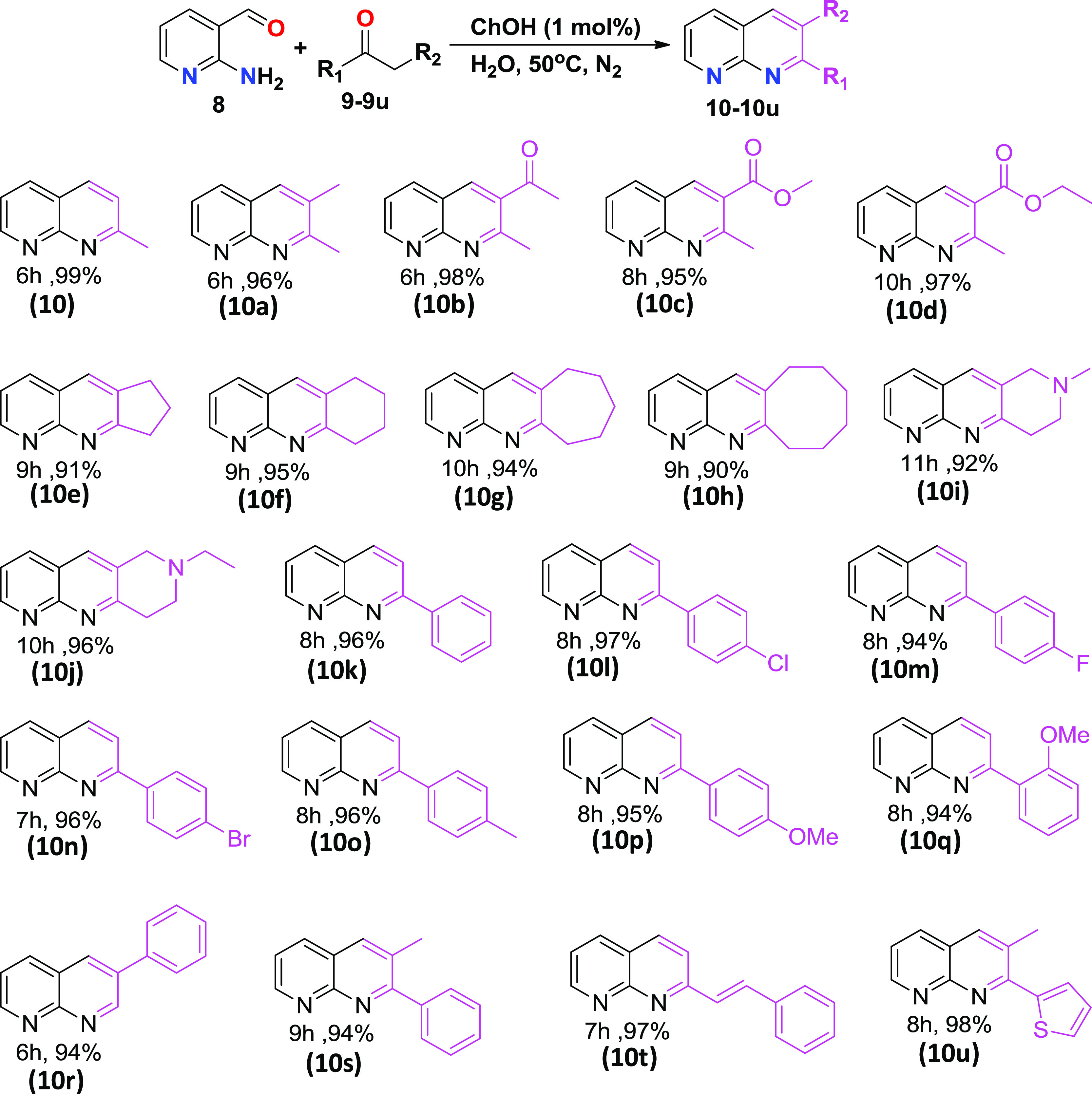
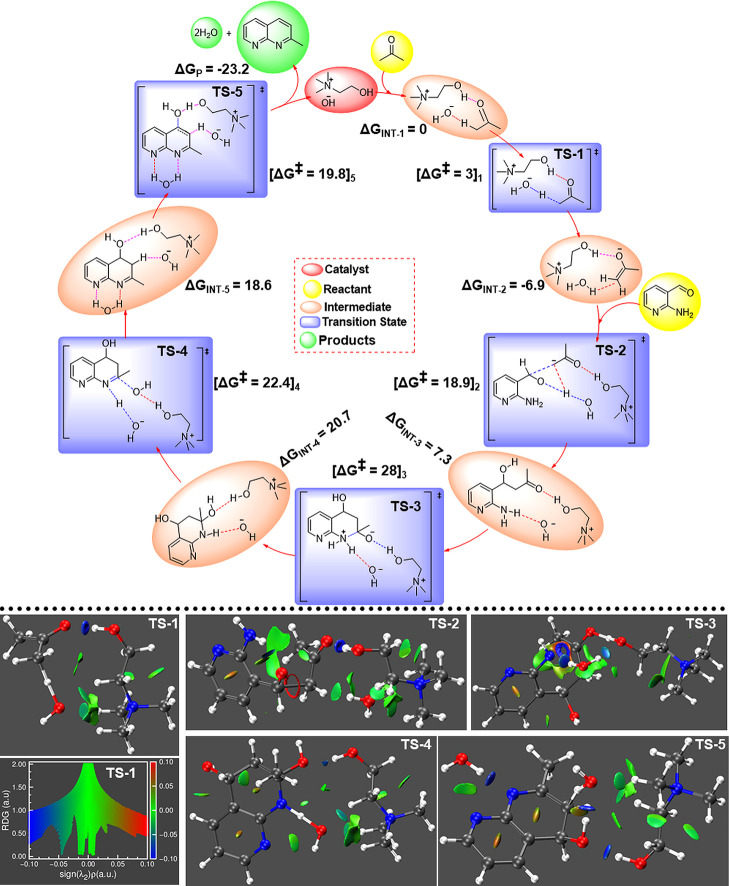
The products of the Friedlander reaction, i.e., 1,8-naphthyridines, have far-reaching impacts in materials science, chemical biology, and medicine. The reported synthetic methodologies elegantly orchestrate the diverse synthetic routes of naphthyridines but require harsh reaction conditions, organic solvents, and expensive metal catalysts. Here, we introduce gram-scale synthesis of 1,8-naphthyridines in water using an inexpensive and biocompatible ionic liquid (IL) as a catalyst. This is the first-ever report on the synthesis of naphthyridines in water. This is a one-step reaction, and the product separation is relatively easy. The choline hydroxide (ChOH) is used as a metal-free, nontoxic, and water-soluble catalyst. In comparison to other catalysts reported in the literature, ChOH has the advantage of forming an additional hydrogen bond with the reactants, which is the vital step for the reaction to happen in water. Density functional theory (DFT) and noncovalent interaction (NCI) plot index analysis provide the plausible reaction mechanism for the catalytic cycle and confirm that hydrogen bonds with the IL catalyst are pivotal to facilitate the reaction. Molecular docking and molecular dynamics (MD) simulations are also performed to demonstrate the potentialities of the newly synthesized products as drugs. Through MD simulations, it was established that the tetrahydropyrido derivative of naphthyridine () binds to the active sites of the ts3 human serotonin transporter (hSERT) (PDB ID: 6AWO) without perturbing the secondary structure, suggesting that can be a potential preclinical drug candidate for hSERT inhibition and depression treatment.
弗里德兰德反应的产物,即1,8-萘啶,在材料科学、化学生物学和医学领域有着深远的影响。已报道的合成方法巧妙地设计了萘啶的多种合成路线,但需要苛刻的反应条件、有机溶剂和昂贵的金属催化剂。在此,我们介绍了以廉价且具有生物相容性的离子液体(IL)为催化剂,在水中进行克级规模的1,8-萘啶合成。这是有史以来首次关于在水中合成萘啶的报道。这是一个一步反应,产物分离相对容易。氢氧化胆碱(ChOH)用作无金属、无毒且水溶性的催化剂。与文献中报道的其他催化剂相比,ChOH具有与反应物形成额外氢键的优势,这是反应在水中发生的关键步骤。密度泛函理论(DFT)和非共价相互作用(NCI)图谱指数分析为催化循环提供了合理的反应机制,并证实与离子液体催化剂形成的氢键对于促进反应至关重要。还进行了分子对接和分子动力学(MD)模拟,以证明新合成产物作为药物的潜力。通过MD模拟确定,萘啶的四氢吡啶衍生物()与ts3人血清素转运蛋白(hSERT)(PDB ID:6AWO)的活性位点结合,而不会干扰二级结构,这表明可以作为hSERT抑制和抑郁症治疗的潜在临床前药物候选物。