Department of Otorhinolaryngology, Kansai Medical Hospital, Osaka, Toyonaka, Japan.
Department of Otorhinolaryngology-Head and Neck Surgery, Osaka University Graduate School of Medicine, Suita, Osaka, Japan.
J Cachexia Sarcopenia Muscle. 2021 Oct;12(5):1122-1135. doi: 10.1002/jcsm.12755. Epub 2021 Aug 1.
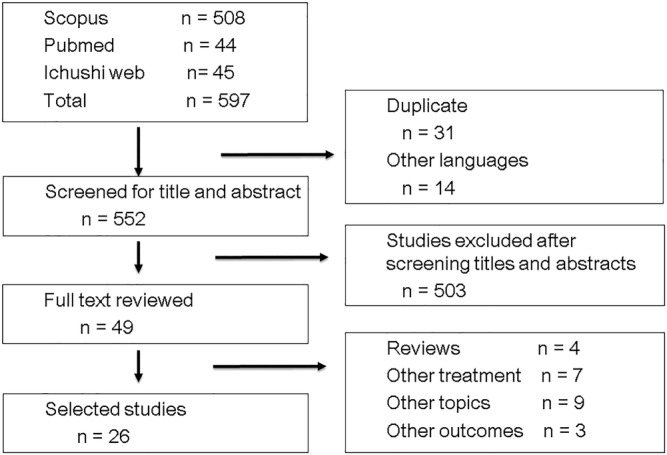
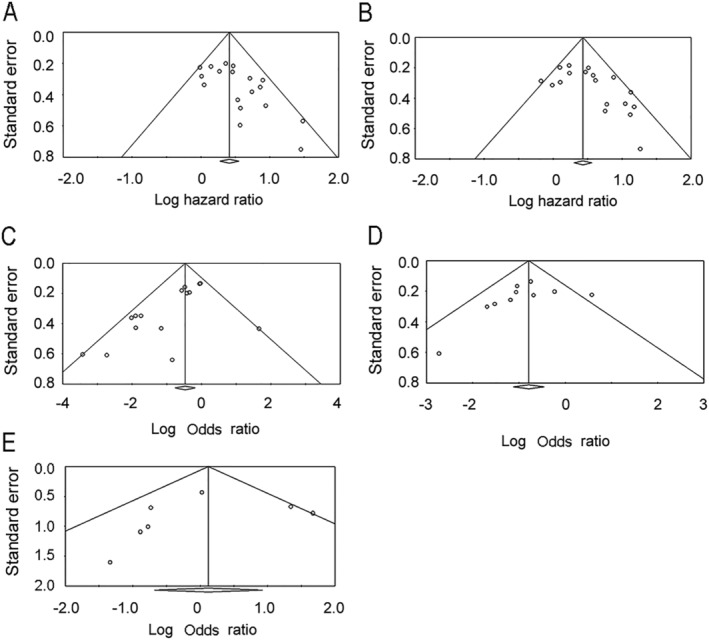
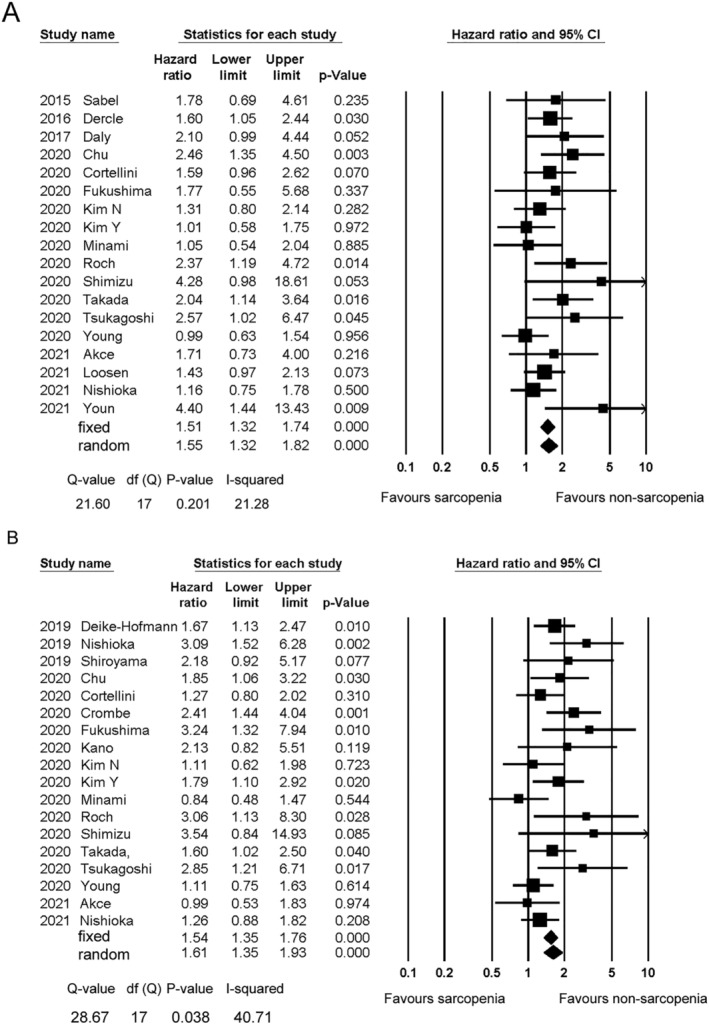
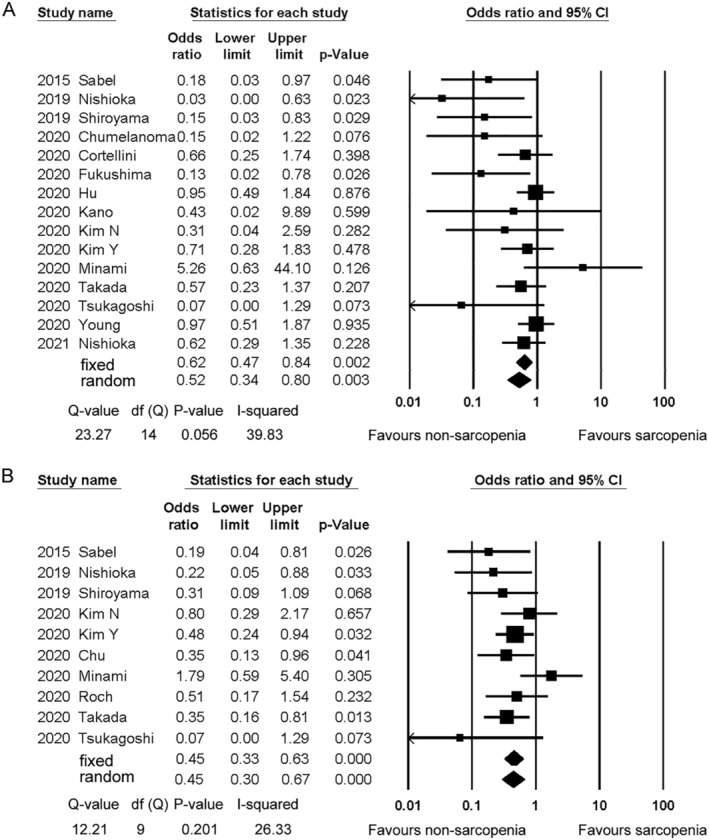
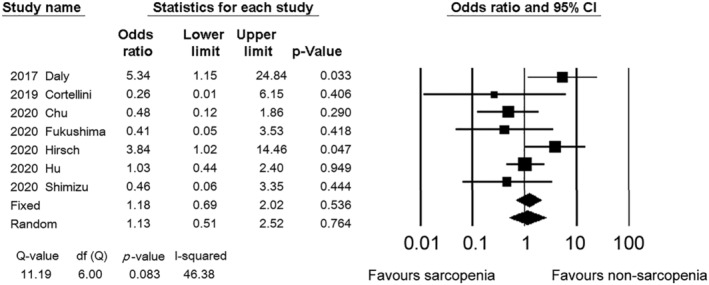
Sarcopenia, which is characterized by a decrease in muscle quantity or quality, is commonly observed in patients with cancer. Recent research has reported contradictory results on the association between sarcopenia and the efficacy of immune checkpoint inhibitors (ICIs). We conducted a systematic review and meta-analysis to investigate this discrepancy. We systematically searched three electronic databases to identify articles reporting on the association between sarcopenia and treatment outcomes in patients with solid cancers who received ICIs. The outcomes assessed were hazard ratios (HRs) for overall survival (OS) and progression-free survival (PFS), and odds ratios (ORs) for objective response rate (ORR), disease control rate (DCR), and toxicity. Pooled estimates and their 95% confidence intervals (CIs) were calculated. A total of 2501 patients from 26 studies were analysed. Sarcopenia was observed in 44.7% (95% CI: 38.2-51.3) of the patients and was significantly associated with poor survival (HR = 1.55, 95% CI = 1.32-1.82 for OS and HR = 1.61, 95% CI = 1.35 to 1.93 for PFS). The HRs (95% CIs) for OS according to the diagnostic measures used were 1.97 (0.88-4.41) for psoas muscle index (PMI), 1.41 (0.87-2.28) for skeletal muscle density (SMD), and 1.43 (1.23-1.67) for skeletal mass index (SMI). The HRs (95% CIs) for PFS were 1.86 (1.08-3.21) for PMI, 1.27 (0.94-1.71) for SMD, and 1.38 (1.11-1.71) for SMI. Poor radiological response to ICI therapy was observed in patients with sarcopenia (OR = 0.52, 95% CI = 0.34-0.80 for ORR and OR = 0.45, 95% CI = 0.30-0.67 for DCR). The ORs for ORR (95% CIs) were 0.56 (0.15-2.05) for PMI and 0.78 (0.56-1.09) for SMI. The oncologic outcomes associated with melanoma and non-small cell lung cancer (NSCLC) were comparable with those observed overall (HR for OS = 2.02, 95% CI = 1.26-3.24 for melanoma and HR for OS = 1.61, 95% CI = 1.19-2.18 for NSCLC). In contrast, the occurrence of severe toxicity was not associated with sarcopenia (OR = 1.13, 95% CI = 0.51-2.52). Poor survival and poor response in patients with sarcopenia indicate a negative association between sarcopenia and efficacy of ICIs. Sarcopenia's predictive ability is consistent across various tumour types. For the selection of patients who may respond to ICIs pre-therapeutically, the presence of sarcopenia should be assessed in clinical practice.
肌肉减少症是一种以肌肉数量或质量下降为特征的疾病,在癌症患者中较为常见。最近的研究报告称,肌肉减少症与免疫检查点抑制剂(ICIs)的疗效之间存在矛盾的结果。我们进行了一项系统综述和荟萃分析,以调查这种差异。我们系统地检索了三个电子数据库,以确定报告固体癌症患者接受 ICIs 治疗时肌肉减少症与治疗结果之间关联的文章。评估的结果是总生存期(OS)和无进展生存期(PFS)的风险比(HRs),以及客观缓解率(ORR)、疾病控制率(DCR)和毒性的比值比(ORs)。计算了汇总估计值及其 95%置信区间(CIs)。对来自 26 项研究的 2501 名患者进行了分析。在患者中观察到 44.7%(95%CI:38.2-51.3)的患者存在肌肉减少症,并且与不良生存显著相关(OS 的 HR=1.55,95%CI=1.32-1.82;PFS 的 HR=1.61,95%CI=1.35-1.93)。根据使用的诊断措施,OS 的 HR(95%CI)分别为:腹直肌指数(PMI)为 1.97(0.88-4.41),骨骼肌密度(SMD)为 1.41(0.87-2.28),骨骼肌质量指数(SMI)为 1.43(1.23-1.67)。PFS 的 HR(95%CI)分别为:PMI 为 1.86(1.08-3.21),SMD 为 1.27(0.94-1.71),SMI 为 1.38(1.11-1.71)。在存在肌肉减少症的患者中观察到对 ICI 治疗的不良影像学反应(OR=0.52,95%CI=0.34-0.80 用于 ORR,OR=0.45,95%CI=0.30-0.67 用于 DCR)。ORR 的 OR(95%CI)分别为:PMI 为 0.56(0.15-2.05),SMI 为 0.78(0.56-1.09)。与黑色素瘤和非小细胞肺癌(NSCLC)相关的肿瘤学结局与总体观察到的结局相当(黑色素瘤的 OS HR=2.02,95%CI=1.26-3.24;NSCLC 的 OS HR=1.61,95%CI=1.19-2.18)。相比之下,严重毒性的发生与肌肉减少症无关(OR=1.13,95%CI=0.51-2.52)。肌肉减少症患者的不良生存和不良反应表明肌肉减少症与 ICIs 的疗效之间存在负相关。肌肉减少症的预测能力在各种肿瘤类型中是一致的。在临床上,为了在治疗前选择可能对 ICIs 有反应的患者,应评估肌肉减少症的存在。