Departamento de Biología de Sistemas, Facultad de Medicina y Ciencias de la Salud, Universidad de Alcalá, Alcalá de Henares, Madrid, Spain.
Unidad de Investigación de la Fundación para la Investigación Biomédica del Hospital Universitario Príncipe de Asturias, Alcalá de Henares, Madrid, Spain.
J Cachexia Sarcopenia Muscle. 2021 Oct;12(5):1266-1279. doi: 10.1002/jcsm.12750. Epub 2021 Aug 1.
Hyperphosphatemia has been related to the development of sarcopenia in aging mice. We describe the intracellular mechanisms involved in the impairment of the myogenic differentiation promoted by hyperphosphatemia and analyse these mechanisms in the muscle from older mice.
C C cells were grown in 2% horse serum in order to promote myogenic differentiation, in the presence or absence of 10 mM beta-glycerophosphate (BGP) for 7 days. Troponin T, paired box 7 (Pax-7), myogenic factor 5 (Myf5), myogenic differentiation 1 (MyoD), myogenin (MyoG), myocyte enhancer factor 2 (MEF2C), P300/CBP-associated factor (PCAF), histone deacetylase 1 (HDAC1), fibronectin, vimentin, and collagen I were analysed at 48, 72, and 168 h, by western blotting or by immunofluorescence staining visualized by confocal microscopy. Studies in mice were performed in 5- and 24-month-old C57BL6 mice. Three months before sacrifice, 21-month-old mice were fed with a standard diet or a low phosphate diet, containing 0.6% or 0.2% phosphate, respectively. Serum phosphate concentration was assessed by a colorimetric method and forelimb strength by a grip test. Fibrosis was observed in the tibialis anterior muscle by Sirius Red staining. In gastrocnemius muscle, MyoG, MEF2C, and fibronectin expressions were analysed by western blotting.
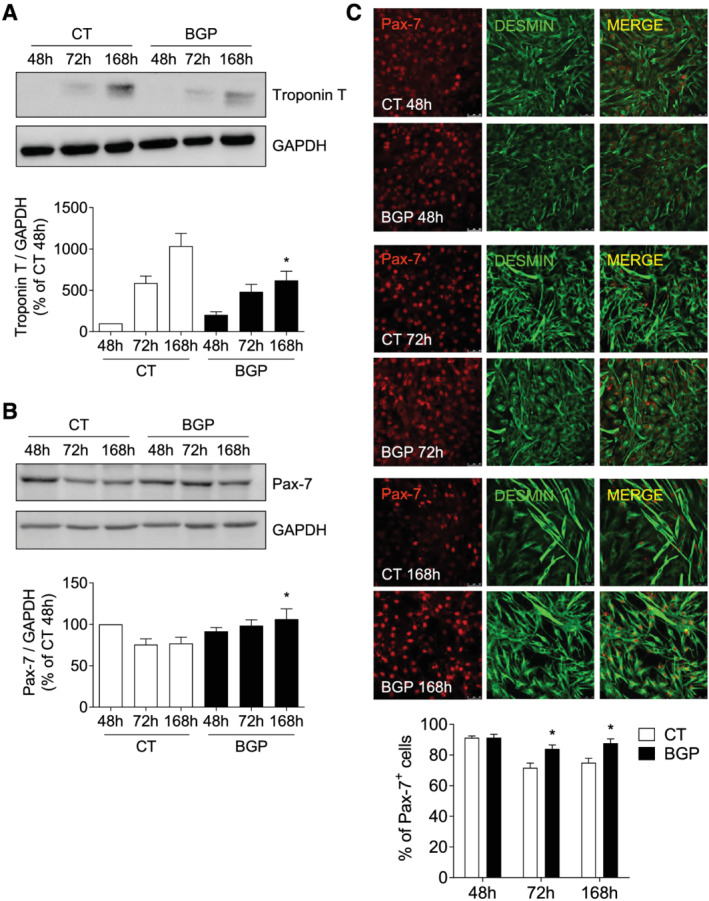
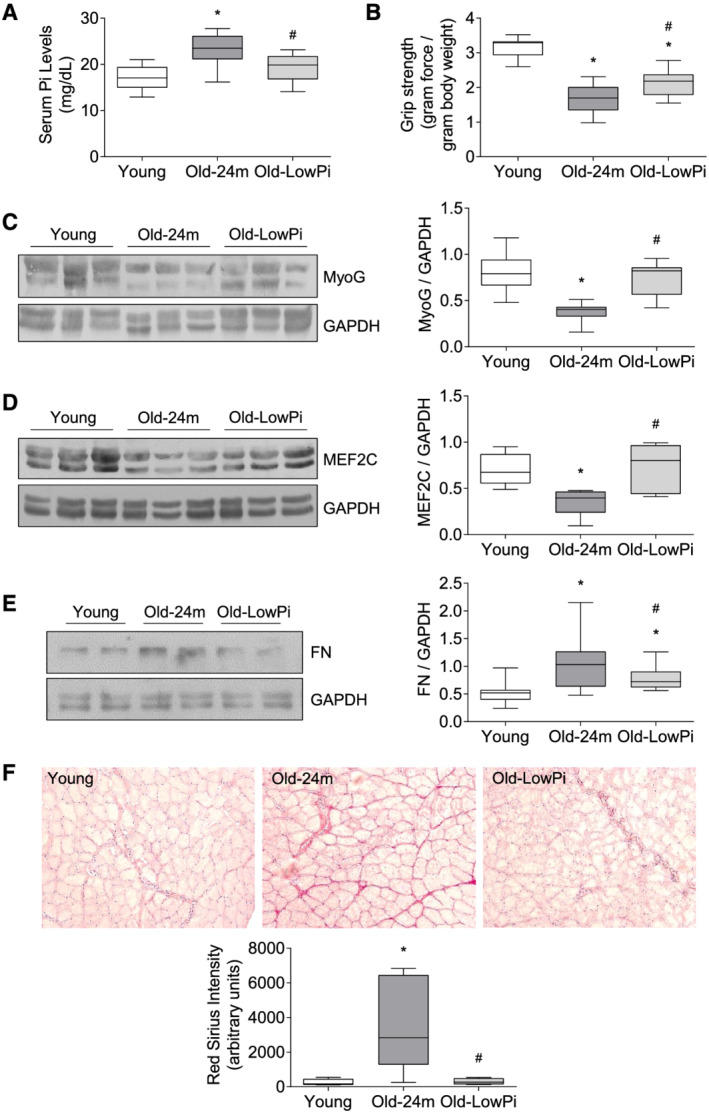
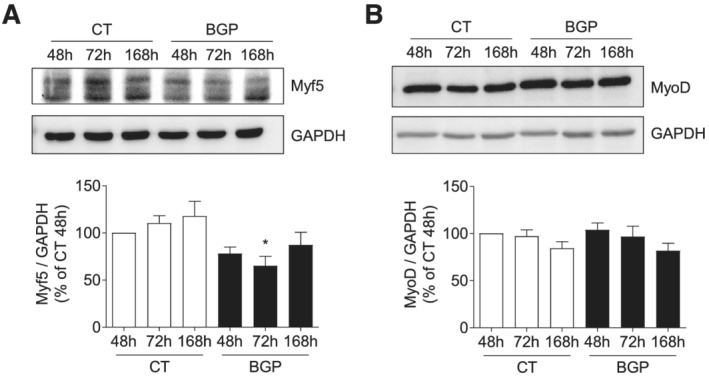
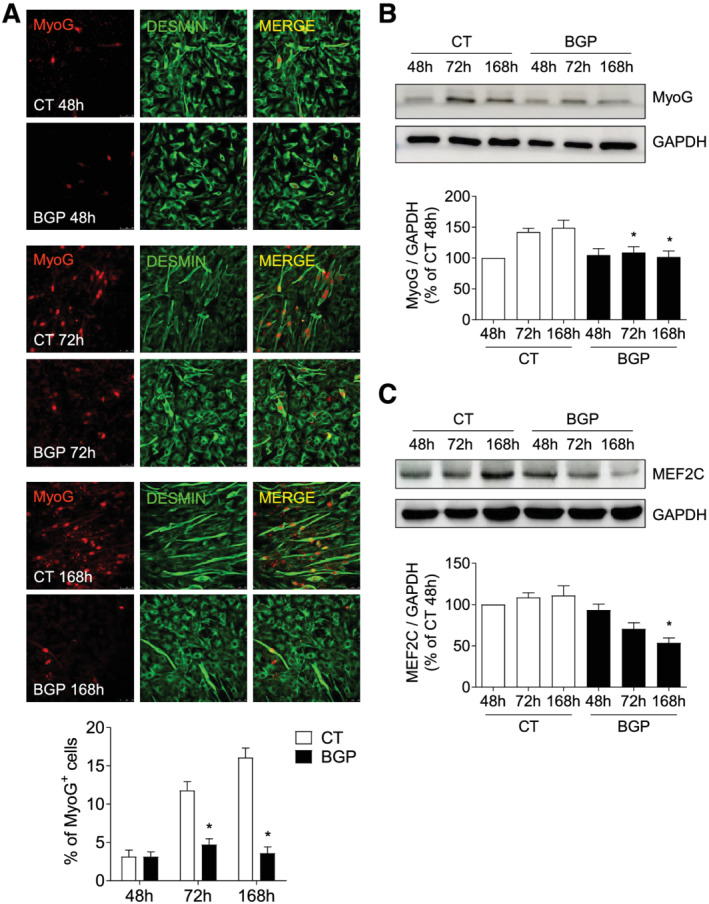
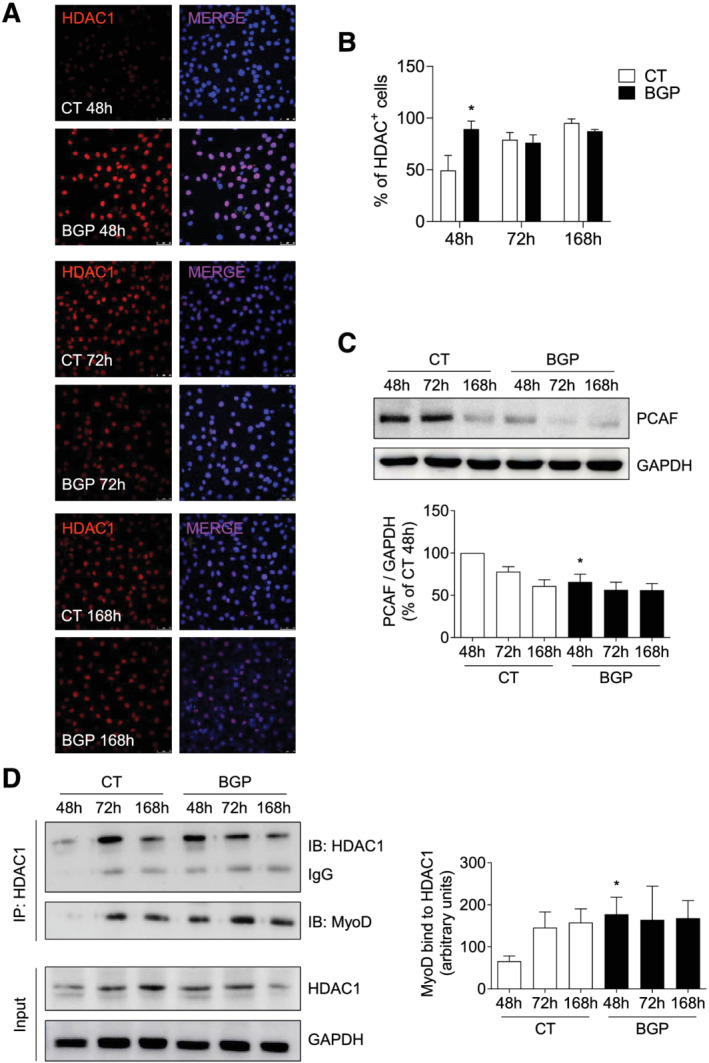
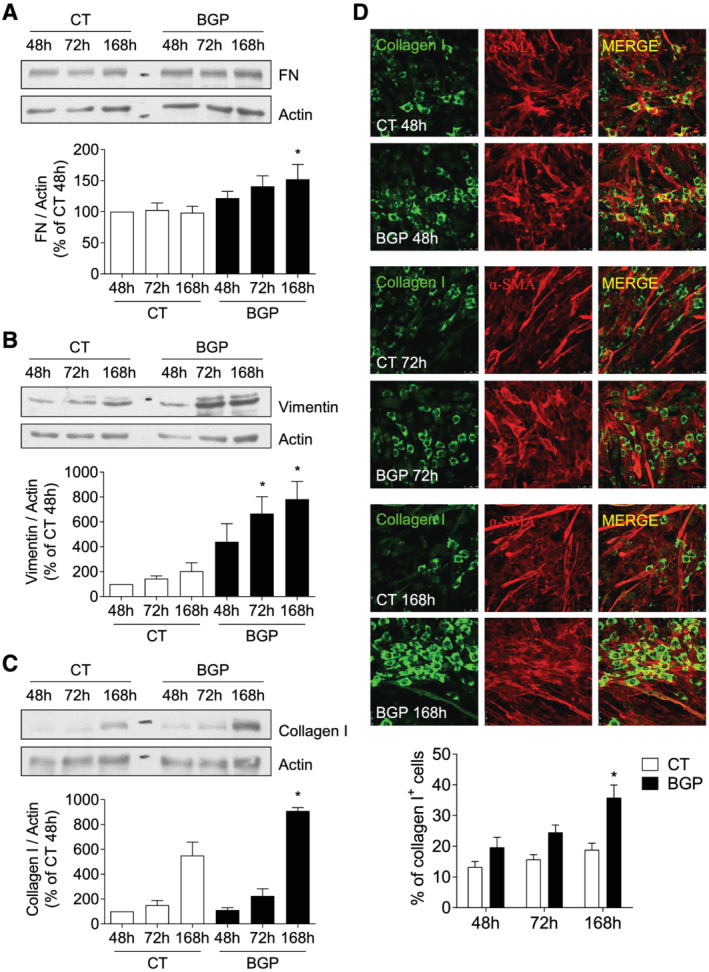
Cells differentiated in the presence of BGP showed near five times less expression of troponin T and kept higher levels of Pax-7 than control cells indicating a reduced myogenic differentiation. BGP reduced Myf5 about 50% and diminished MyoD transcriptional activity by increasing the expression of HDAC1 and reducing the expression of PCAF. Consequently, BGP reduced to 50% the expression of MyoG and MEF2C. A significant increase in the expression of fibrosis markers as collagen I, vimentin, and fibronectin was found in cells treated with BGP. In mice, serum phosphate (17.24 ± 0.77 mg/dL young; 23.23 ± 0.81 mg/dL old; 19.09 ± 0.75 mg/dL old with low phosphate diet) correlates negatively (r = -0.515, P = 0.001) with the muscular strength (3.13 ± 0.07 gf/g young; 1.70 ± 0.12 gf/g old; 2.10 ± 0.09 gf/g old with low phosphate diet) and with the expression of MyoG (r = -0.535, P = 0.007) and positively with the expression of fibronectin (r = 0.503, P = 0.001) in gastrocnemius muscle. The tibialis anterior muscle from old mice showed muscular fibrosis. Older mice fed with a low phosphate diet showed improved muscular parameters relative to control mice of similar age.
Hyperphosphatemia impairs myogenic differentiation, by inhibiting the transcriptional activity of MyoD, and enhances the expression of fibrotic genes in cultured myoblasts. Experiments carried out in older mice demonstrate a close relationship between age-related hyperphosphatemia and the decrease in the expression of myogenic factors and the increase in factors related to muscle fibrosis.
高磷血症与衰老小鼠的肌肉减少症的发展有关。我们描述了参与高磷血症促进的成肌分化受损的细胞内机制,并分析了这些机制在老年小鼠肌肉中的作用。
C2C 细胞在 2%马血清中生长,以促进成肌分化,在存在或不存在 10 mM β-甘油磷酸(BGP)的情况下培养 7 天。在 48、72 和 168 小时时,通过 Western 印迹或通过共聚焦显微镜观察的免疫荧光染色分析肌钙蛋白 T、配对盒 7(Pax-7)、肌生成因子 5(Myf5)、肌生成素 1(MyoD)、肌细胞增强因子 2(MEF2C)、P300/CBP 相关因子(PCAF)、组蛋白去乙酰化酶 1(HDAC1)、纤连蛋白、波形蛋白和胶原 I。在 5 月龄和 24 月龄的 C57BL6 小鼠中进行了小鼠研究。在处死前 3 个月,21 月龄的小鼠分别喂食标准饮食或低磷饮食,分别含有 0.6%或 0.2%的磷。通过比色法测定血清磷酸盐浓度,通过握力试验测定前肢力量。通过天狼猩红染色观察比目鱼肌的纤维化。通过 Western 印迹分析腓肠肌中的 MyoG、MEF2C 和纤连蛋白表达。
在 BGP 存在下分化的细胞显示出近五倍的肌钙蛋白 T 表达减少,并且保持比对照细胞更高水平的 Pax-7,表明成肌分化减少。BGP 使 Myf5 减少约 50%,并通过增加 HDAC1 的表达和减少 PCAF 的表达来降低 MyoD 转录活性。因此,BGP 将 MyoG 和 MEF2C 的表达减少到 50%。在 BGP 处理的细胞中发现纤维化标志物如胶原蛋白 I、波形蛋白和纤连蛋白的表达显著增加。在小鼠中,血清磷酸盐(17.24 ± 0.77 mg/dL 年轻;23.23 ± 0.81 mg/dL 年老;19.09 ± 0.75 mg/dL 年老且低磷饮食)与肌肉强度呈负相关(r = -0.515,P = 0.001)(3.13 ± 0.07 gf/g 年轻;1.70 ± 0.12 gf/g 年老;2.10 ± 0.09 gf/g 年老且低磷饮食)和与 MyoG 的表达呈负相关(r = -0.535,P = 0.007),与纤连蛋白的表达呈正相关(r = 0.503,P = 0.001)。年老小鼠的比目鱼肌出现肌肉纤维化。喂食低磷饮食的老年小鼠与同龄对照小鼠相比,肌肉参数得到改善。
高磷血症通过抑制 MyoD 的转录活性,损害成肌分化,并增强培养的成肌细胞中纤维化基因的表达。在老年小鼠中进行的实验表明,与年龄相关的高磷血症与成肌因子表达减少和与肌肉纤维化相关的因子表达增加之间存在密切关系。