Department of Thoracic Surgery, University Hospital Zurich, Zurich, Switzerland.
PLoS One. 2021 Aug 2;16(8):e0255155. doi: 10.1371/journal.pone.0255155. eCollection 2021.
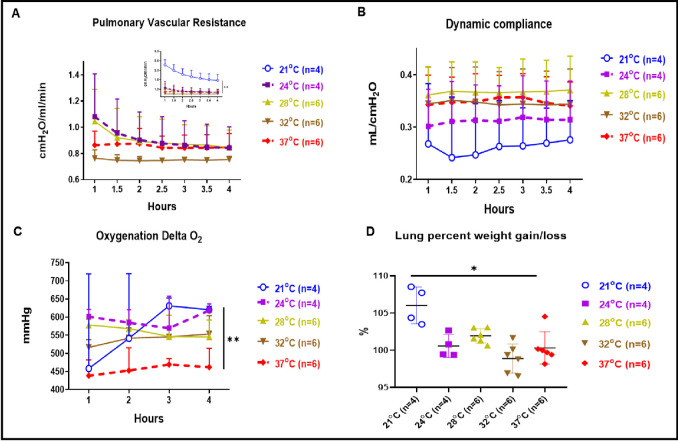
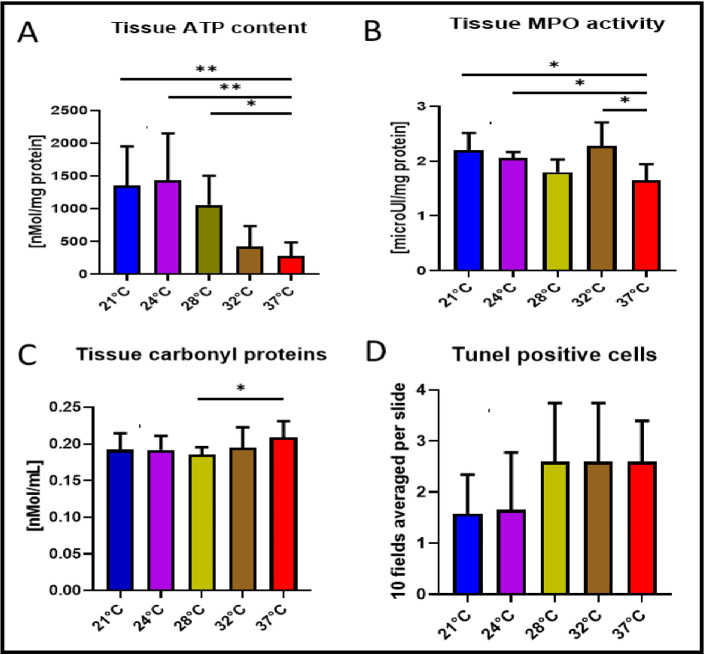
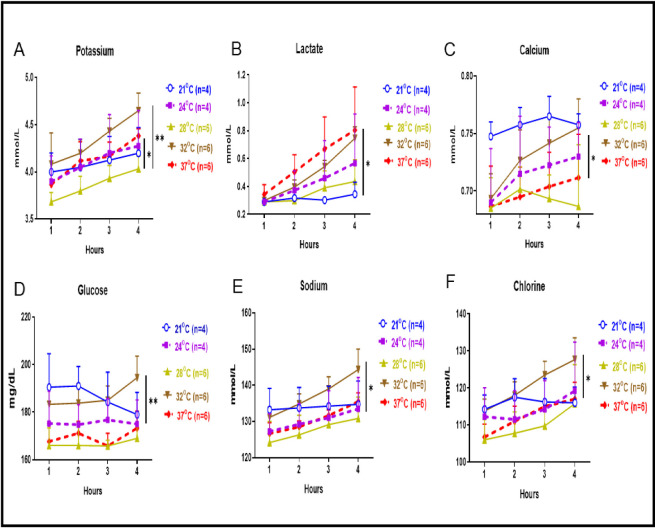
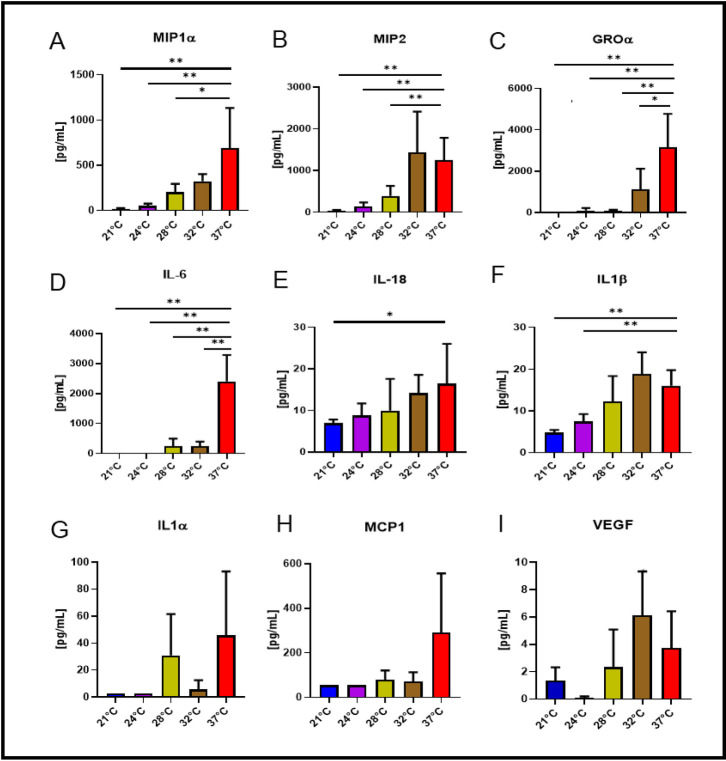
Use of normothermic ex vivo lung perfusion (EVLP) was adopted in clinical practice to assess the quality of marginal donor lungs. Subnormothermic perfusion temperatures are in use among other solid organs to improve biochemical, clinical and immunological parameters. In a rat EVLP model of donation after circulatory death (DCD) lung donors, we tested the effect of four subnormothermic EVLP temperatures that could further improve organ preservation. Warm ischemic time was of 2 hours. EVLP time was of 4 hours. Lung physiological data were recorded and metabolic parameters were assessed. Lung oxygenation at 21°C and 24°C were significantly improved whereas pulmonary vascular resistance and edema formation at 21°C EVLP were significantly worsened when compared to 37°C EVLP. The perfusate concentrations of potassium ions and lactate exiting the lungs with 28°C EVLP were significantly lower whereas sodium and chlorine ions with 32°C EVLP were significantly higher when compared to 37°C EVLP. Also compared to 37°C EVLP, the pro-inflammatory chemokines MIP2, MIP-1α, GRO-α, the cytokine IL-6 were significantly lower with 21°C, 24°C and 28°C EVLP, the IL-18 was significantly lower but only with 21°C EVLP and IL-1β was significantly lower at 21°C and 24°C EVLP. Compared to the 37°C EVLP, the lung tissue ATP content after 21°C, 24°C and 28°C EVLP were significantly higher, the carbonylated protein content after 28°C EVLP was significantly lower and we measured significantly higher myeloperoxidase activities in lung tissues with 21°C, 24°C and 32°C. The 28°C EVLP demonstrated acceptable physiological variables, significantly higher lung tissue ATP content and decreased tissue carbonylated proteins with reduced release of pro-inflammatory cytokines. In conclusion, the 28°C EVLP is a non inferior setting in comparison to the clinically approved 37°C EVLP and significantly improve biochemical, clinical and immunological parameters and may reduce I/R injuries of DCD lung donors.
采用常温和体外肺灌注(EVLP)来评估边缘供体肺的质量。其他实体器官也在使用亚低温灌注温度来改善生化、临床和免疫参数。在捐赠后循环死亡(DCD)肺供体的大鼠 EVLP 模型中,我们测试了四种可能进一步改善器官保存的亚低温 EVLP 温度的效果。热缺血时间为 2 小时。EVLP 时间为 4 小时。记录肺生理数据并评估代谢参数。与 37°C EVLP 相比,21°C 和 24°C 的 EVLP 显著改善了肺氧合,而 21°C EVLP 的肺血管阻力和水肿形成显著恶化。与 37°C EVLP 相比,28°C EVLP 灌流出的肺钾离子和乳酸浓度显著降低,而 32°C EVLP 的钠离子和氯离子浓度显著升高。与 37°C EVLP 相比,21°C、24°C 和 28°C EVLP 的促炎趋化因子 MIP2、MIP-1α、GRO-α、细胞因子 IL-6 显著降低,IL-18 仅在 21°C EVLP 时显著降低,IL-1β 在 21°C 和 24°C EVLP 时显著降低。与 37°C EVLP 相比,21°C、24°C 和 28°C EVLP 后肺组织 ATP 含量显著升高,28°C EVLP 后羰基蛋白含量显著降低,21°C、24°C 和 32°C 时肺组织髓过氧化物酶活性显著升高。28°C EVLP 表现出可接受的生理变量,显著增加肺组织 ATP 含量,减少组织羰基蛋白,减少促炎细胞因子的释放。总之,与临床批准的 37°C EVLP 相比,28°C EVLP 是非劣效设置,可显著改善生化、临床和免疫参数,并可能减少 DCD 肺供体的 I/R 损伤。