Department of Surgery, Duke University Medical Center, Durham, NC, United States.
Department of Molecular Genetics & Microbiology, Duke University School of Medicine, Durham, NC, United States.
Front Immunol. 2022 Jul 1;13:931524. doi: 10.3389/fimmu.2022.931524. eCollection 2022.
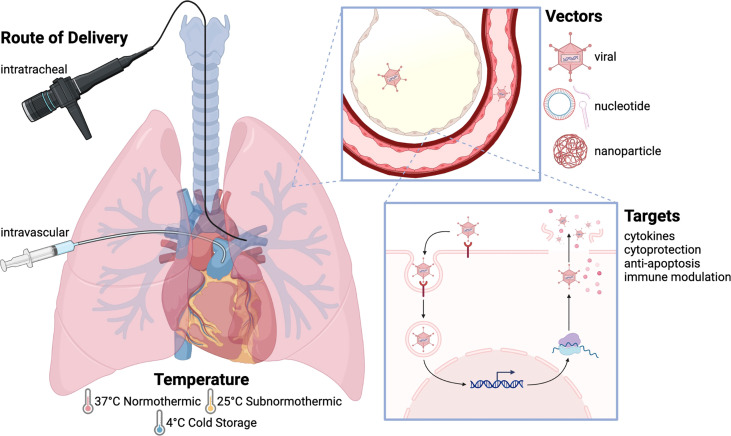
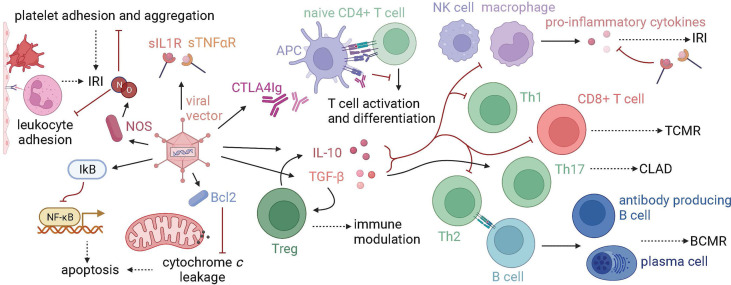
Lung transplantation is the definitive therapy for patients living with end-stage lung disease. Despite significant progress made in the field, graft survival remains the lowest of all solid organ transplants. Additionally, the lung has among the lowest of organ utilization rates-among eligible donors, only 22% of lungs from multi-organ donors were transplanted in 2019. Novel strategies are needed to rehabilitate marginal organs and improve graft survival. Gene therapy is one promising strategy in optimizing donor allografts. Over-expression or inhibition of specific genes can be achieved to target various pathways of graft injury, including ischemic-reperfusion injuries, humoral or cellular rejection, and chronic lung allograft dysfunction. Experiments in animal models have historically utilized adenovirus-based vectors and the majority of literature in lung transplantation has focused on overexpression of IL-10. Although several strategies were shown to prevent rejection and prolong graft survival in preclinical models, none have led to clinical translation. The past decade has seen a renaissance in the field of gene therapy and two AAV-based gene therapies are now FDA-approved for clinical use. Concurrently, normothermic ex vivo machine perfusion technology has emerged as an alternative to traditional static cold storage. This preservation method keeps organs physiologically active during storage and thus potentially offers a platform for gene therapy. This review will explore the advantages and disadvantages of various gene therapy modalities, review various candidate genes implicated in various stages of allograft injury and summarize the recent efforts in optimizing donor lungs using gene therapy.
肺移植是治疗终末期肺部疾病患者的最终疗法。尽管在该领域取得了重大进展,但移植物存活率仍然是所有实体器官移植中最低的。此外,肺的器官利用率最低——在符合条件的供体中,2019 年仅 22%的多器官供体的肺被移植。需要新的策略来修复边缘器官并提高移植物存活率。基因治疗是优化供体同种异体移植物的一种有前途的策略。可以通过过度表达或抑制特定基因来靶向移植物损伤的各种途径,包括缺血再灌注损伤、体液或细胞排斥以及慢性肺同种异体移植功能障碍。在动物模型中的实验历史上使用腺病毒载体,并且肺移植领域的大多数文献都集中在 IL-10 的过表达上。尽管一些策略已被证明可预防排斥反应并延长临床前模型中的移植物存活期,但没有一种策略导致临床转化。过去十年,基因治疗领域迎来了复兴,两种基于 AAV 的基因疗法现已获得 FDA 批准用于临床使用。同时,常温体外机器灌注技术已成为传统静态冷藏的替代方法。这种保存方法使器官在储存期间保持生理活性,从而为基因治疗提供了一个平台。本文综述将探讨各种基因治疗方式的优缺点,回顾各种候选基因在同种异体损伤的各个阶段中的作用,并总结最近使用基因治疗优化供肺的努力。