Department of Pathology, Xuzhou Medical University, 209 Tongshan Road, Xuzhou, Jiangsu, 221004, People's Republic of China.
Department of Pathology and Pathophysiology, Jiangsu Vocational College of Medicine, Yancheng, 224005, Jiangsu, China.
J Biomed Sci. 2021 Aug 2;28(1):56. doi: 10.1186/s12929-021-00752-4.
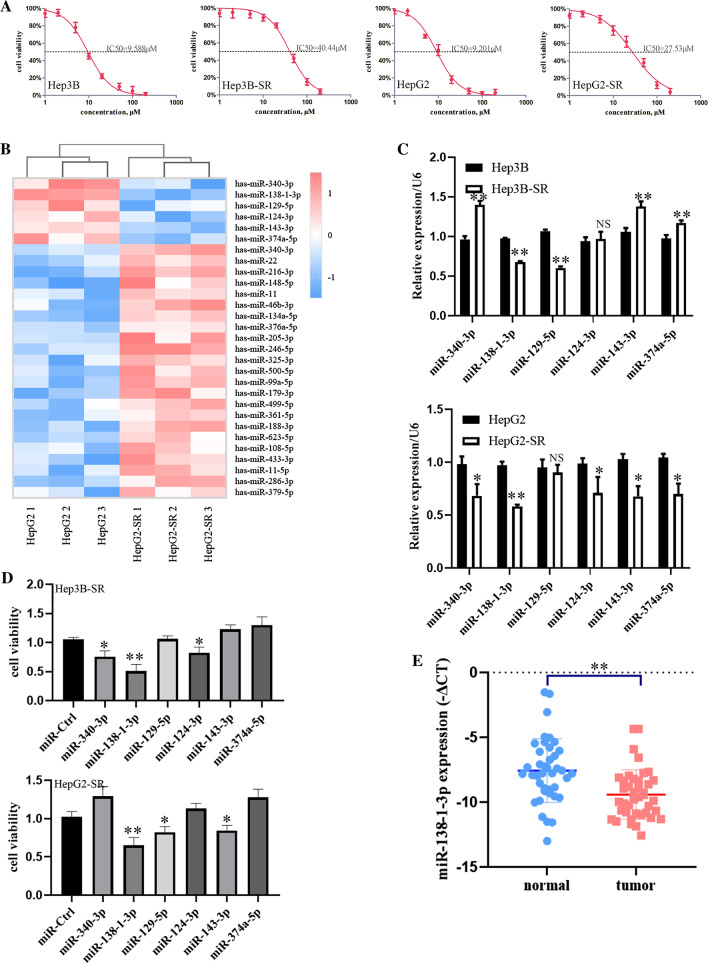
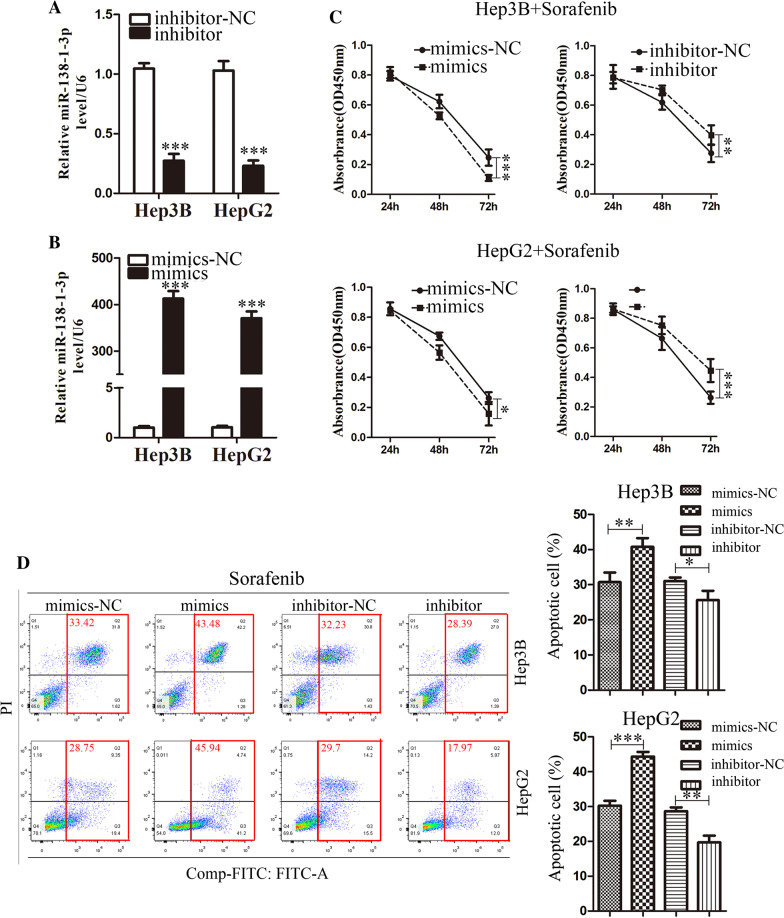
Sorafenib is a kinase inhibitor that is used as a first-line therapy in advanced hepatocellular carcinoma (HCC) patients. However, the existence of sorafenib resistance has limited its therapeutic effect. Through RNA sequencing, we demonstrated that miR-138-1-3p was downregulated in sorafenib resistant HCC cell lines. This study aimed to investigate the role of miR-138-1-3p in sorafenib resistance of HCC.
In this study, quantitative real-time PCR (qPCR) and Western Blot were utilized to detect the levels of PAK5 in sorafenib-resistant HCC cells and parental cells. The biological functions of miR-138-1-3p and PAK5 in sorafenib-resistant cells and their parental cells were explored by cell viability assays and flow cytometric analyses. The mechanisms for the involvement of PAK5 were examined via co-immunoprecipitation (co-IP), immunofluorescence, dual luciferase reporter assay and chromatin immunoprecipitation (ChIP). The effects of miR-138-1-3p and PAK5 on HCC sorafenib resistant characteristics were investigated by a xenotransplantation model.
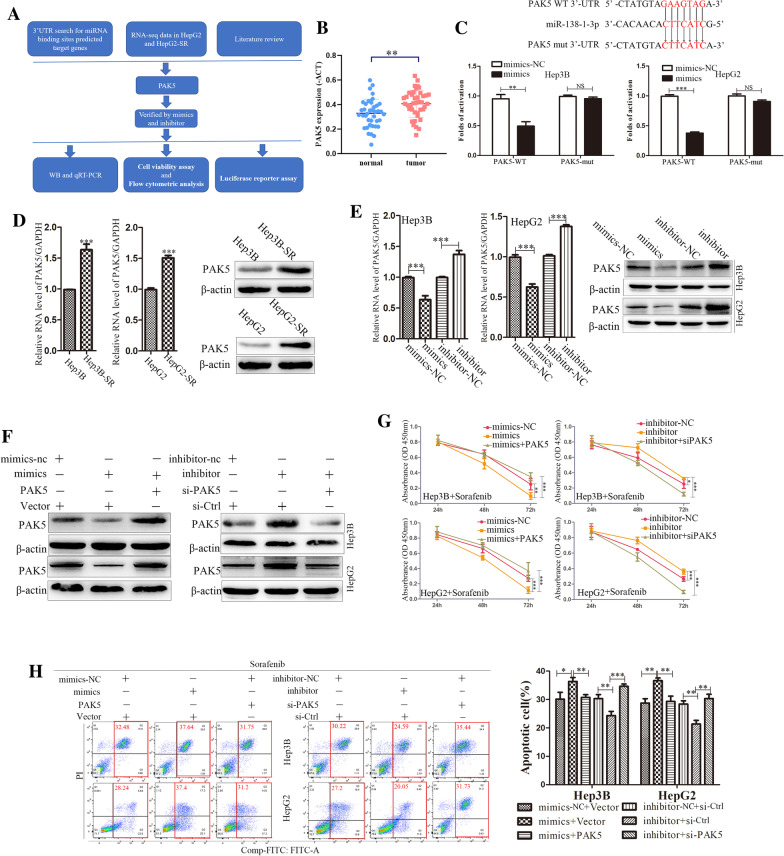
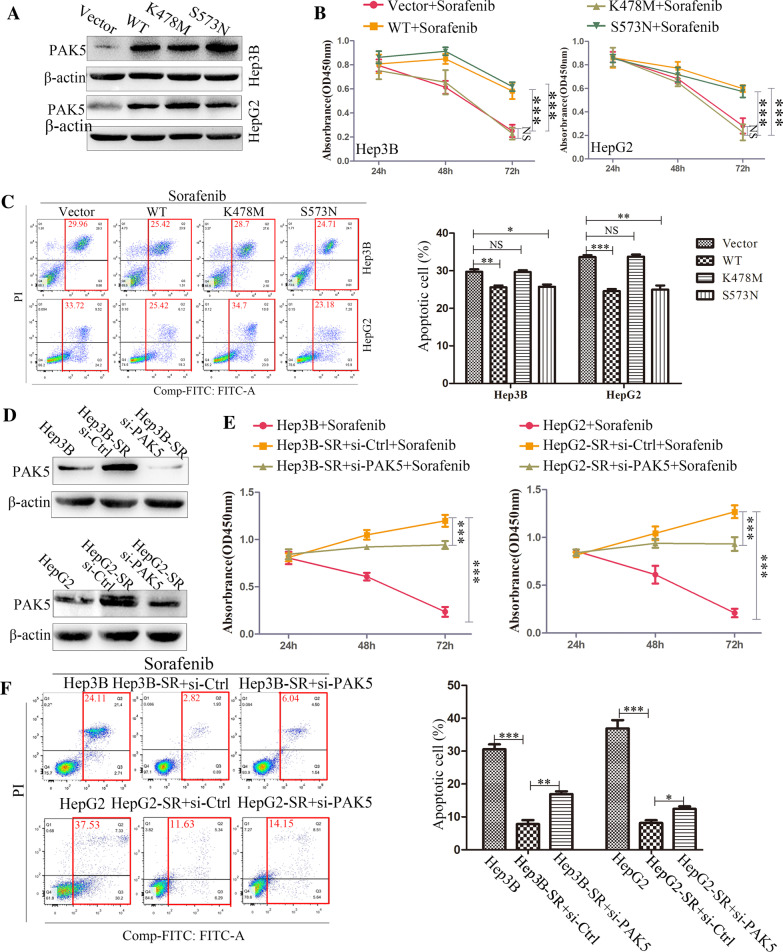
We detected significant down-regulation of miR-138-1-3p and up-regulation of PAK5 in sorafenib-resistance HCC cell lines. Mechanistic studies revealed that miR-138-1-3p reduced the protein expression of PAK5 by directly targeting the 3'-UTR of PAK5 mRNA. In addition, we verified that PAK5 enhanced the phosphorylation and nuclear translocation of β-catenin that increased the transcriptional activity of a multidrug resistance protein ABCB1.
PAK5 contributed to the sorafenib resistant characteristics of HCC via β-catenin/ABCB1 signaling pathway. Our findings identified the correlation between miR-138-1-3p and PAK5 and the molecular mechanisms of PAK5-mediated sorafenib resistance in HCC, which provided a potential therapeutic target in advanced HCC patients.
索拉非尼是一种激酶抑制剂,被用作晚期肝细胞癌(HCC)患者的一线治疗药物。然而,索拉非尼耐药的存在限制了其治疗效果。通过 RNA 测序,我们证明 miR-138-1-3p 在索拉非尼耐药 HCC 细胞系中下调。本研究旨在探讨 miR-138-1-3p 在 HCC 索拉非尼耐药中的作用。
在这项研究中,使用定量实时 PCR(qPCR)和 Western Blot 检测索拉非尼耐药 HCC 细胞系和亲本细胞中 PAK5 的水平。通过细胞活力测定和流式细胞术分析探讨 miR-138-1-3p 和 PAK5 在索拉非尼耐药细胞及其亲本细胞中的生物学功能。通过共免疫沉淀(co-IP)、免疫荧光、双荧光素酶报告基因检测和染色质免疫沉淀(ChIP)检测 PAK5 参与的机制。通过异种移植模型研究 miR-138-1-3p 和 PAK5 对 HCC 索拉非尼耐药特征的影响。
我们检测到索拉非尼耐药 HCC 细胞系中 miR-138-1-3p 显著下调和 PAK5 上调。机制研究表明,miR-138-1-3p 通过直接靶向 PAK5 mRNA 的 3'-UTR 降低 PAK5 蛋白表达。此外,我们验证了 PAK5 增强了β-连环蛋白的磷酸化和核易位,从而增加了多药耐药蛋白 ABCB1 的转录活性。
PAK5 通过β-连环蛋白/ABCB1 信号通路促进 HCC 的索拉非尼耐药特征。我们的研究结果确定了 miR-138-1-3p 与 PAK5 之间的相关性以及 PAK5 介导的 HCC 索拉非尼耐药的分子机制,为晚期 HCC 患者提供了潜在的治疗靶点。