Bute Building, School of Psychology and Neuroscience, University of St Andrews, West Burn Lane, St Andrews, Fife KY16 9TS, UK.
Bute Building, School of Psychology and Neuroscience, University of St Andrews, West Burn Lane, St Andrews, Fife KY16 9TS, UK.
J Neurosci Methods. 2021 Oct 1;362:109301. doi: 10.1016/j.jneumeth.2021.109301. Epub 2021 Jul 31.
Studying human ageing is of increasing importance due to the worldwide ageing population. However, it faces the challenge of lengthy experiments to produce an ageing phenotype. Often, to recreate the hallmarks of ageing requires complex empirical conditions that can confound data interpretation. Indeed, many studies use whole organisms with relatively short life spans, which may have little, or limited, relevance to human ageing. There has been extensive use of cell lines to study ageing in human somatic cells, but the modelling of human neuronal ageing is somewhat more complex in vitro.
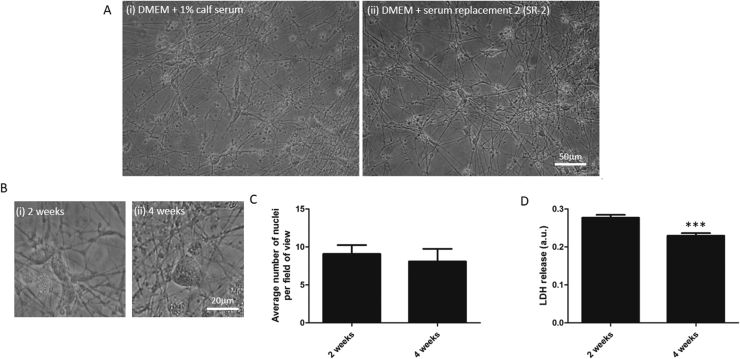
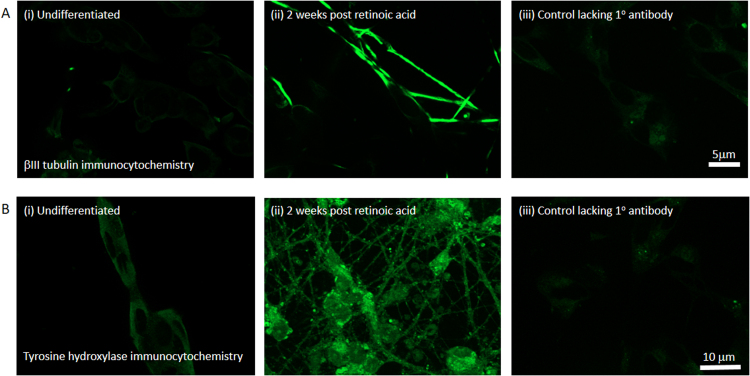
We cultured the well-characterised SH-SY5Y human neural cell line to produce high purity cultures of cells differentiated to express a neuronal phenotype, and designed a protocol to maintain these cells in culture until they accumulated biomarkers of cellular ageing.
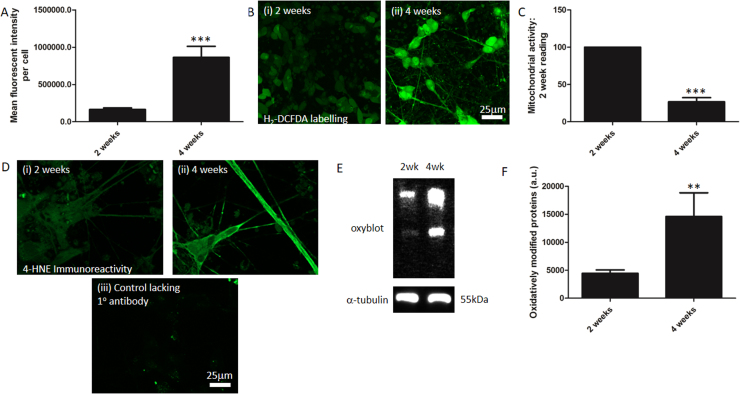
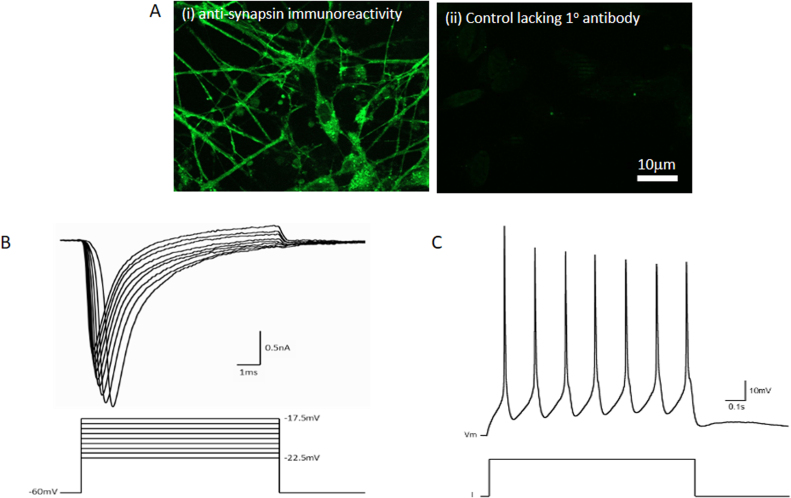
Our data validate a novel and simple technique for the efficient differentiation and long-term maintenance of SH-SY5Y cells, expressing markers of neuronal differentiation and demonstrating electrical activity in culture. Over time in vitro, these cells progressively accumulate markers of ageing such as enhanced production of reactive oxygen species and accumulation of oxidative damage.
In comparison to existing techniques to model neuronal ageing our method is cost effective, requiring no specialist equipment or growth factors.
We demonstrate that SH-SY5Y cells, grown under these culture conditions, represent a simple model of neuronal ageing that is amenable to cell biological, biochemical and electrophysiological investigation.
由于全球人口老龄化,研究人类衰老变得越来越重要。然而,它面临着产生衰老表型的实验时间长的挑战。通常,要重现衰老的标志需要复杂的经验条件,这可能会混淆数据解释。事实上,许多研究使用具有相对较短寿命的整个生物体,这可能与人类衰老几乎没有或有限的相关性。已经广泛使用细胞系来研究人类体细胞的衰老,但体外模拟人类神经元衰老要复杂一些。
我们培养了经过充分表征的 SH-SY5Y 人神经细胞系,以产生表达神经元表型的高纯度细胞培养物,并设计了一种方案来维持这些细胞在培养物中生长,直到它们积累细胞衰老的生物标志物。
我们的数据验证了一种新颖而简单的技术,可有效分化和长期维持 SH-SY5Y 细胞,表达神经元分化的标志物,并在培养物中表现出电活性。随着时间的推移,这些细胞在体外逐渐积累衰老标志物,例如活性氧的产生增加和氧化损伤的积累。
与现有的神经元衰老模型技术相比,我们的方法具有成本效益,不需要专门的设备或生长因子。
我们证明,在这些培养条件下生长的 SH-SY5Y 细胞代表了一种简单的神经元衰老模型,适用于细胞生物学、生物化学和电生理学研究。