Global Health and Nutrition Consultant and Independent Researcher, Anman, Jordan.
Nutrition Research Network, Research, International, and Scientific Affairs, Academy of Nutrition and Dietetics, Chicago, IL.
J Acad Nutr Diet. 2021 Jul;121(7):1379-1391.e21. doi: 10.1016/j.jand.2020.08.078. Epub 2020 Oct 21.
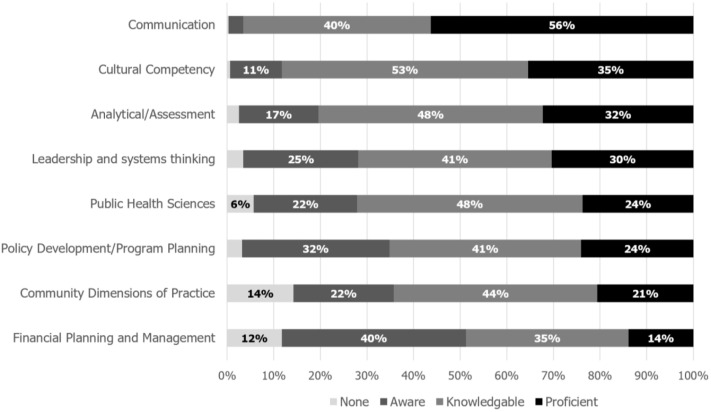
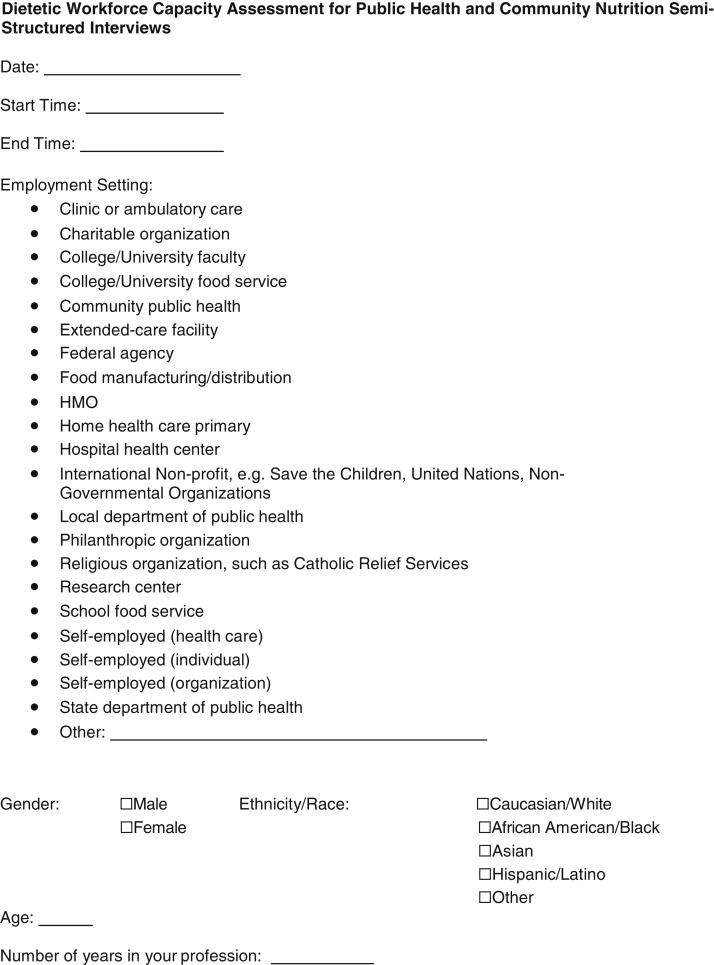
Worldwide, there is a continued rise in malnutrition and noncommunicable disease, along with rapidly changing dietary patterns, demographics, and climate and persistent economic inequality and instability. These trends have led to a national and global focus on nutrition-specific and nutrition-sensitive interventions to improve population health. A well-trained public health and community nutrition workforce is critical to manage and contribute to these efforts. The study describes the current public health and community nutrition workforce and factors influencing registered dietitian nutritionists (RDNs) to work in these settings and characterizes RDN preparedness, training, and competency in public health and community nutrition. The study was comprised of a cross-sectional, online survey of mostly US RDNs working in public health/community nutrition and semistructured telephone interviews with US-based and global public health and community nutrition experts. RStudio version 1.1.442 was used to manage and descriptively analyze survey data. Thematic analysis was conducted to evaluate expert interviews. Survey participants (n = 316) were primarily women (98%) and White (84%) with the RDN credential (91%) and advanced degrees (65%). Most reported that non-RDNs are performing nutrition-related duties at their organizations. Respondents generally rated themselves as better prepared to perform community nutrition vs public health functions. Interviews were conducted with 7 US-based experts and 5 international experts. Experts reported that non-RDNs often fill nutrition-related positions in public health, and RDNs should more actively pursue emerging public health opportunities. Experts suggested that RDNs are more desirable job candidates if they have advanced public health degrees or prior experience in public health or community nutrition and that dietetic training programs need to more rigorously incorporate public health training and experience. Significant opportunity exists to improve the preparedness and training of the current dietetic workforce to increase capacity and meet emerging needs in public health and community nutrition.
在全球范围内,营养不良和非传染性疾病不断增加,同时饮食模式、人口结构、气候迅速变化,经济不平等和不稳定持续存在。这些趋势促使人们关注营养特定和营养敏感的干预措施,以改善人口健康。一支训练有素的公共卫生和社区营养工作队伍对于管理和推动这些努力至关重要。本研究描述了当前的公共卫生和社区营养工作队伍,以及影响注册营养师在这些环境中工作的因素,并描述了注册营养师在公共卫生和社区营养方面的准备情况、培训和能力。该研究采用了横断面、在线调查的方法,主要调查了在美国从事公共卫生/社区营养工作的注册营养师,并对美国和全球公共卫生和社区营养专家进行了半结构化电话访谈。使用 RStudio 版本 1.1.442 来管理和描述性地分析调查数据。采用主题分析方法评估专家访谈结果。调查参与者(n=316)主要为女性(98%)和白人(84%),拥有注册营养师证书(91%)和高级学位(65%)。大多数人报告说,非注册营养师在其组织中从事与营养相关的职责。受访者普遍认为自己在执行社区营养职能方面比执行公共卫生职能的准备更充分。对 7 名美国专家和 5 名国际专家进行了访谈。专家们报告说,非注册营养师经常填补公共卫生领域的营养相关职位,注册营养师应该更积极地寻求新的公共卫生机会。专家建议,如果注册营养师具有公共卫生方面的高级学位或在公共卫生或社区营养方面有先前经验,他们将成为更理想的工作候选人,并且营养培训计划需要更严格地纳入公共卫生培训和经验。为了提高当前营养工作队伍的准备和培训水平,增加公共卫生和社区营养方面的能力并满足新出现的需求,还有很大的改进空间。