Department of Gastroenterology, The Second Hospital of Hebei Medical University, Hebei Key Laboratory of Gastroenterology, Hebei Institute of Gastroenterology, Shijiazhuang, P. R. China.
Department of Gastroenterology, The Affiliated Hospital of Hebei Engineering University, Handan, P. R. China.
Oncogene. 2021 Sep;40(39):5829-5842. doi: 10.1038/s41388-021-01877-4. Epub 2021 Aug 3.
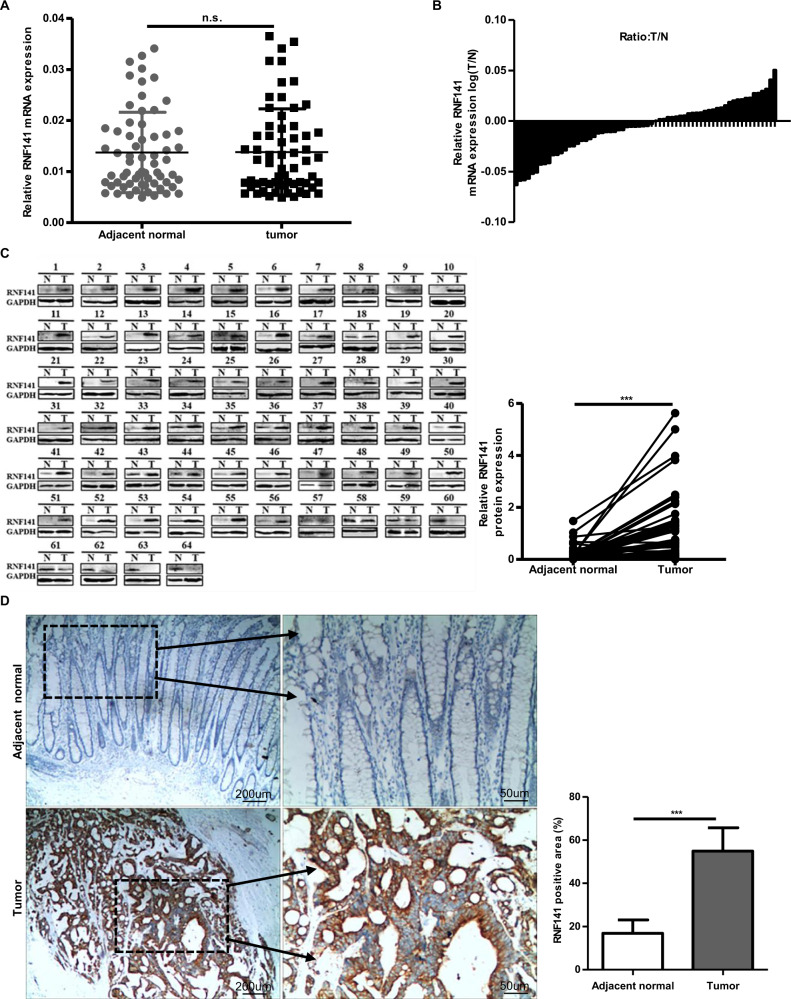
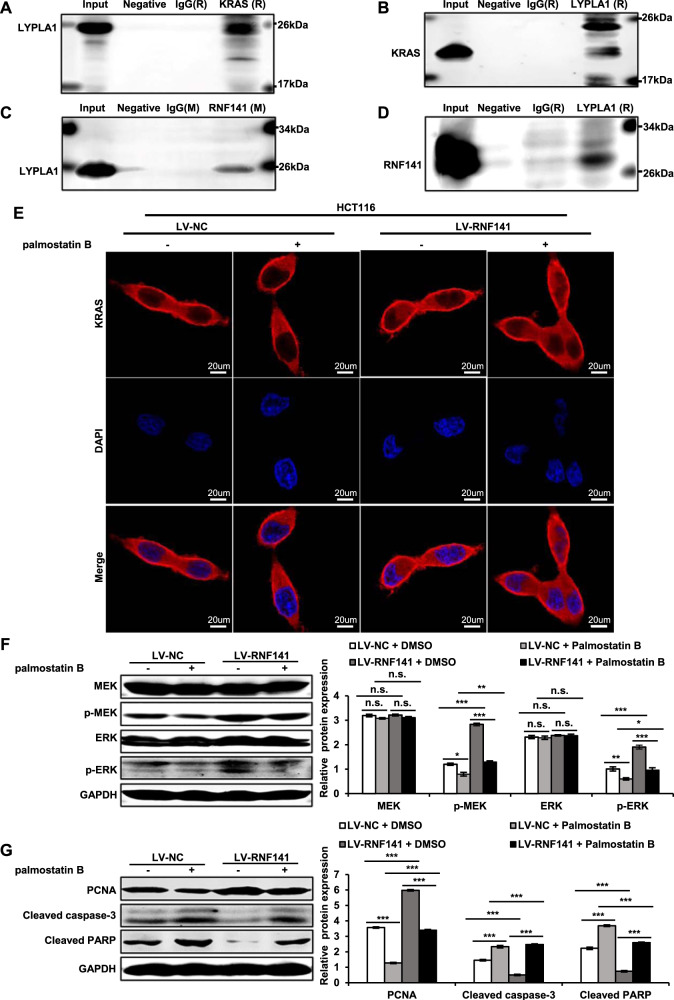
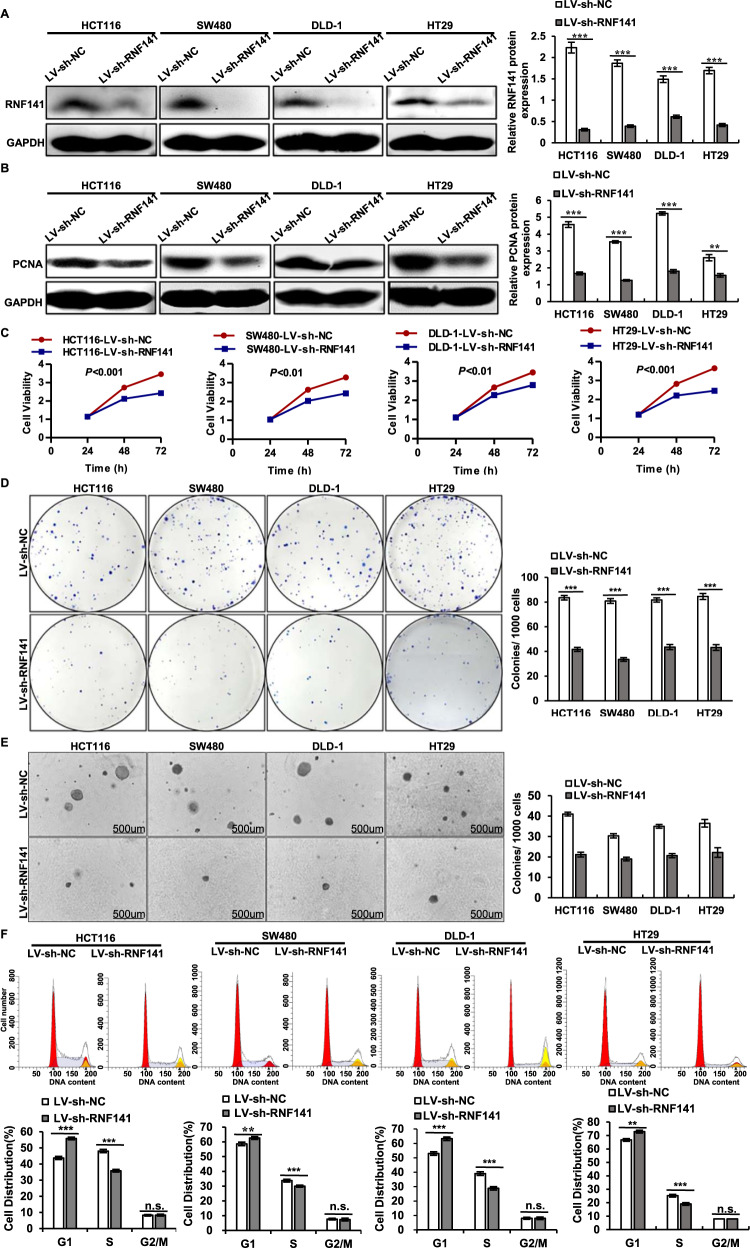
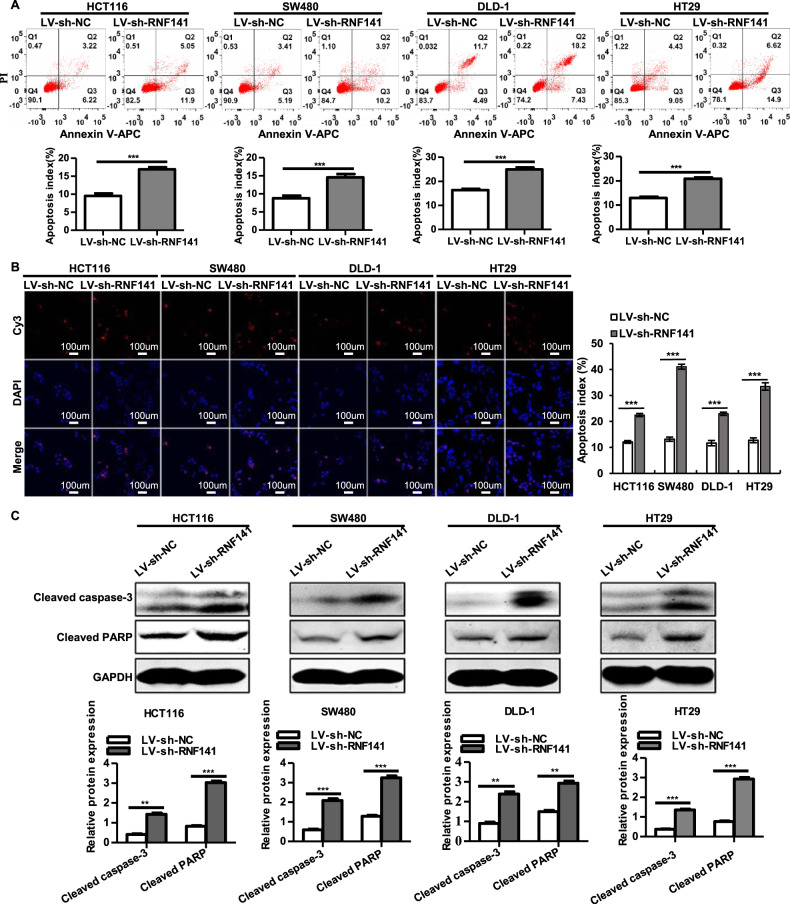
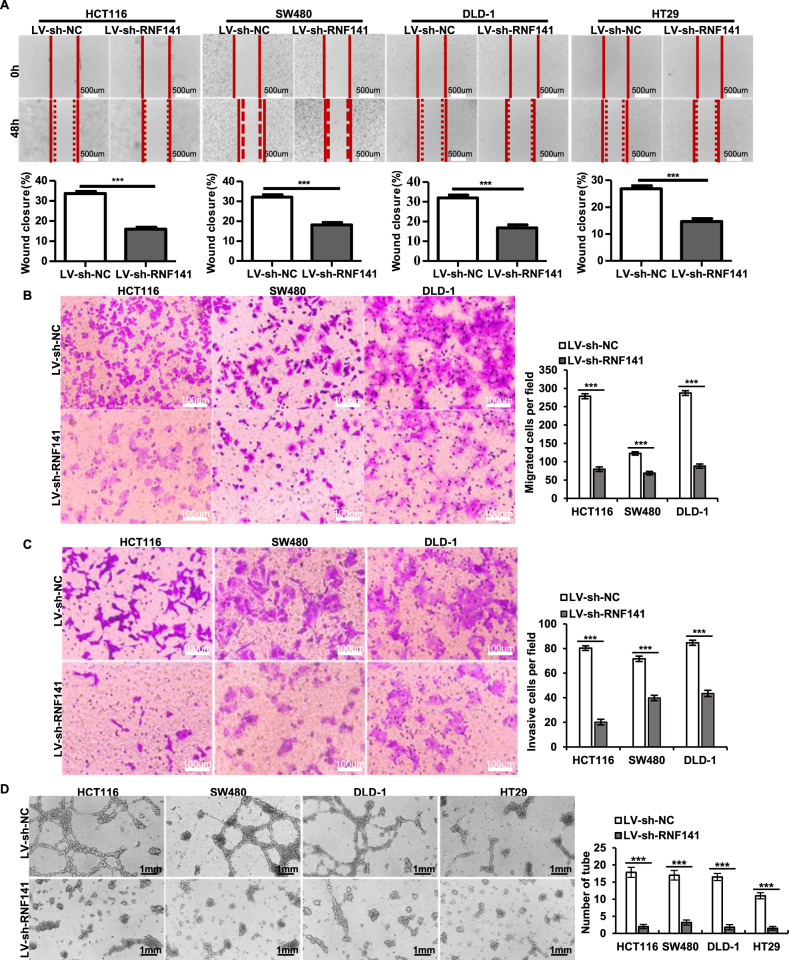
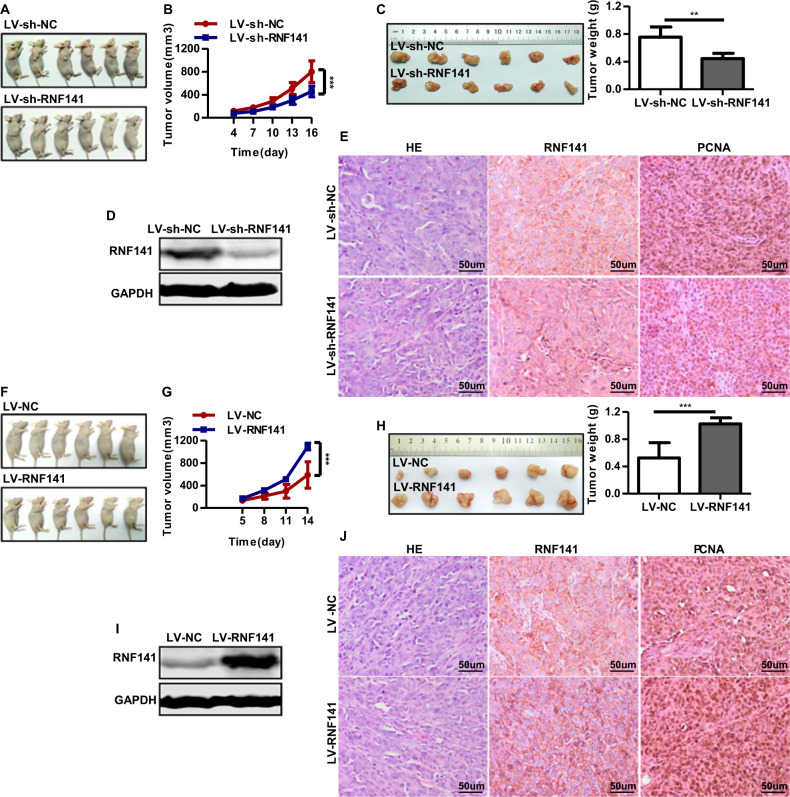
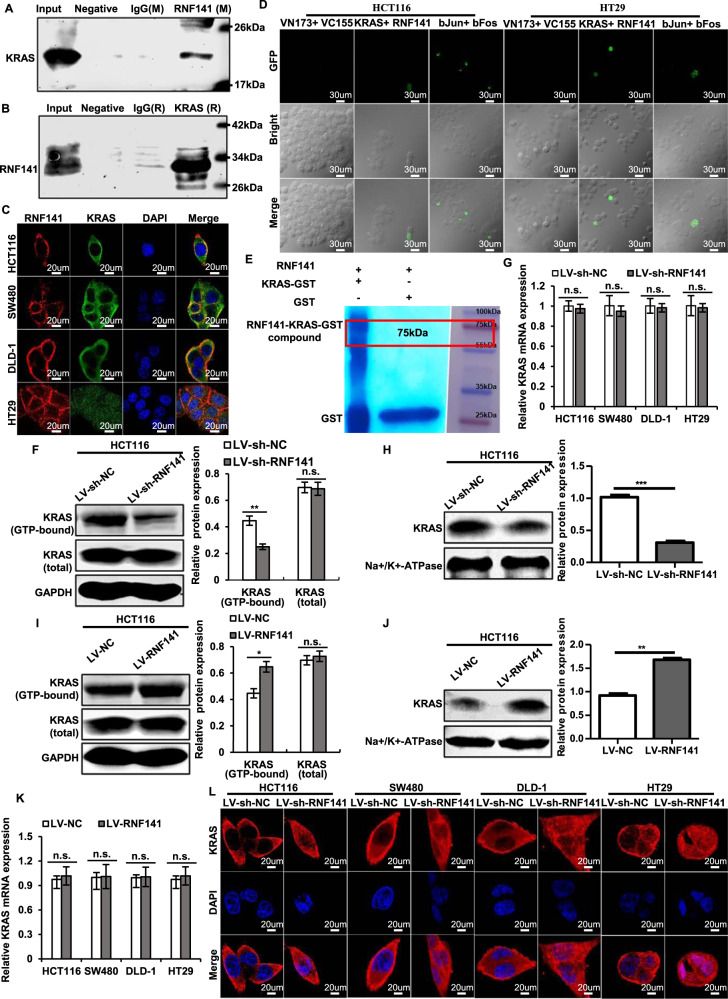
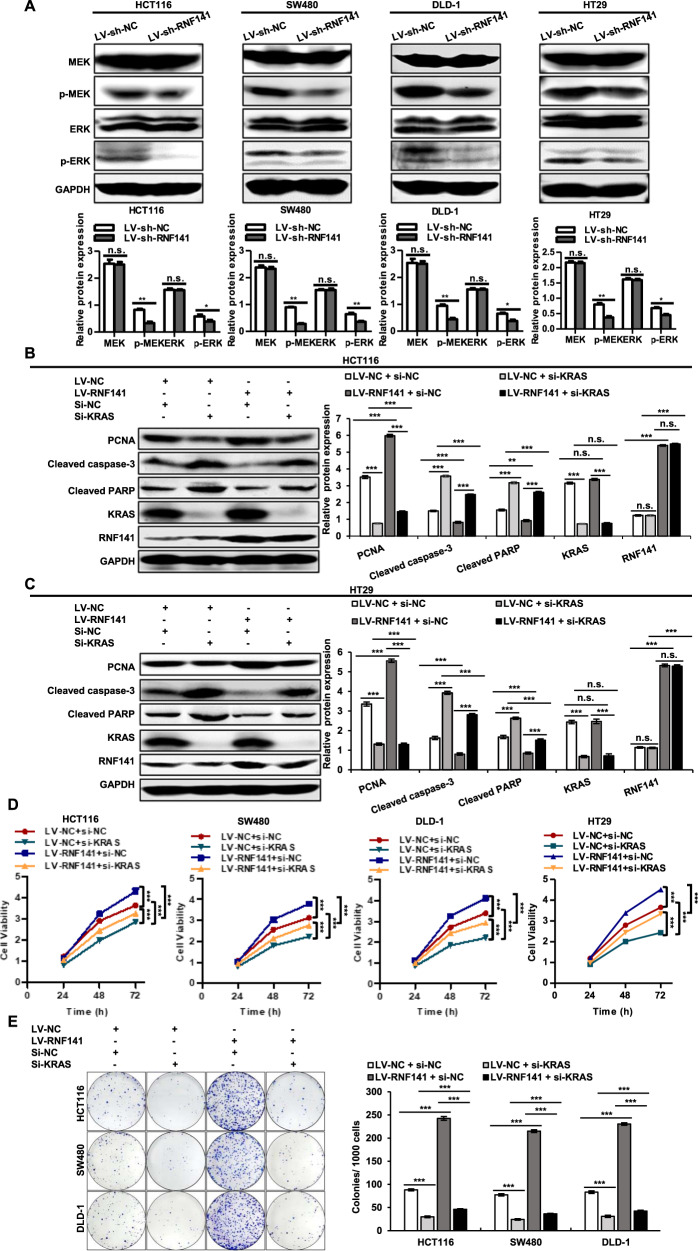
RING finger proteins (RNFs) play a critical role in cancer initiation and progression. RNF141 is a member of RNFs family; however, its clinical significance, roles, and mechanism in colorectal cancer (CRC) remain poorly understood. Here, we examined the expression of RNF141 in 64 pairs of CRC and adjacent normal tissues by real-time PCR, Western blot, and immunohistochemical analysis. We found that there was more expression of RNF141 in CRC tissue compared with its adjacent normal tissue and high RNF141 expression associated with T stage. In vivo and in vitro functional experiments were conducted and revealed the oncogenic role of RNF141 in CRC. RNF141 knockdown suppressed proliferation, arrested the cell cycle in the G1 phase, inhibited migration, invasion and HUVEC tube formation but promoted apoptosis, whereas RNF141 overexpression exerted the opposite effects in CRC cells. The subcutaneous xenograft models showed that RNF141 knockdown reduced tumor growth, but its overexpression promoted tumor growth. Mechanistically, liquid chromatography-tandem mass spectrometry indicated RNF141 interacted with KRAS, which was confirmed by Co-immunoprecipitation, Immunofluorescence assay. Further analysis with bimolecular fluorescence complementation (BiFC) and Glutathione-S-transferase (GST) pull-down assays showed that RNF141 could directly bind to KRAS. Importantly, the upregulation of RNF141 increased GTP-bound KRAS, but its knockdown resulted in a reduction accordingly. Next, we demonstrated that RNF141 induced KRAS activation via increasing its enrichment on the plasma membrane not altering total KRAS expression, which was facilitated by the interaction with LYPLA1. Moreover, KRAS silencing partially abolished the effect of RNF141 on cell proliferation and apoptosis. In addition, our findings presented that RNF141 functioned as an oncogene by upregulating KRAS activity in a manner of promoting KRAS enrichment on the plasma membrane in CRC.
环指蛋白(RNFs)在癌症的发生和发展中起着关键作用。RNF141 是 RNFs 家族的一员;然而,其在结直肠癌(CRC)中的临床意义、作用和机制仍知之甚少。在这里,我们通过实时 PCR、Western blot 和免疫组织化学分析检测了 64 对 CRC 及其相邻正常组织中 RNF141 的表达。我们发现,CRC 组织中 RNF141 的表达高于其相邻正常组织,且高 RNF141 表达与 T 分期相关。体内和体外功能实验表明,RNF141 在 CRC 中具有致癌作用。RNF141 敲低抑制增殖,使细胞周期停滞在 G1 期,抑制迁移、侵袭和 HUVEC 管形成,但促进细胞凋亡,而 RNF141 过表达在 CRC 细胞中则产生相反的效果。皮下移植瘤模型表明,RNF141 敲低减少肿瘤生长,但过表达促进肿瘤生长。机制上,液质联用分析表明 RNF141 与 KRAS 相互作用,这一结果通过 Co-immunoprecipitation 和免疫荧光分析得到了证实。进一步通过双分子荧光互补(BiFC)和谷胱甘肽 S-转移酶(GST)下拉实验分析表明,RNF141 可以直接与 KRAS 结合。重要的是,RNF141 的上调增加了 GTP 结合的 KRAS,但敲低则相应减少。接下来,我们证明 RNF141 通过增加 KRAS 在质膜上的富集而不是改变总 KRAS 表达来诱导 KRAS 激活,这一过程由与 LYPLA1 的相互作用促进。此外,KRAS 沉默部分消除了 RNF141 对细胞增殖和凋亡的影响。此外,我们的研究结果表明,RNF141 通过促进 KRAS 在质膜上的富集来上调 KRAS 活性,从而在 CRC 中发挥癌基因作用。