Khalid Muhammad Zain, Rogers Sylvette, Fatima Ayesha, Dawe Manal, Singh Romil
Internal Medicine, Liaquat National Hospital and Medical College, Karachi, PAK.
Family Medicine, Caribbean Medical University, Des Plaines, USA.
Cureus. 2021 Jul 2;13(7):e16104. doi: 10.7759/cureus.16104. eCollection 2021 Jul.
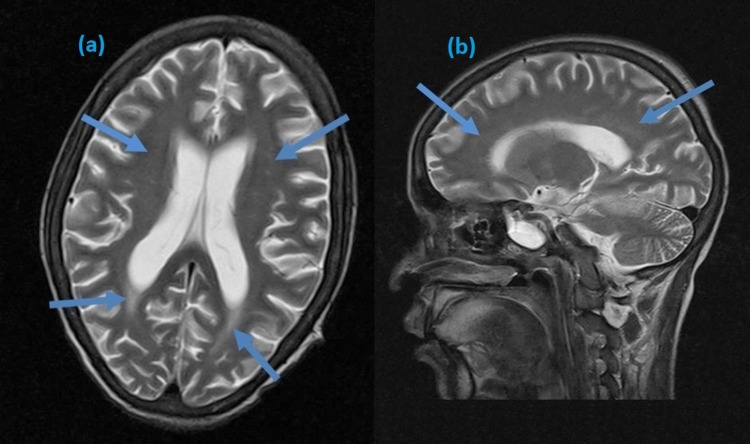
The association between coronavirus disease 19 (COVID-19) and autoimmune disease has been mounting, and literature on COVID-19-induced flare-up of systemic lupus erythematosus (SLE) disease is lacking. We describe a case of lupus cerebritis triggered by COVID-19 in a young female with SLE, who presented with fluctuated mentation, psychomotor retardation, slow speech, and intermittent choreiform movement in the upper part of the body. She had a history of COVID-19 infection three weeks back. Her serum immunoglobulin G antibodies were positive against COVID-19. On examination, she had psychomotor agitation, intermittent choreiform movements of upper limbs, and poor speech. Brain magnetic resonance imaging revealed hyperintense signals in the white matter of both hemispheres, suggestive of lupus cerebritis secondary to COVID-19 infection and lack of any other identifiable risk factor. Management included methylprednisolone, prednisone, and olanzapine. The patient was also placed on monthly intravenous cyclophosphamide, and her condition started improving gradually.
新型冠状病毒肺炎(COVID-19)与自身免疫性疾病之间的关联日益增多,但关于COVID-19诱发系统性红斑狼疮(SLE)病情发作的文献尚缺。我们描述了1例患有SLE的年轻女性因COVID-19引发狼疮性脑病的病例,该患者表现为精神状态波动、精神运动迟缓、言语缓慢以及身体上部间歇性舞蹈样动作。她在三周前有COVID-19感染史。其血清免疫球蛋白G抗体针对COVID-19呈阳性。检查时,她存在精神运动性激越、上肢间歇性舞蹈样动作以及言语障碍。脑磁共振成像显示双侧半球白质高信号,提示继发于COVID-19感染的狼疮性脑病且无任何其他可识别的危险因素。治疗包括甲泼尼龙、泼尼松和奥氮平。患者还接受每月1次的静脉注射环磷酰胺治疗,其病情开始逐渐改善。