Departments of Anesthesiology and Intensive Care, Amsterdam UMC, VUMC, ZH 6F 003, De Boelelaan 1117, 1081 HV, Amsterdam, The Netherlands.
Crit Care. 2021 Aug 5;25(1):280. doi: 10.1186/s13054-021-03716-0.
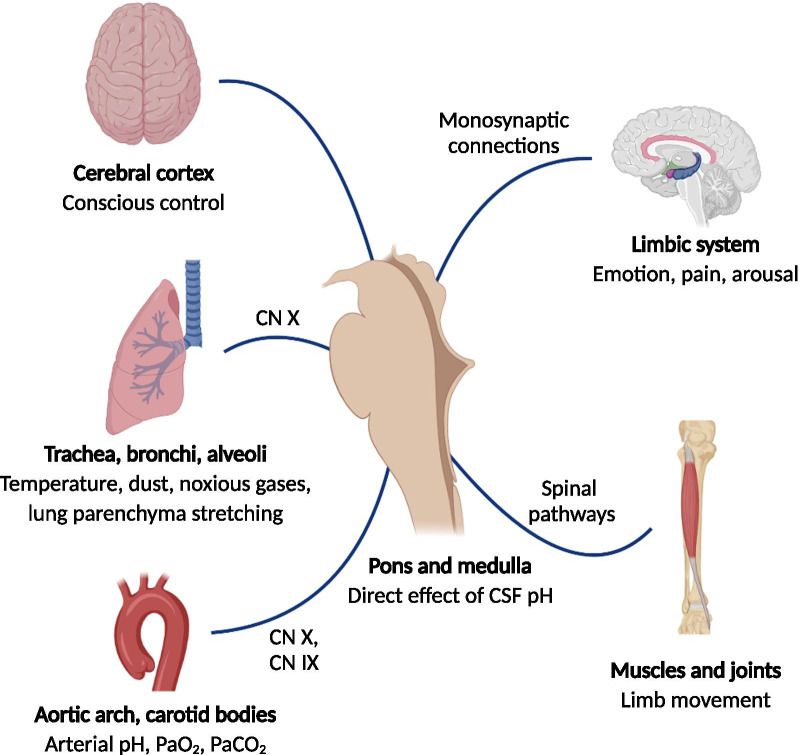
The respiratory system reacts instantaneously to intrinsic and extrinsic inputs. This adaptability results in significant fluctuations in breathing parameters, such as respiratory rate, tidal volume, and inspiratory flow profiles. Breathing variability is influenced by several conditions, including sleep, various pulmonary diseases, hypoxia, and anxiety disorders. Recent studies have suggested that weaning failure during mechanical ventilation may be predicted by low respiratory variability. This review describes methods for quantifying breathing variability, summarises the conditions and comorbidities that affect breathing variability, and discusses the potential implications of breathing variability for anaesthesia and intensive care.
呼吸系统对内在和外在的输入会立即做出反应。这种适应性导致呼吸参数(如呼吸频率、潮气量和吸气流量曲线)发生显著波动。呼吸变异性受到多种情况的影响,包括睡眠、各种肺部疾病、缺氧和焦虑障碍。最近的研究表明,机械通气期间脱机失败可能可以通过低呼吸变异性来预测。本文综述了用于量化呼吸变异性的方法,总结了影响呼吸变异性的条件和合并症,并讨论了呼吸变异性对麻醉和重症监护的潜在影响。