Bishr Amr S, Abdelaziz Salma M, Yahia Ibrahim S, Yassien Mahmoud A, Hassouna Nadia A, Aboshanab Khaled M
Department of Microbiology and Immunology, Faculty of Pharmacy, Ain Shams University, Organization of African Unity St., Cairo 11566, Egypt.
Research Center for Advanced Materials Science (RCAMS), King Khalid University, Abha P.O. Box 9004, Saudi Arabia.
Biology (Basel). 2021 Jul 6;10(7):624. doi: 10.3390/biology10070624.
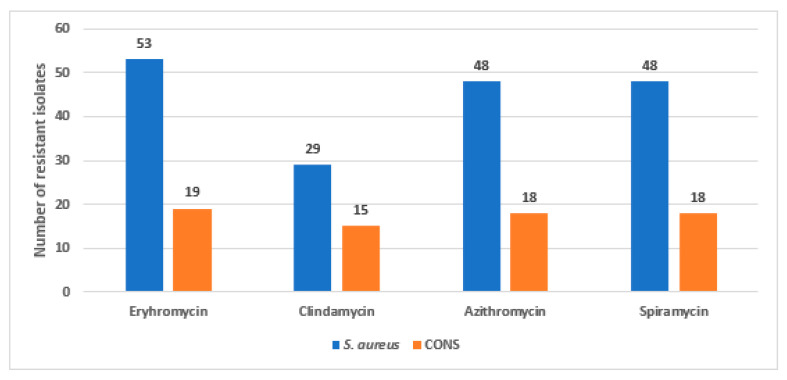
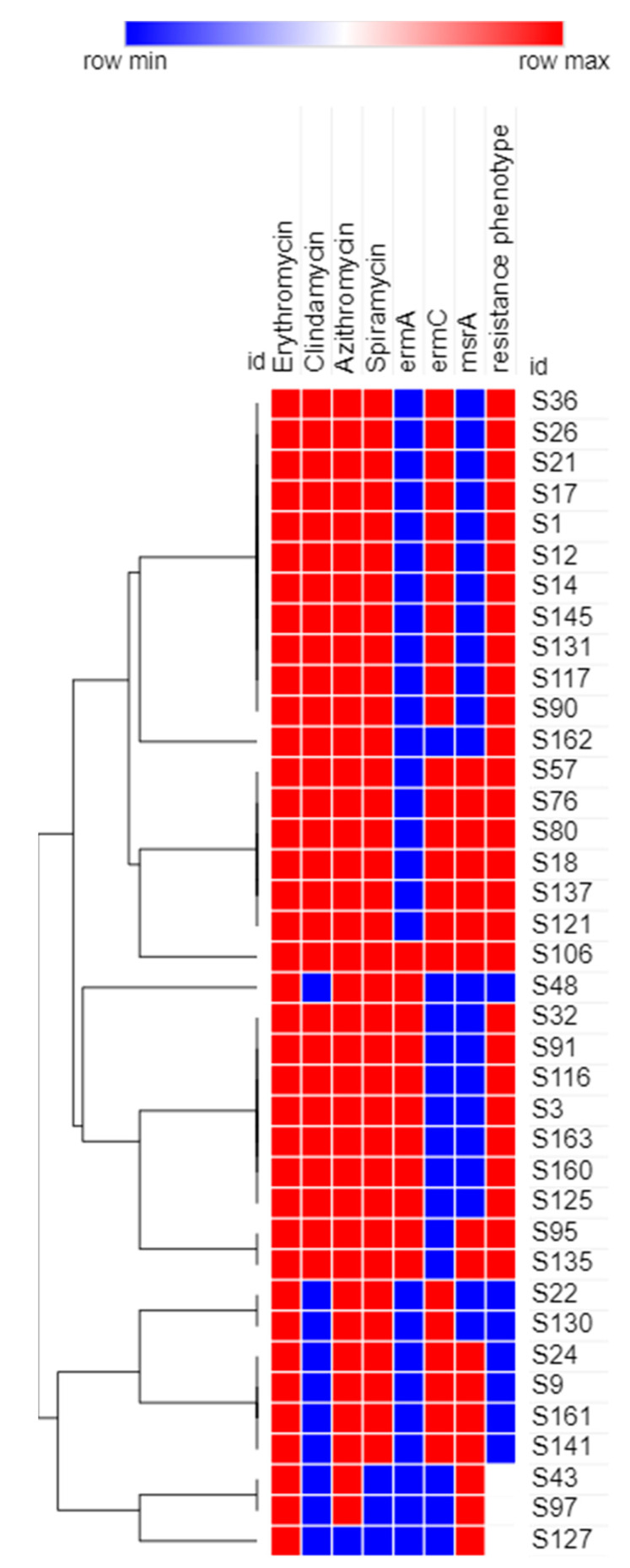
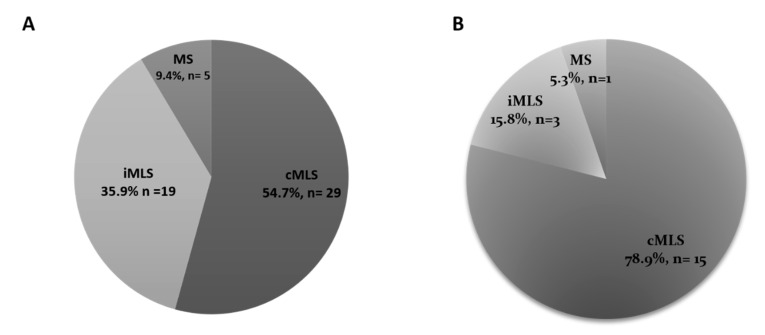
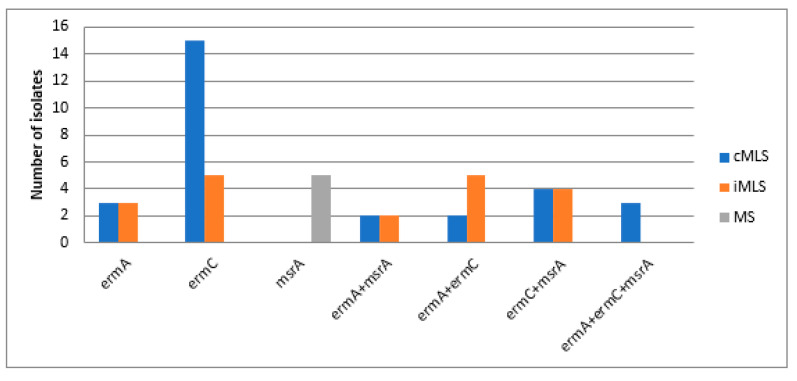
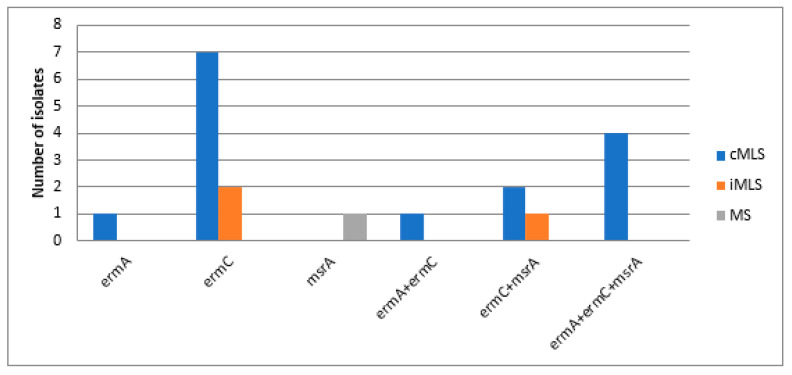
Macrolide-resistant methicillin-resistant (MAC-MRSA) is one of the most clinically relevant pathogens due to its significant ability of resistance acquisition to different antimicrobial agents. This study aimed to evaluate antimicrobial susceptibility and the use of different combinations of azithromycin with other antibiotics for combating MAC resistance. Seventy-two (38.5%) (n = 187), showed resistance to MACs; of these, 53 isolates (73.6%, n = 72) were and 19 (26.4%, n = 72) were coagulase-negative staphylococci (CoNS). Out of the 53 and 19 CoNS isolates, 38 (71.7%, n = 53) and 9 (47.4%, n = 19) were MRSA and methicillin-resistant CoNS, respectively. The constitutive MACs, lincosamides and streptogramin-B (cMLS) comprised the predominant phenotype among isolates (54.7%) and CoNS isolates (78.9%). The PCR analysis showed that the C gene was the most prevalent (79.2%), followed by A (48.6%), and A (31.9%). Azithromycin combinations with either linezolid, ceftriaxone, gentamicin, or cefotaxime provided synergy in 42.1%, 44.7%, 31.6% and 7.9% of the 38 MAC-MRSA isolates, respectively. Statistical analysis showed significant association between certain MAC resistance genotypes and the synergistic effect of certain azithromycin combinations ( value < 0.05). In conclusion, azithromycin combinations with either linezolid, or ceftriaxone showed synergism in most of the MAC-resistant MRSA clinical isolates.
耐大环内酯类耐甲氧西林(MAC-MRSA)是临床上最具相关性的病原体之一,因为它对不同抗菌药物具有显著的耐药获得能力。本研究旨在评估抗菌药物敏感性以及阿奇霉素与其他抗生素不同组合用于对抗MAC耐药性的效果。187株中有72株(38.5%)对MAC耐药;其中,53株分离株(73.6%,n = 72)为金黄色葡萄球菌,19株(26.4%,n = 72)为凝固酶阴性葡萄球菌(CoNS)。在53株金黄色葡萄球菌和19株CoNS分离株中,分别有38株(71.7%,n = 53)和9株(47.4%,n = 19)为耐甲氧西林金黄色葡萄球菌和耐甲氧西林CoNS。组成型MAC、林可酰胺类和链阳菌素B(cMLS)在金黄色葡萄球菌分离株(54.7%)和CoNS分离株(78.9%)中占主要表型。PCR分析表明,C基因最为普遍(79.2%),其次是A基因(48.6%)和A基因(31.9%)。阿奇霉素与利奈唑胺、头孢曲松、庆大霉素或头孢噻肟联合使用时,在38株MAC-MRSA分离株中分别有42.1%、44.7%、31.6%和7.9%表现出协同作用。统计分析表明,某些MAC耐药基因型与某些阿奇霉素组合的协同效应之间存在显著关联(P值<0.05)。总之,阿奇霉素与利奈唑胺或头孢曲松联合使用在大多数耐MAC的MRSA临床分离株中表现出协同作用。