McMenamin Alexander J, Parekh Fenali, Lawrence Verena, Flenniken Michelle L
Department of Plant Sciences and Plant Pathology, Montana State University, Bozeman, MT 59717, USA.
Department of Microbiology and Cell Biology, Montana State University, Bozeman, MT 59717, USA.
Insects. 2021 Jul 17;12(7):653. doi: 10.3390/insects12070653.
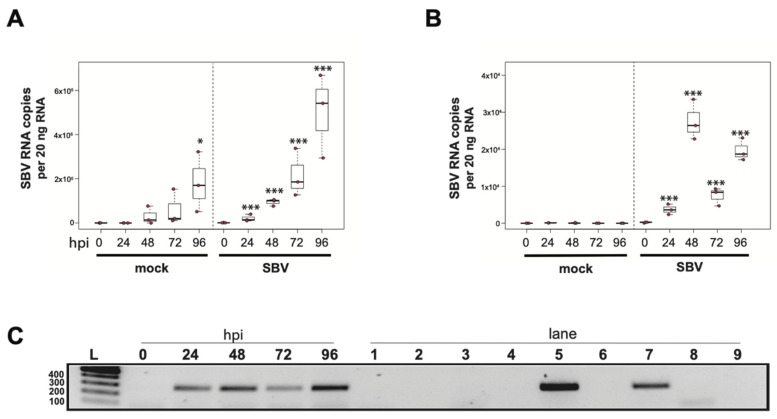
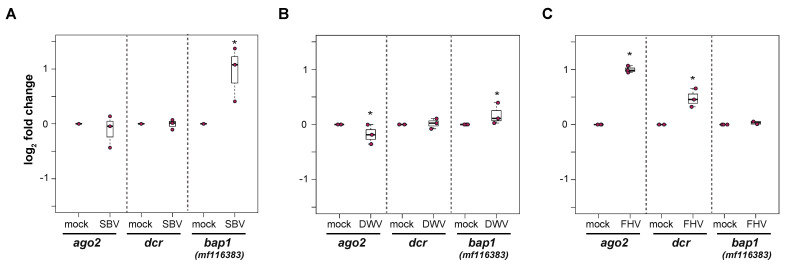
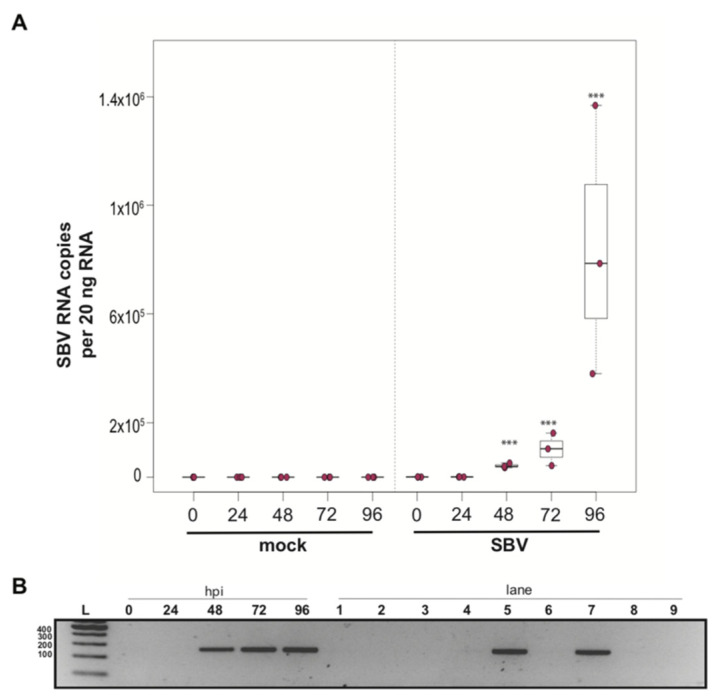
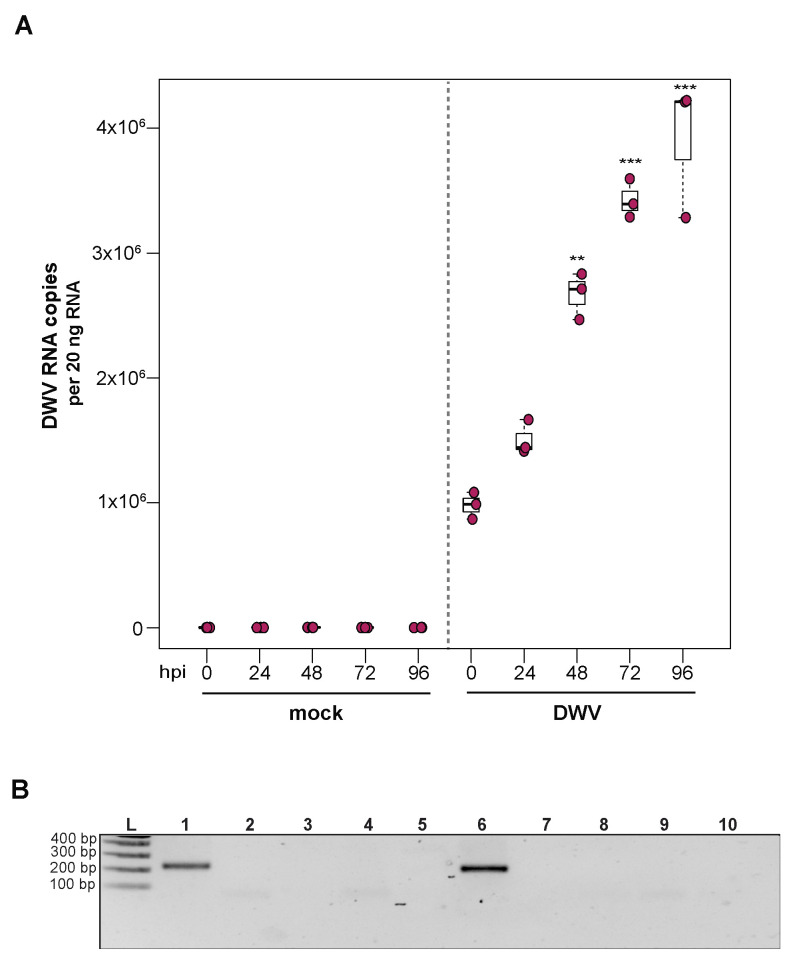
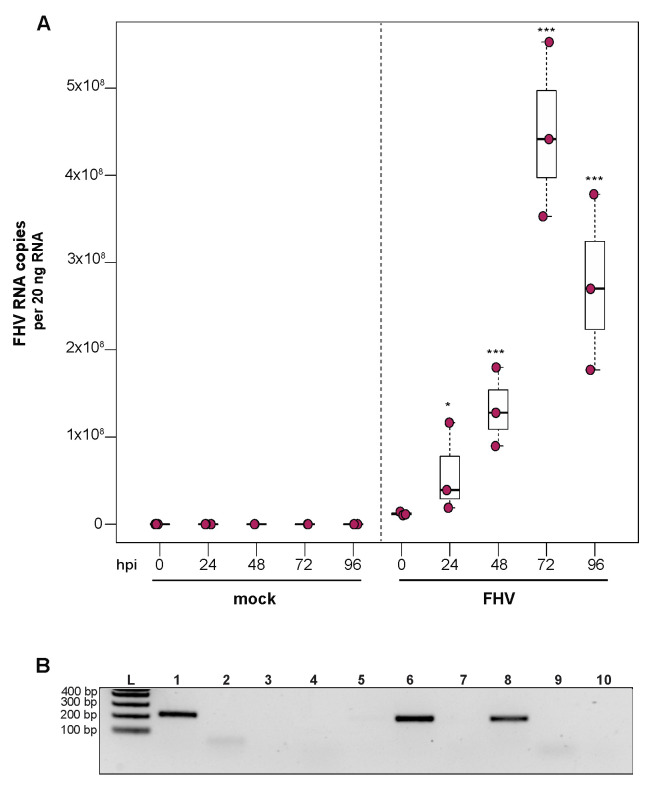
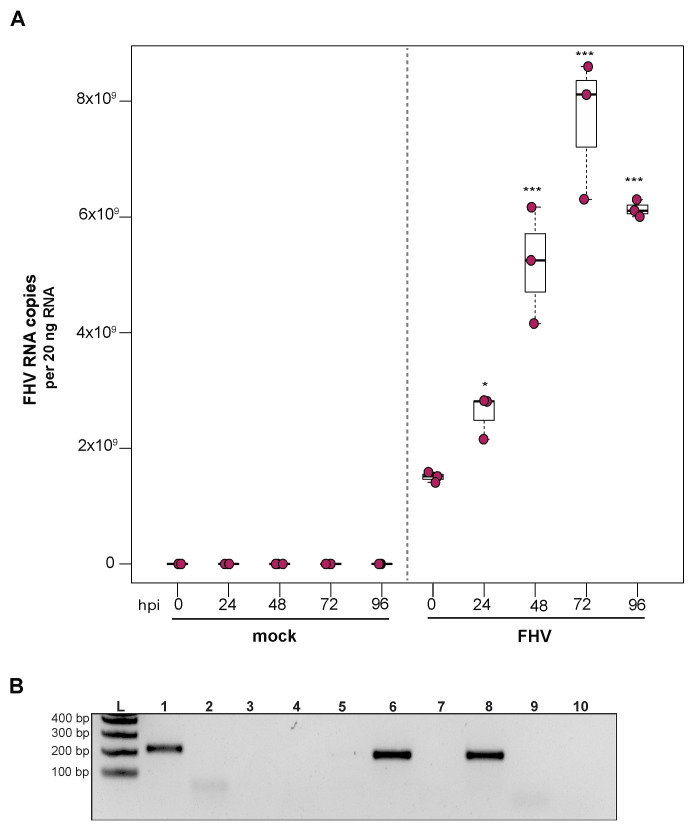
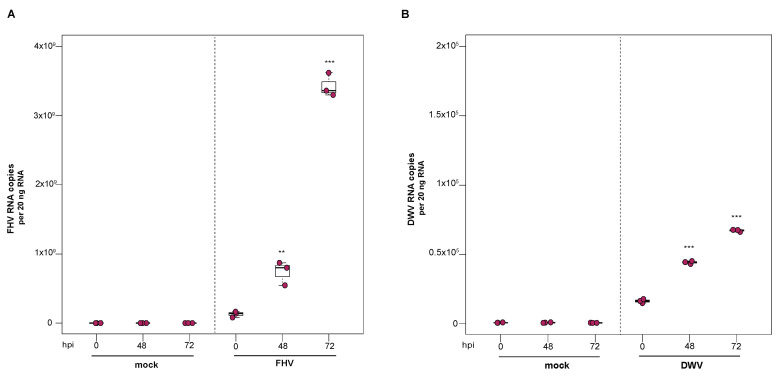
Honey bee () health is impacted by viral infections at the colony, individual bee, and cellular levels. To investigate honey bee antiviral defense mechanisms at the cellular level we further developed the use of cultured primary cells, derived from either larvae or pupae, and demonstrated that these cells could be infected with a panel of viruses, including common honey bee infecting viruses (i.e., sacbrood virus (SBV) and deformed wing virus (DWV)) and an insect model virus, Flock House virus (FHV). Virus abundances were quantified over the course of infection. The production of infectious virions in cultured honey bee pupal cells was demonstrated by determining that naïve cells became infected after the transfer of deformed wing virus or Flock House virus from infected cell cultures. Initial characterization of the honey bee antiviral immune responses at the cellular level indicated that there were virus-specific responses, which included increased expression of (GenBank: MF116383) in SBV-infected pupal cells and increased expression of and in FHV-infected hemocytes and pupal cells. Additional studies are required to further elucidate virus-specific honey bee antiviral defense mechanisms. The continued use of cultured primary honey bee cells for studies that involve multiple viruses will address this knowledge gap.
蜜蜂()的健康在群落、个体蜜蜂和细胞水平上都会受到病毒感染的影响。为了在细胞水平上研究蜜蜂的抗病毒防御机制,我们进一步开发了源自幼虫或蛹的原代培养细胞的应用,并证明这些细胞可以被一组病毒感染,包括常见的感染蜜蜂的病毒(即囊状幼虫病毒(SBV)和残翅病毒(DWV))以及一种昆虫模型病毒,禽舍病毒(FHV)。在感染过程中对病毒丰度进行了定量。通过确定将残翅病毒或禽舍病毒从感染的细胞培养物转移后,未感染的细胞被感染,证明了在培养的蜜蜂蛹细胞中产生了有传染性的病毒粒子。在细胞水平上对蜜蜂抗病毒免疫反应的初步表征表明,存在病毒特异性反应,其中包括在感染SBV的蛹细胞中(GenBank:MF11638)表达增加,以及在感染FHV的血细胞和蛹细胞中 和 表达增加。需要进一步的研究来进一步阐明病毒特异性的蜜蜂抗病毒防御机制。继续将培养的蜜蜂原代细胞用于涉及多种病毒的研究将填补这一知识空白。