Veerasamy Ravichandran, Roy Anitha, Karunakaran Rohini, Rajak Harish
Pharmaceutical Chemistry Unit, Faculty of Pharmacy, AIMST University, Semeling 08100, Kedah, Malaysia.
Saveetha Dental College and Hospitals, Saveetha Institute of Medical and Technical Sciences, Chennai 600077, Tamil Nadu, India.
Pharmaceuticals (Basel). 2021 Jul 11;14(7):663. doi: 10.3390/ph14070663.
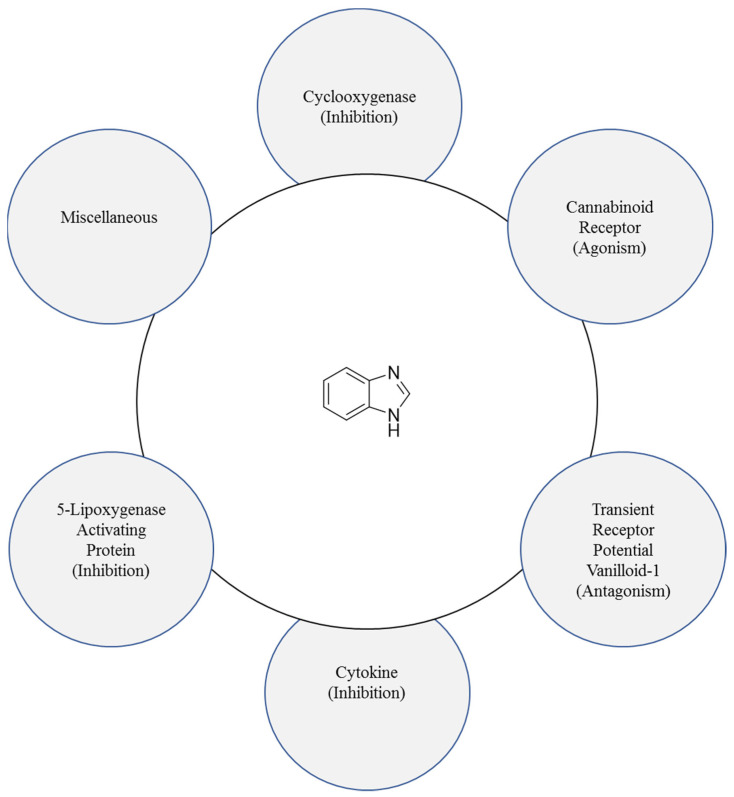
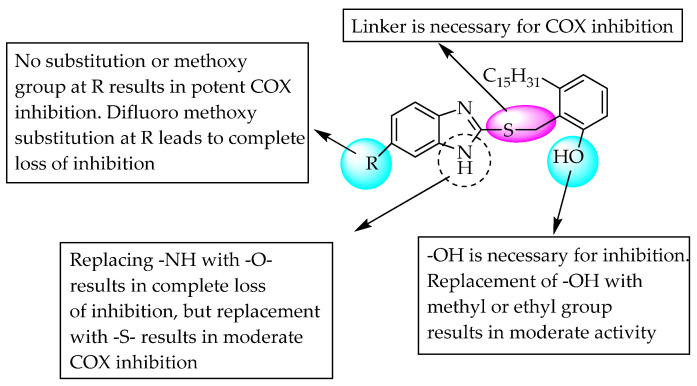
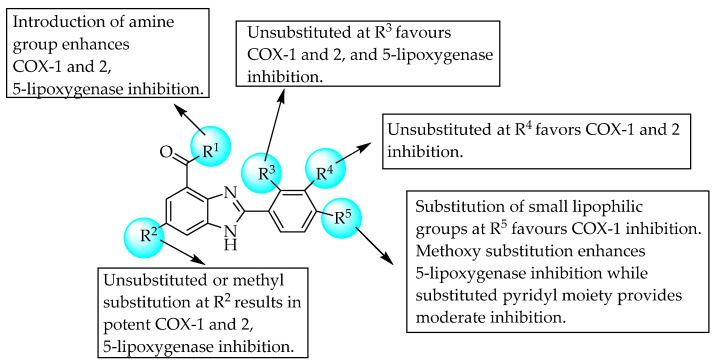
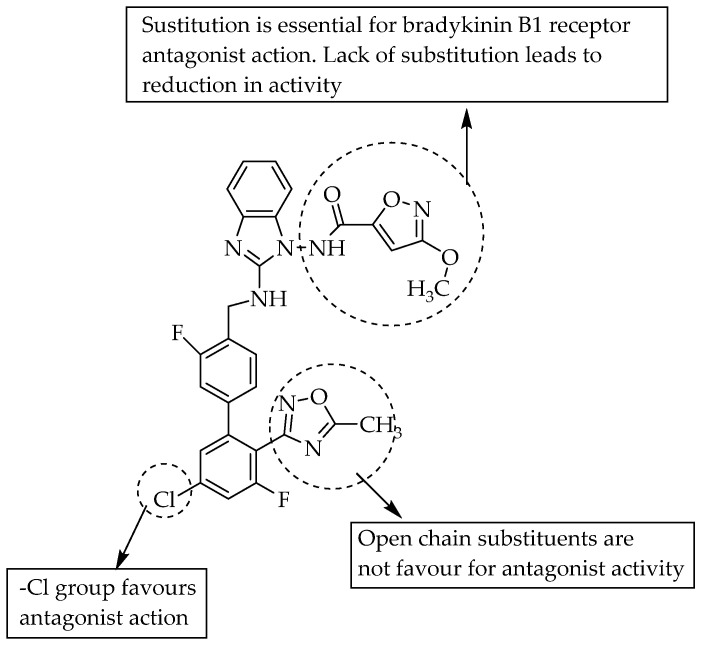
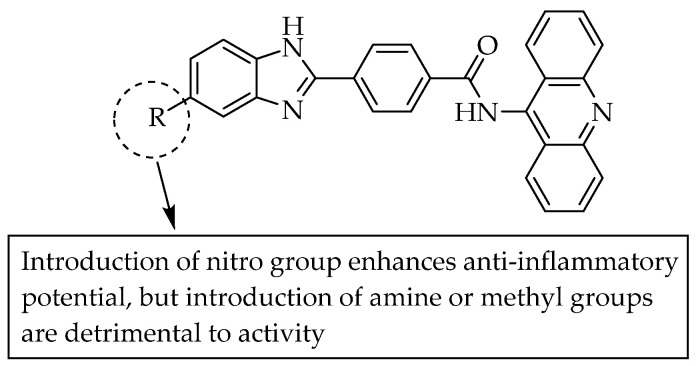
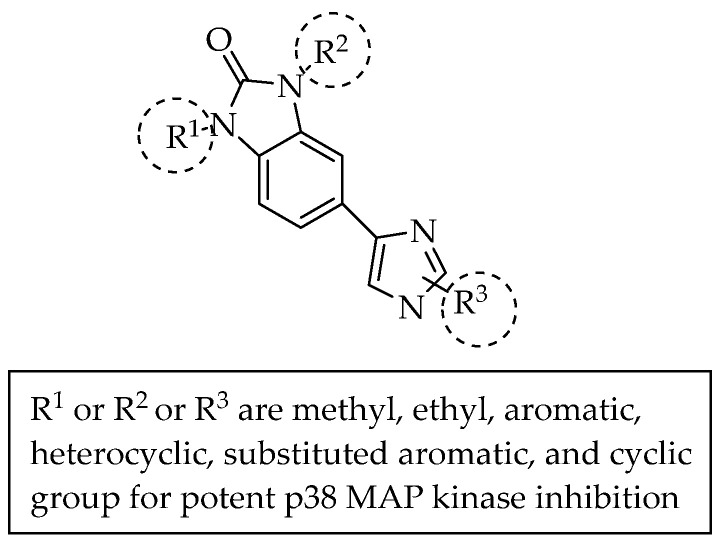
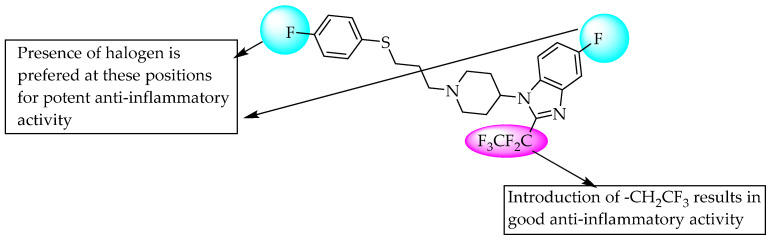
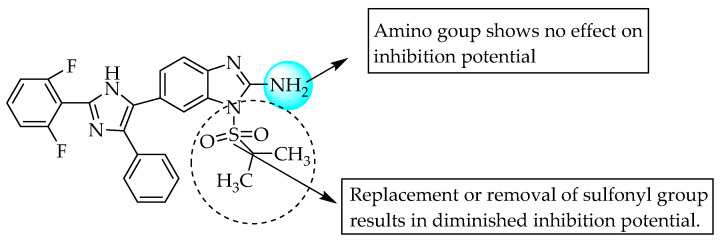
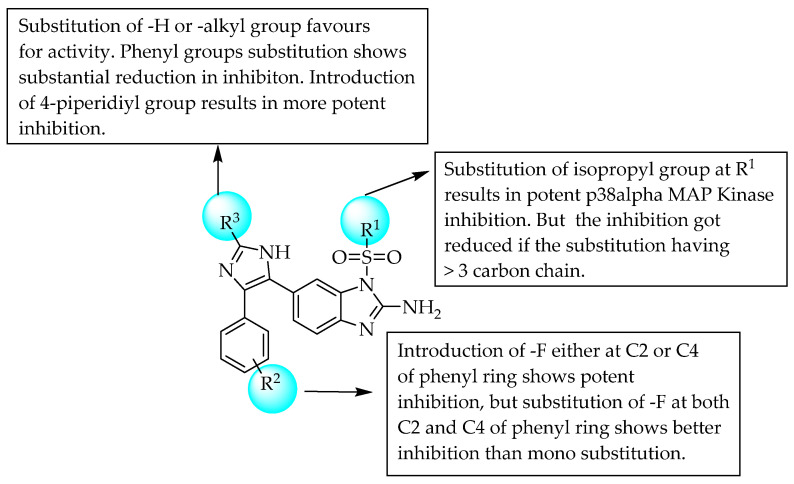
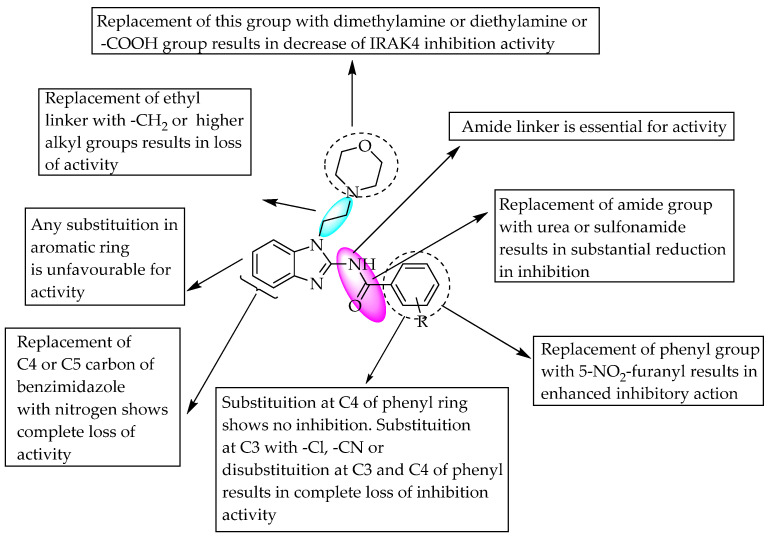
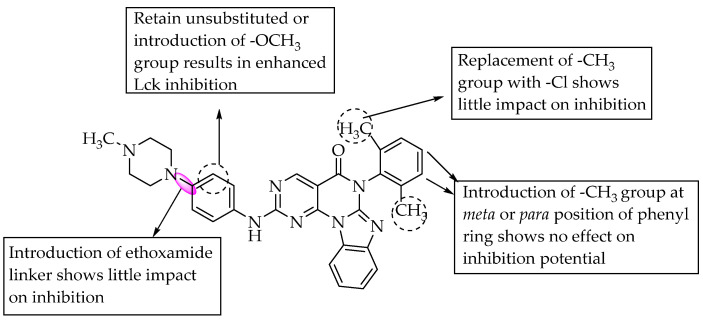
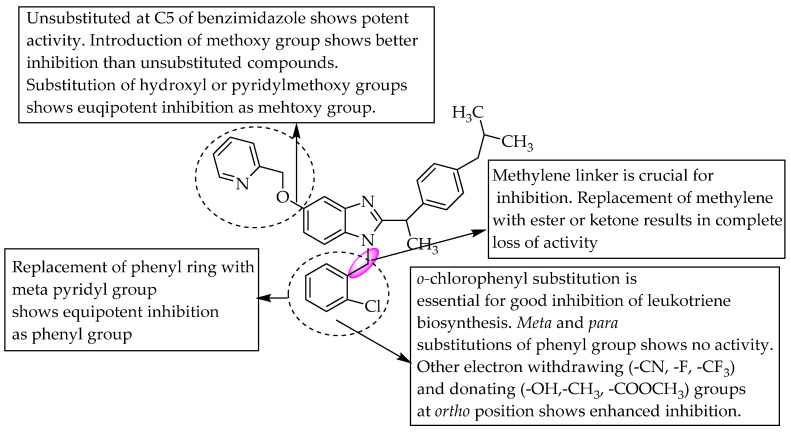
A significant number of the anti-inflammatory drugs currently in use are becoming obsolete. These are exceptionally hazardous for long-term use because of their possible unfavourable impacts. Subsequently, in the ebb-and-flow decade, analysts and researchers are engaged in developing new anti-inflammatory drugs, and many such agents are in the later phases of clinical trials. Molecules with heterocyclic nuclei are similar to various natural antecedents, thus acquiring immense consideration from scientific experts and researchers. The arguably most adaptable heterocyclic cores are benzimidazoles containing nitrogen in a bicyclic scaffold. Numerous benzimidazole drugs are broadly used in the treatment of numerous diseases, showing promising therapeutic potential. Benzimidazole derivatives exert anti-inflammatory effects mainly by interacting with transient receptor potential vanilloid-1, cannabinoid receptors, bradykinin receptors, specific cytokines, 5-lipoxygenase activating protein and cyclooxygenase. Literature on structure-activity relationship (SAR) and investigations of benzimidazoles highlight that the substituent's tendency and position on the benzimidazole ring significantly contribute to the anti-inflammatory activity. Reported SAR analyses indicate that substitution at the N1, C2, C5 and C6 positions of the benzimidazole scaffold greatly influence the anti-inflammatory activity. For example, benzimidazole substituted with anacardic acid on C2 inhibits COX-2, and 5-carboxamide or sulfamoyl or sulfonyl benzimidazole antagonises the cannabinoid receptor, whereas the C2 diarylamine and C3 carboxamide substitution of the benzimidazole scaffold result in antagonism of the bradykinin receptor. In this review, we examine the insights regarding the SARs of anti-inflammatory benzimidazole compounds, which will be helpful for researchers in designing and developing potential anti-inflammatory drugs to target inflammation-promoting enzymes.
目前正在使用的大量抗炎药物正逐渐过时。由于其可能产生的不利影响,这些药物长期使用极具危险性。随后,在当前的十年里,分析人员和研究人员致力于开发新的抗炎药物,许多此类药物正处于临床试验的后期阶段。具有杂环核的分子与各种天然前体相似,因此受到了科学专家和研究人员的极大关注。可以说最具适应性的杂环核心是在双环支架中含有氮的苯并咪唑。许多苯并咪唑药物被广泛用于治疗多种疾病,显示出有前景的治疗潜力。苯并咪唑衍生物主要通过与瞬时受体电位香草酸受体1、大麻素受体、缓激肽受体、特定细胞因子、5-脂氧合酶激活蛋白和环氧化酶相互作用来发挥抗炎作用。关于苯并咪唑结构-活性关系(SAR)的文献以及相关研究表明,苯并咪唑环上取代基的趋势和位置对其抗炎活性有显著贡献。报道的SAR分析表明,苯并咪唑支架的N1、C2、C5和C6位的取代对抗炎活性有很大影响。例如,在C2位被漆树酸取代的苯并咪唑抑制COX-2,5-羧酰胺或氨磺酰基或磺酰基苯并咪唑拮抗大麻素受体,而苯并咪唑支架的C2二芳基胺和C3羧酰胺取代导致对缓激肽受体的拮抗作用。在本综述中,我们研究了抗炎苯并咪唑化合物SAR的相关见解,这将有助于研究人员设计和开发针对促炎酶的潜在抗炎药物。