
递送细胞穿透肽纳米颗粒的核酸的内化和生物活性受生物分子冠的控制。
Internalisation and Biological Activity of Nucleic Acids Delivering Cell-Penetrating Peptide Nanoparticles Is Controlled by the Biomolecular Corona.
作者信息
Lorents Annely, Maloverjan Maria, Padari Kärt, Pooga Margus
机构信息
Institute of Molecular and Cell Biology, University of Tartu, 50411 Tartu, Estonia.
Institute of Technology, University of Tartu, 50411 Tartu, Estonia.
出版信息
Pharmaceuticals (Basel). 2021 Jul 12;14(7):667. doi: 10.3390/ph14070667.
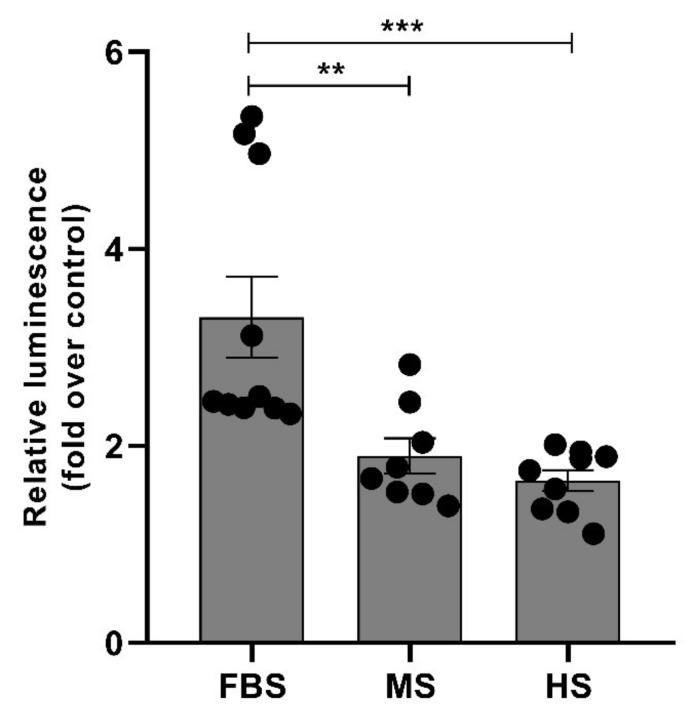
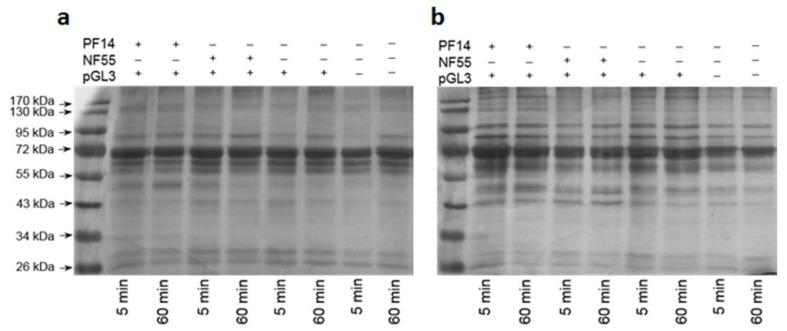
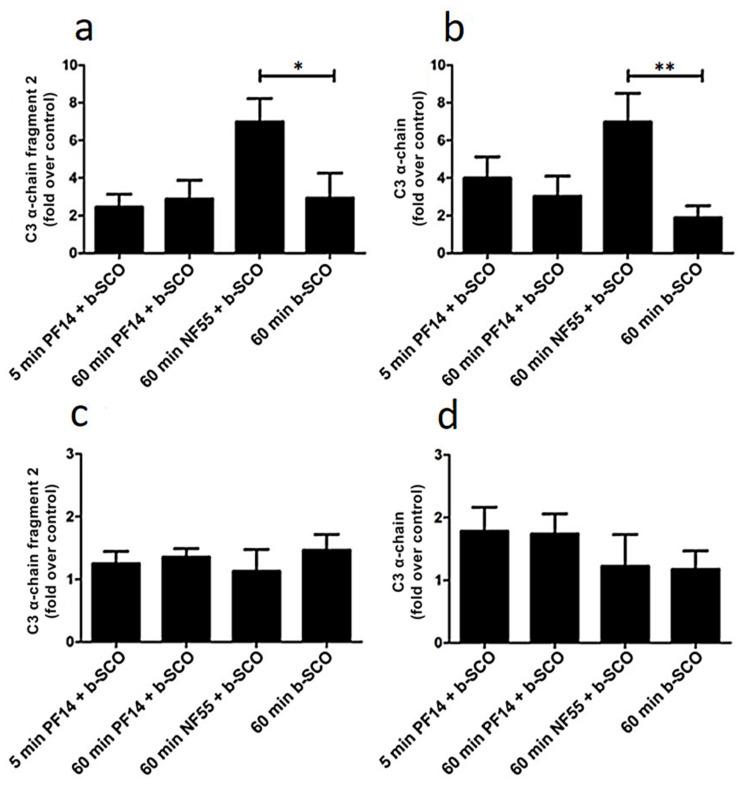
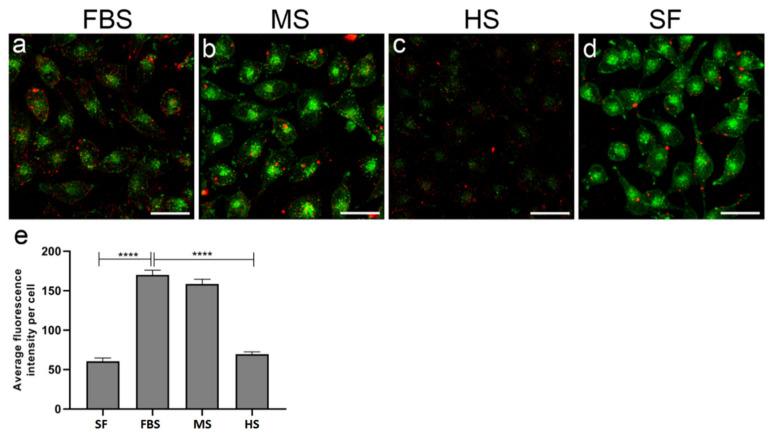
Nucleic acid molecules can be transferred into cells to alter gene expression and, thus, alleviate certain pathological conditions. Cell-penetrating peptides (CPPs) are vectors that can be used for transfecting nucleic acids as well as many other compounds. CPPs associate nucleic acids non-covalently, forming stable nanoparticles and providing efficient transfection of cells in vitro. However, in vivo, expected efficiency is achieved only in rare cases. One of the reasons for this discrepancy is the formation of protein corona around nanoparticles, once they are exposed to a biological environment, e.g., blood stream. In this study, we compared protein corona of CPP-nucleic acid nanoparticles formed in the presence of bovine, murine and human serum. We used Western blot and mass-spectrometry to identify the major constituents of protein corona forming around nanoparticles, showing that proteins involved in transport, haemostasis and complement system are its major components. We investigated physical features of nanoparticles and measured their biological efficiency in splice-correction assay. We showed that protein corona constituents might alter the fate of nanoparticles in vivo, e.g., by subjecting them to phagocytosis. We demonstrated that composition of protein corona of nanoparticles is species-specific that leads to dissimilar transfection efficiency and should be considered while developing delivery systems for nucleic acids.
核酸分子可被转入细胞以改变基因表达,从而缓解某些病理状况。细胞穿透肽(CPPs)是可用于转染核酸以及许多其他化合物的载体。CPPs与核酸非共价结合,形成稳定的纳米颗粒,并在体外实现细胞的高效转染。然而,在体内,仅在极少数情况下能达到预期效率。这种差异的原因之一是纳米颗粒一旦暴露于生物环境(如血流)中,就会在其周围形成蛋白质冠层。在本研究中,我们比较了在牛血清、鼠血清和人血清存在下形成的CPP-核酸纳米颗粒的蛋白质冠层。我们使用蛋白质印迹法和质谱法来鉴定纳米颗粒周围形成的蛋白质冠层的主要成分,结果表明参与转运、止血和补体系统的蛋白质是其主要成分。我们研究了纳米颗粒的物理特性,并在剪接校正试验中测量了它们的生物学效率。我们表明,蛋白质冠层成分可能会改变纳米颗粒在体内的命运,例如使其被吞噬。我们证明,纳米颗粒蛋白质冠层的组成具有物种特异性,这导致不同的转染效率,在开发核酸递送系统时应予以考虑。



 Zotero 插件