Francia Valentina, Montizaan Daphne, Salvati Anna
Groningen Research Institute of Pharmacy, University of Groningen, 9713AV Groningen, Netherlands.
Beilstein J Nanotechnol. 2020 Feb 14;11:338-353. doi: 10.3762/bjnano.11.25. eCollection 2020.
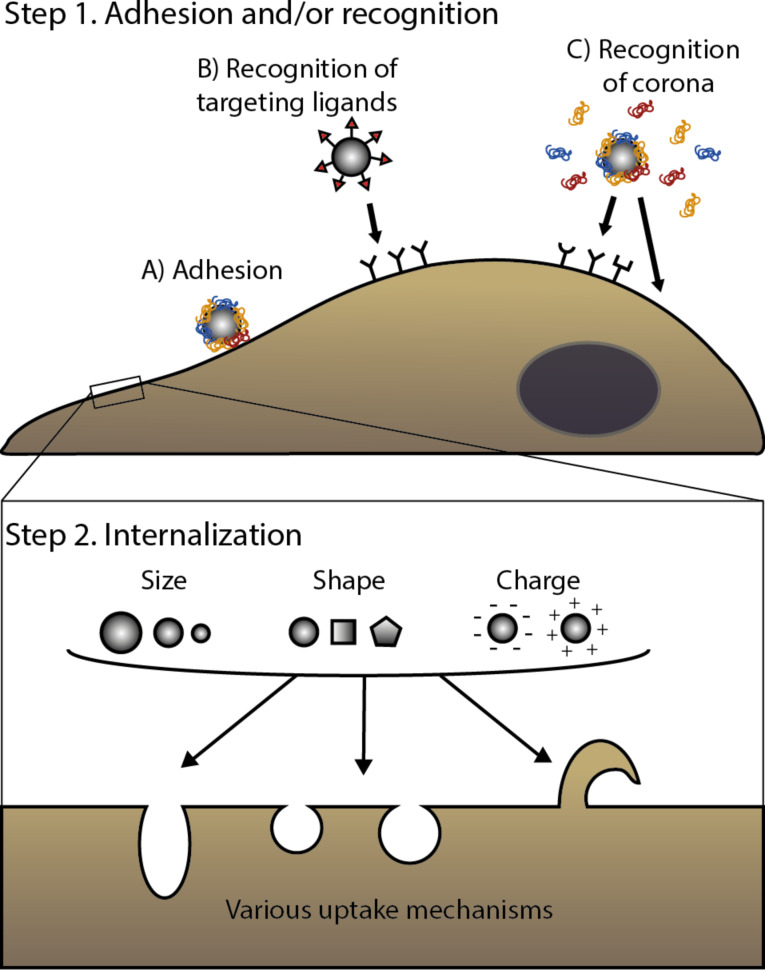
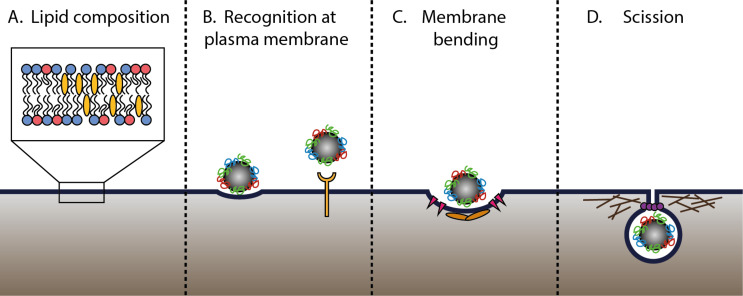
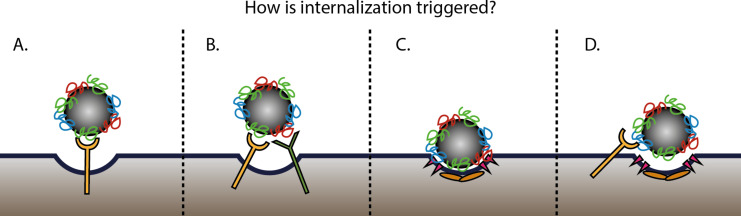
Nano-sized materials have great potential as drug carriers for nanomedicine applications. Thanks to their size, they can exploit the cellular machinery to enter cells and be trafficked intracellularly, thus they can be used to overcome some of the cellular barriers to drug delivery. Nano-sized drug carriers of very different properties can be prepared, and their surface can be modified by the addition of targeting moieties to recognize specific cells. However, it is still difficult to understand how the material properties affect the subsequent interactions and outcomes at cellular level. As a consequence of this, designing targeted drugs remains a major challenge in drug delivery. Within this context, we discuss the current understanding of the initial steps in the interactions of nano-sized materials with cells in relation to nanomedicine applications. In particular, we focus on the difficult interplay between the initial adhesion of nano-sized materials to the cell surface, the potential recognition by cell receptors, and the subsequent mechanisms cells use to internalize them. The factors affecting these initial events are discussed. Then, we briefly describe the different pathways of endocytosis in cells and illustrate with some examples the challenges in understanding how nanomaterial properties, such as size, charge, and shape, affect the mechanisms cells use for their internalization. Technical difficulties in characterizing these mechanisms are presented. A better understanding of the first interactions of nano-sized materials with cells will help to design nanomedicines with improved targeting.
纳米材料作为纳米医学应用的药物载体具有巨大潜力。由于其尺寸小,它们可以利用细胞机制进入细胞并在细胞内运输,因此可用于克服药物递送中的一些细胞屏障。可以制备具有非常不同性质的纳米药物载体,并且可以通过添加靶向部分来修饰其表面以识别特定细胞。然而,仍然难以理解材料特性如何在细胞水平上影响随后的相互作用和结果。因此,设计靶向药物仍然是药物递送中的一项重大挑战。在此背景下,我们讨论了目前对纳米材料与细胞相互作用的初始步骤与纳米医学应用相关的理解。特别是,我们关注纳米材料与细胞表面的初始粘附、细胞受体的潜在识别以及细胞随后用于内化它们的机制之间的复杂相互作用。讨论了影响这些初始事件的因素。然后,我们简要描述细胞内吞作用的不同途径,并通过一些例子说明理解纳米材料特性(如尺寸、电荷和形状)如何影响细胞用于内化它们的机制所面临的挑战。介绍了表征这些机制的技术困难。更好地理解纳米材料与细胞的首次相互作用将有助于设计具有改进靶向性的纳米药物。