Amsterdam University Medical Centre, VU Medical Centre, Department Ethics, Law and Medical Humanities, De Boelelaan 1089a, 1081 HV Amsterdam, The Netherlands.
Leyden Academy, Rijnsburgerweg 10, 2333 AA Leiden, The Netherlands.
Int J Environ Res Public Health. 2021 Jul 26;18(15):7903. doi: 10.3390/ijerph18157903.
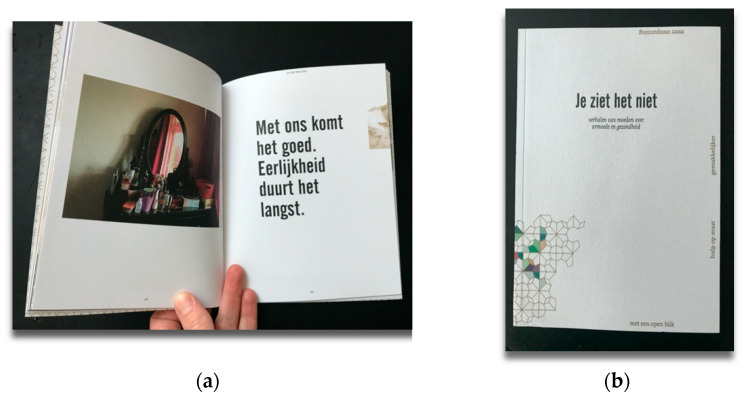
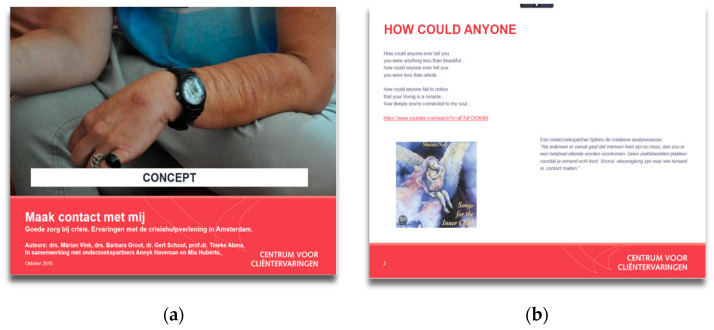
Participatory health research (PHR) is a research approach in which people, including hidden populations, share lived experiences about health inequities to improve their situation through collective action. Boundary objects are produced, using arts-based methods, to be heard by stakeholders. These can bring about dialogue, connection, and involvement in a mission for social justice. This study aims to gain insight into the value and ethical issues of boundary objects that address health inequalities. A qualitative evaluation is conducted on three different boundary objects, created in different participatory studies with marginalized populations (mothers in poverty, psychiatric patients, and unemployed people). A successful boundary object evokes emotions among those who created the objects and those encountering these objects. Such objects move people and create an impulse for change. The more provocative the object, the more people feel triggered to foster change. Boundary objects may cross personal boundaries and could provoke feelings of discomfort and ignorance. Therefore, it is necessary to pay attention to ethics work. Boundary objects that are made by people from hidden populations may spur actions and create influence by improving the understanding of the needs of hidden populations. A dialogue about these needs is an essential step towards social justice.
参与式健康研究(PHR)是一种研究方法,通过这种方法,包括弱势群体在内的人们分享有关健康不平等的生活经历,通过集体行动来改善他们的处境。使用艺术方法制作出边界物体,以便利益相关者听到。这些可以带来对话、联系和参与社会正义使命。本研究旨在深入了解解决健康不平等问题的边界物体的价值和伦理问题。对三个不同的边界物体进行了定性评估,这些边界物体是在与弱势群体(贫困母亲、精神病人和失业人员)进行的不同参与性研究中创建的。一个成功的边界物体会在创造这些物体的人和遇到这些物体的人之间唤起情感。这样的物体可以打动人们,并激发改变的冲动。对象越具挑衅性,人们就越会感到有动力去促进变革。边界物体可能会跨越个人界限,并可能引起不适和无知的感觉。因此,有必要关注道德工作。由弱势群体制作的边界物体可能会通过提高对弱势群体需求的理解来激发行动并产生影响。关于这些需求的对话是实现社会正义的重要步骤。