Institute of Pharmacology, College of Medicine, National Yang Ming Chiao Tung University, No. 155, Sec. 2, Linong St., Taipei 11217, Taiwan.
School of Medicine, National Yang Ming Chiao Tung University, No. 155, Sec. 2, Linong St., Taipei 11217, Taiwan.
Int J Mol Sci. 2021 Jul 25;22(15):7930. doi: 10.3390/ijms22157930.
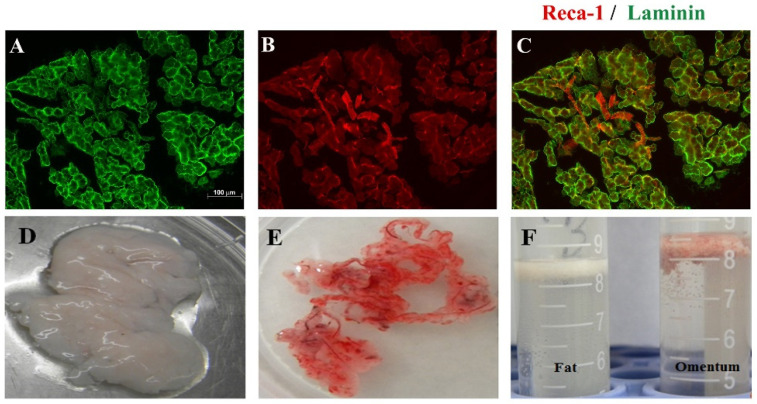
Spinal cord injury (SCI) causes a primary injury at the lesion site and triggers a secondary injury and prolonged inflammation. There has been no definitive treatment till now. Promoting angiogenesis is one of the most important strategies for functional recovery after SCI. The omentum, abundant in blood and lymph vessels, possesses the potent ability of tissue regeneration.
The present work examines the efficacy of autologous omentum, either as a flap (with vascular connection intact) or graft (severed vascular connection), on spinal nerve regeneration. After contusive SCI in rats, a thin sheath of omentum was grafted to the injured spinal cord.
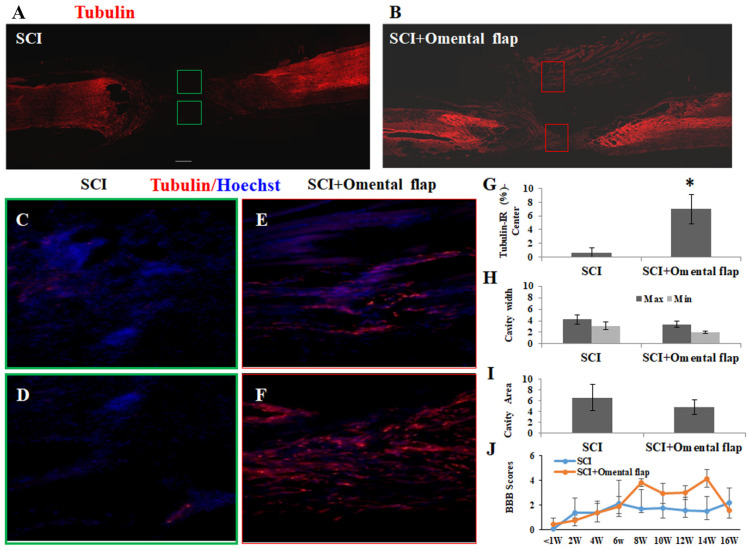
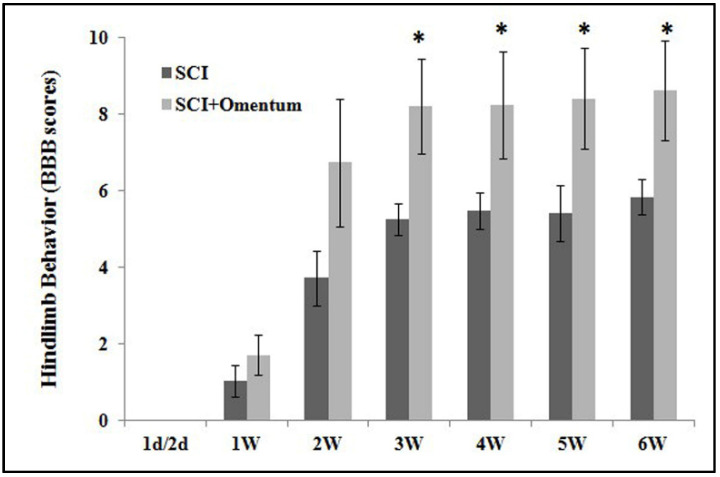
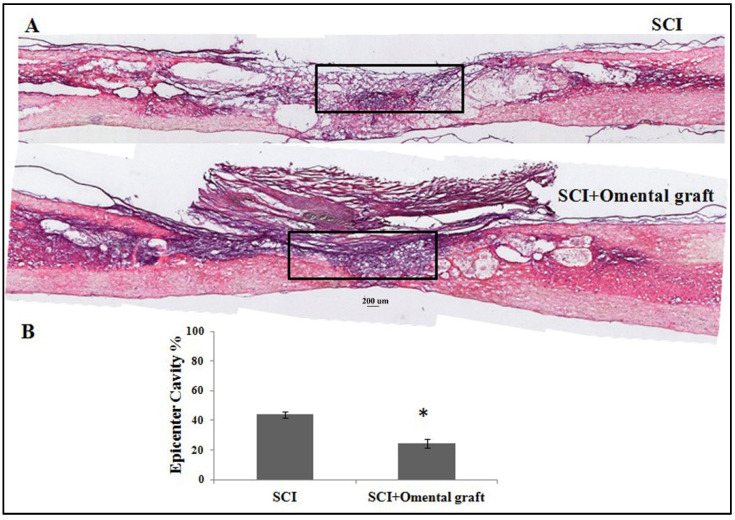
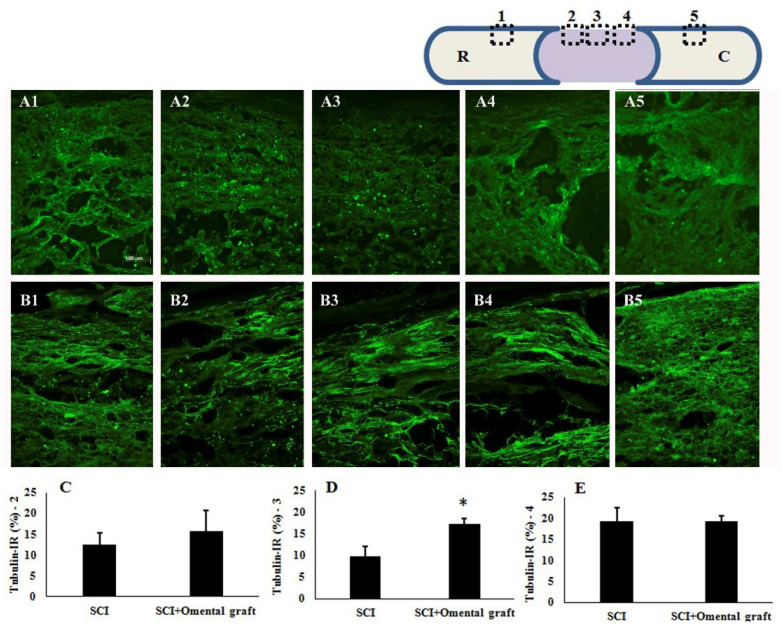
Omental graft improved behavior scores significantly from the 3rd to 6th week after injury (6th week, 5.5 ± 0.5 vs. 8.6 ± 1.3, < 0.05). Furthermore, the reduction in cavity and the preservation of class III β-tubulin-positive nerve fibers in the injury area was noted. Next, the free omental flap was transposed to a completely transected SCI in rats through a pre-implanted tunnel. The flap remained vascularized and survived well several weeks after the operation. At 16 weeks post-treatment, SCI rats with omentum flap treatment displayed the preservation of significantly more nerve fibers ( < 0.05) and a reduced injured cavity, though locomotor scores were similar.
Taken together, the findings of this study indicate that treatment with an omental graft or transposition of an omental flap on an injured spinal cord has a positive effect on nerve protection and tissue preservation in SCI rats. The current data highlight the importance of omentum in clinical applications.
脊髓损伤 (SCI) 在损伤部位造成原发性损伤,并引发继发性损伤和长期炎症。到目前为止,还没有明确的治疗方法。促进血管生成是 SCI 后功能恢复的最重要策略之一。大网膜富含血管和淋巴管,具有很强的组织再生能力。
本研究探讨了自体大网膜作为皮瓣(血管连接完整)或移植物(切断血管连接)对脊髓神经再生的疗效。在大鼠创伤性 SCI 后,将一层薄的网膜移植到损伤的脊髓上。
大网膜移植物显著改善了损伤后第 3 至 6 周的行为评分(第 6 周,5.5±0.5 比 8.6±1.3, < 0.05)。此外,还观察到损伤区域内腔的减少和 III 类β-微管蛋白阳性神经纤维的保留。接下来,将游离大网膜瓣通过预先植入的隧道转移到大鼠完全横断的 SCI 中。瓣片保持血管化,在手术后数周内存活良好。在治疗后 16 周,接受大网膜瓣治疗的 SCI 大鼠显示出明显更多的神经纤维保留( < 0.05)和损伤腔减少,尽管运动评分相似。
综上所述,本研究结果表明,大网膜移植或大网膜瓣转位治疗损伤的脊髓对 SCI 大鼠的神经保护和组织保存有积极作用。目前的数据强调了大网膜在临床应用中的重要性。