Laboratory of Hepato-Gastroenterology, Institute of Experimental and Clinical Research, UCLouvain, 1200 Brussels, Belgium.
HPB Surgery Unit, Centre Hospitalier Universitaire UCL Namur, Site Mont-Godinne, 5530 Yvoir, Belgium.
Int J Mol Sci. 2021 Jul 28;22(15):8053. doi: 10.3390/ijms22158053.
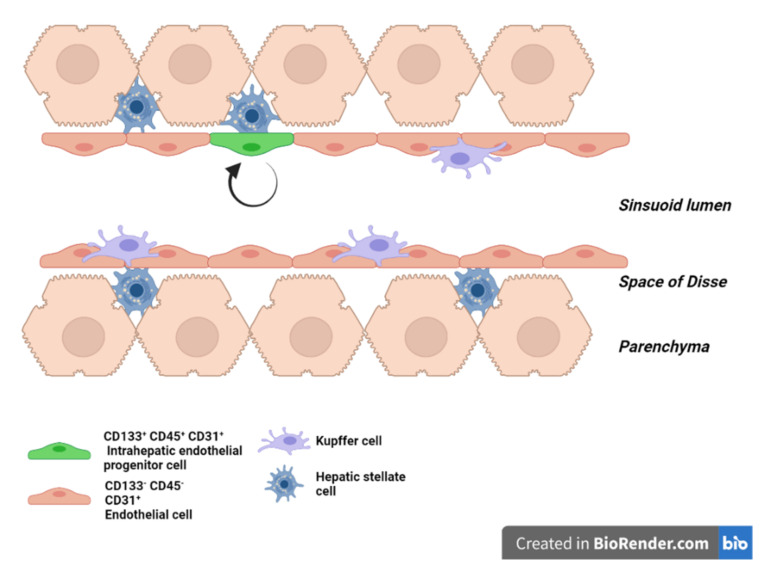
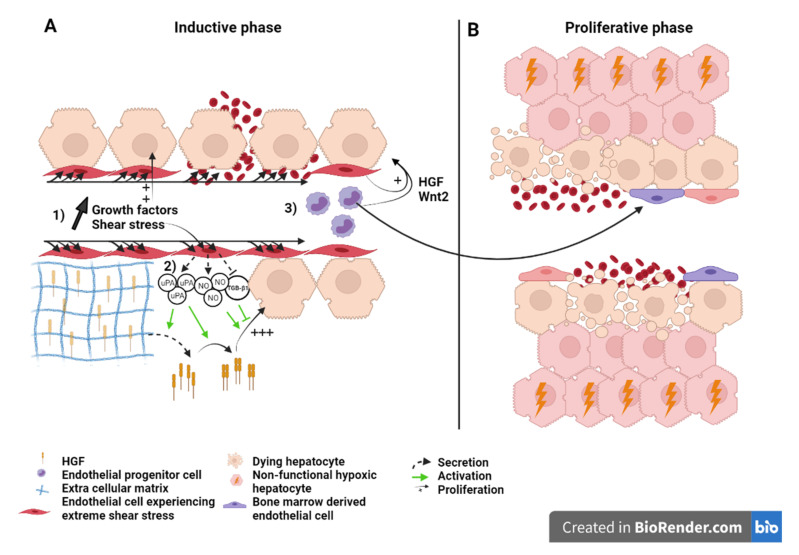
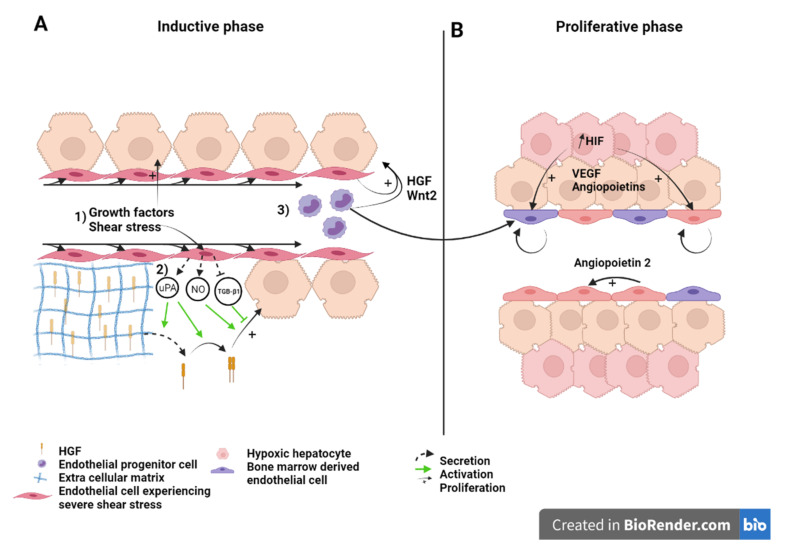
Liver sinusoids are lined by liver sinusoidal endothelial cells (LSEC), which represent approximately 15 to 20% of the liver cells, but only 3% of the total liver volume. LSEC have unique functions, such as fluid filtration, blood vessel tone modulation, blood clotting, inflammatory cell recruitment, and metabolite and hormone trafficking. Different subtypes of liver endothelial cells are also known to control liver zonation and hepatocyte function. Here, we have reviewed the origin of LSEC, the different subtypes identified in the liver, as well as their renewal during homeostasis. The liver has the exceptional ability to regenerate from small remnants. The past decades have seen increasing awareness in the role of non-parenchymal cells in liver regeneration despite not being the most represented population. While a lot of knowledge has emerged, clarification is needed regarding the role of LSEC in sensing shear stress and on their participation in the inductive phase of regeneration by priming the hepatocytes and delivering mitogenic factors. It is also unclear if bone marrow-derived LSEC participate in the proliferative phase of liver regeneration. Similarly, data are scarce as to LSEC having a role in the termination phase of the regeneration process. Here, we review what is known about the interaction between LSEC and other liver cells during the different phases of liver regeneration. We next explain extended hepatectomy and small liver transplantation, which lead to "small for size syndrome" (SFSS), a lethal liver failure. SFSS is linked to endothelial denudation, necrosis, and lobular disturbance. Using the knowledge learned from partial hepatectomy studies on LSEC, we expose several techniques that are, or could be, used to avoid the "small for size syndrome" after extended hepatectomy or small liver transplantation.
肝窦由肝窦内皮细胞(LSEC)组成,LSEC 约占肝脏细胞的 15%至 20%,但仅占肝脏总体积的 3%。LSEC 具有独特的功能,如液体过滤、血管张力调节、凝血、炎症细胞募集以及代谢物和激素转运。不同类型的肝内皮细胞也被认为控制着肝区带和肝细胞功能。在这里,我们回顾了 LSEC 的起源、在肝脏中鉴定出的不同亚型,以及它们在稳态下的更新。肝脏具有从微小残片中再生的非凡能力。尽管非实质细胞不是最主要的细胞群,但过去几十年来,人们越来越意识到它们在肝脏再生中的作用。虽然已经有了很多的认识,但仍需要澄清 LSEC 在感知切应力中的作用,以及在通过激活肝细胞和传递有丝分裂原因子来启动再生的诱导阶段时,它们在参与再生中的作用。骨髓来源的 LSEC 是否参与肝脏再生的增殖阶段也不清楚。同样,关于 LSEC 在再生过程的终止阶段是否起作用的数据也很少。在这里,我们回顾了 LSEC 在肝脏再生的不同阶段与其他肝脏细胞之间的相互作用。接下来,我们解释了扩大肝切除术和小肝移植导致的“小肝综合征”(SFSS),这是一种致命的肝衰竭。SFSS 与内皮细胞剥脱、坏死和小叶紊乱有关。利用从小鼠部分肝切除研究中获得的关于 LSEC 的知识,我们介绍了几种技术,这些技术目前正在或可能被用于避免在扩大肝切除术或小肝移植后出现“小肝综合征”。