Department of Biomedical Sciences, Faculty of Health and Medical Sciences, Blegdamsvej 3B, Room 18.5.32., DK-2200 Copenhagen, Denmark.
Int J Mol Sci. 2021 Aug 3;22(15):8340. doi: 10.3390/ijms22158340.
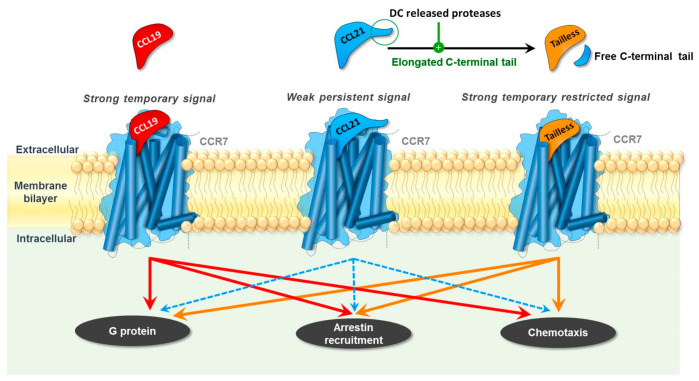
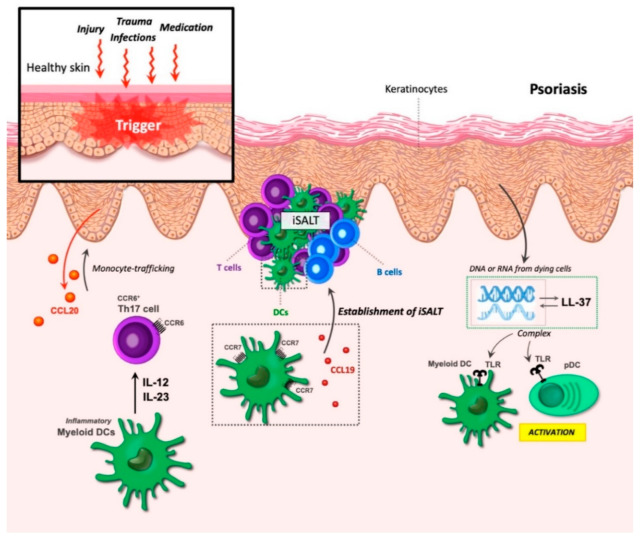
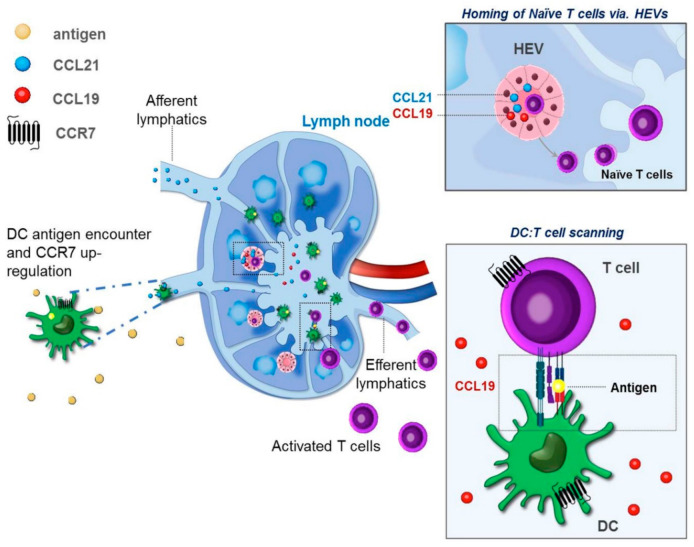
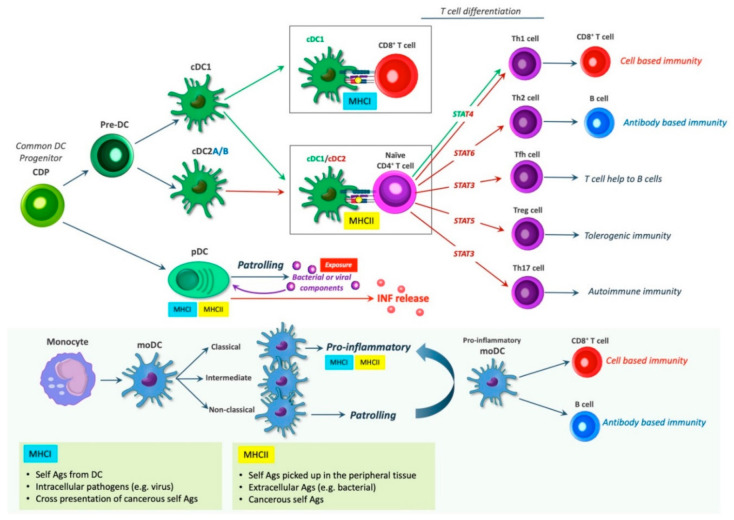
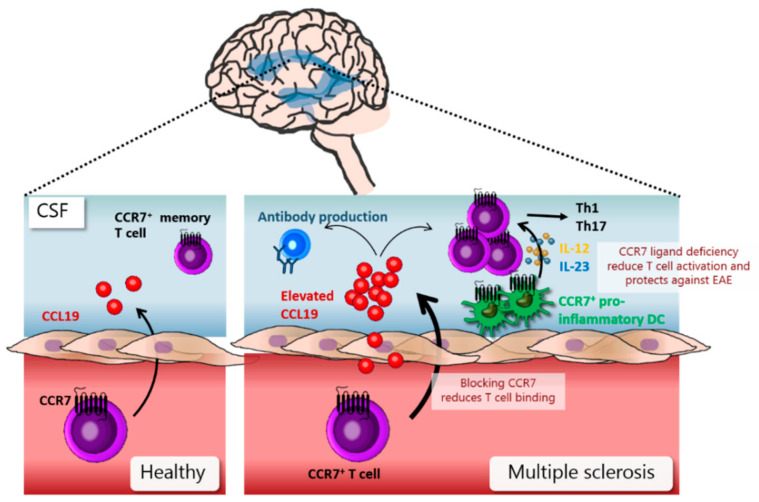
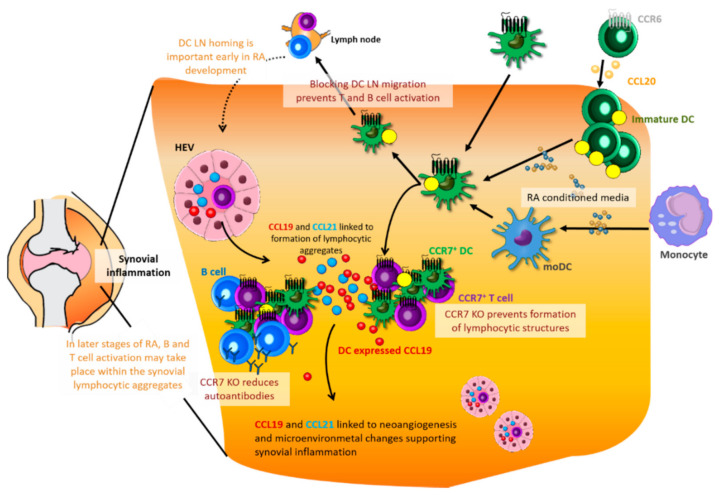
Chemotactic cytokines-chemokines-control immune cell migration in the process of initiation and resolution of inflammatory conditions as part of the body's defense system. Many chemokines also participate in pathological processes leading up to and exacerbating the inflammatory state characterizing chronic inflammatory diseases. In this review, we discuss the role of dendritic cells (DCs) and the central chemokine receptor CCR7 in the initiation and sustainment of selected chronic inflammatory diseases: multiple sclerosis (MS), rheumatoid arthritis (RA), and psoriasis. We revisit the binary role that CCR7 plays in combatting and progressing cancer, and we discuss how CCR7 and DCs can be harnessed for the treatment of cancer. To provide the necessary background, we review the differential roles of the natural ligands of CCR7, CCL19, and CCL21 and how they direct the mobilization of activated DCs to lymphoid organs and control the formation of associated lymphoid tissues (ALTs). We provide an overview of DC subsets and, briefly, elaborate on the different T-cell effector types generated upon DC-T cell priming. In the conclusion, we promote CCR7 as a possible target of future drugs with an antagonistic effect to reduce inflammation in chronic inflammatory diseases and an agonistic effect for boosting the reactivation of the immune system against cancer in cell-based and/or immune checkpoint inhibitor (ICI)-based anti-cancer therapy.
趋化细胞因子-趋化因子控制免疫细胞在炎症状态的起始和解决过程中的迁移,作为身体防御系统的一部分。许多趋化因子也参与导致和加重慢性炎症疾病特征的炎症状态的病理过程。在这篇综述中,我们讨论树突状细胞 (DC) 和中央趋化因子受体 CCR7 在选定的慢性炎症疾病的起始和维持中的作用:多发性硬化症 (MS)、类风湿关节炎 (RA) 和银屑病。我们重新审视了 CCR7 在对抗和促进癌症方面的双重作用,并讨论了如何利用 CCR7 和 DC 治疗癌症。为了提供必要的背景,我们回顾了 CCR7 的天然配体 CCL19 和 CCL21 的不同作用,以及它们如何指导激活的 DC 向淋巴器官的动员,并控制相关淋巴组织 (ALT) 的形成。我们概述了 DC 亚群,并简要阐述了 DC-T 细胞启动时产生的不同 T 细胞效应类型。在结论中,我们提倡 CCR7 作为未来具有拮抗作用的药物的可能靶点,以减少慢性炎症性疾病中的炎症,并具有激动作用,以增强免疫系统对癌症的重新激活,用于基于细胞的和/或免疫检查点抑制剂 (ICI) 的抗癌治疗。