Byun Hayoung, Yu Sangjoon, Oh Jaehoon, Bae Junwon, Yoon Myeong Seong, Lee Seung Hwan, Chung Jae Ho, Kim Tae Hyun
Department of Otolaryngology & Head and Neck Surgery, College of Medicine, Hanyang University, Seoul 04763, Korea.
Machine Learning Research Center for Medical Data, Hanyang University, Seoul 04763, Korea.
J Clin Med. 2021 Jul 21;10(15):3198. doi: 10.3390/jcm10153198.
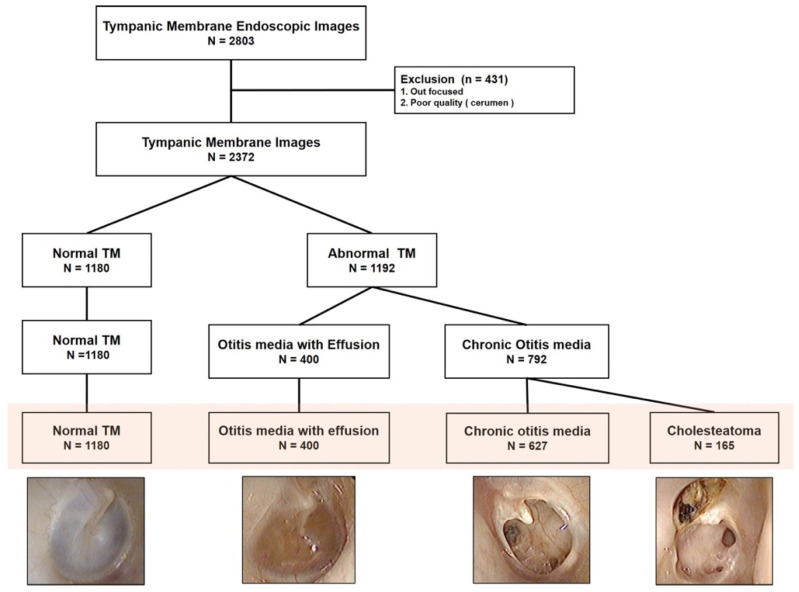
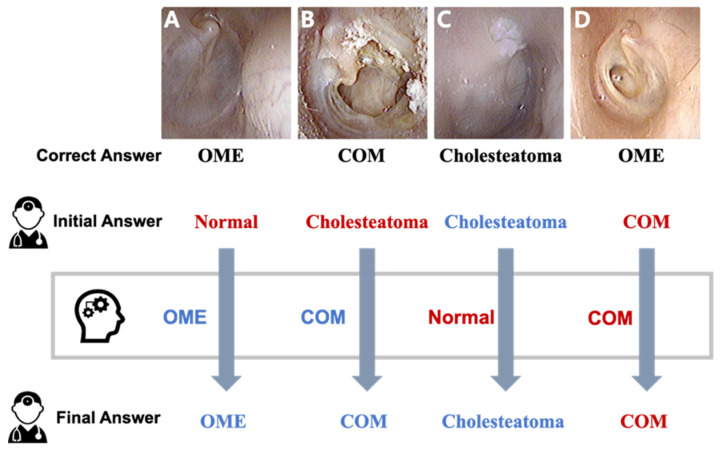
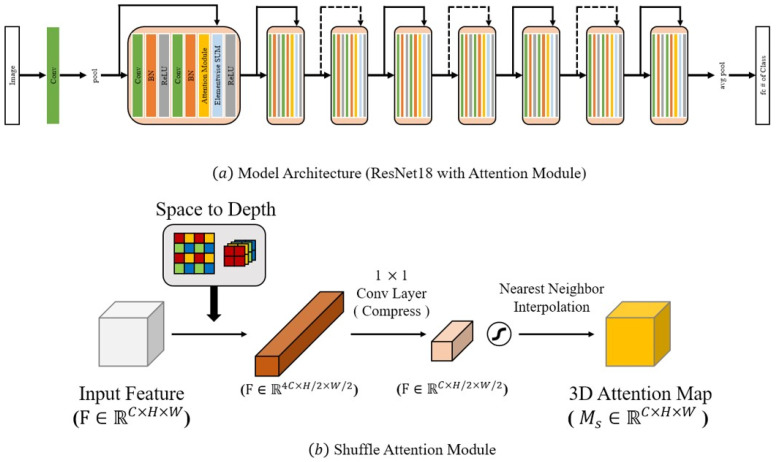
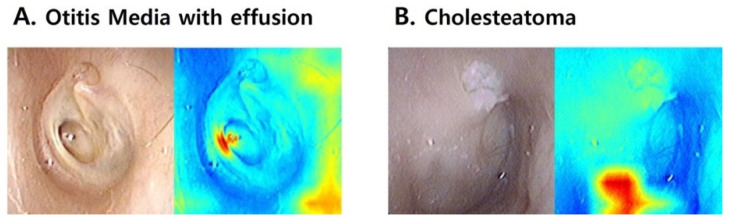
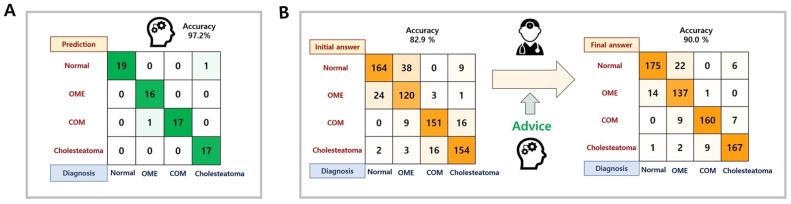
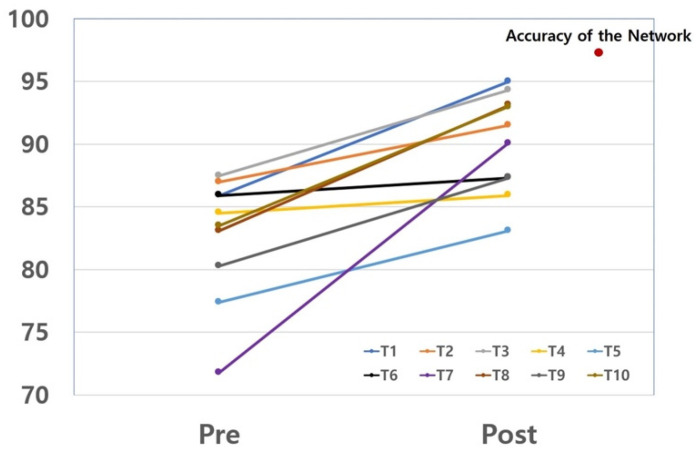
The present study aimed to develop a machine learning network to diagnose middle ear diseases with tympanic membrane images and to identify its assistive role in the diagnostic process. The medical records of subjects who underwent ear endoscopy tests were reviewed. From these records, 2272 diagnostic tympanic membranes images were appropriately labeled as normal, otitis media with effusion (OME), chronic otitis media (COM), or cholesteatoma and were used for training. We developed the "ResNet18 + Shuffle" network and validated the model performance. Seventy-one representative cases were selected to test the final accuracy of the network and resident physicians. We asked 10 resident physicians to make diagnoses from tympanic membrane images with and without the help of the machine learning network, and the change of the diagnostic performance of resident physicians with the aid of the answers from the machine learning network was assessed. The devised network showed a highest accuracy of 97.18%. A five-fold validation showed that the network successfully diagnosed ear diseases with an accuracy greater than 93%. All resident physicians were able to diagnose middle ear diseases more accurately with the help of the machine learning network. The increase in diagnostic accuracy was up to 18% (1.4% to 18.4%). The machine learning network successfully classified middle ear diseases and was assistive to clinicians in the interpretation of tympanic membrane images.
本研究旨在开发一种机器学习网络,用于通过鼓膜图像诊断中耳疾病,并确定其在诊断过程中的辅助作用。回顾了接受耳内镜检查的受试者的病历。从这些记录中,2272张诊断性鼓膜图像被正确标记为正常、分泌性中耳炎(OME)、慢性中耳炎(COM)或胆脂瘤,并用于训练。我们开发了“ResNet18 + Shuffle”网络并验证了模型性能。选择了71例代表性病例来测试该网络和住院医师的最终准确性。我们让10名住院医师在有和没有机器学习网络帮助的情况下根据鼓膜图像进行诊断,并评估住院医师在机器学习网络答案帮助下诊断性能的变化。设计的网络显示出最高97.18%的准确率。五重验证表明,该网络成功诊断耳部疾病的准确率超过93%。所有住院医师在机器学习网络的帮助下都能够更准确地诊断中耳疾病。诊断准确率的提高高达18%(1.4%至18.4%)。机器学习网络成功地对中耳疾病进行了分类,并在鼓膜图像解读方面对临床医生有辅助作用。