Wu Jingwei, Liu Limin, Hu Huaijian, Gao Zhihua
Orthopedics Department, Xuanwu Hospital, Capital Medical University, Beijing, China.
Evid Based Complement Alternat Med. 2021 Jul 28;2021:2426298. doi: 10.1155/2021/2426298. eCollection 2021.
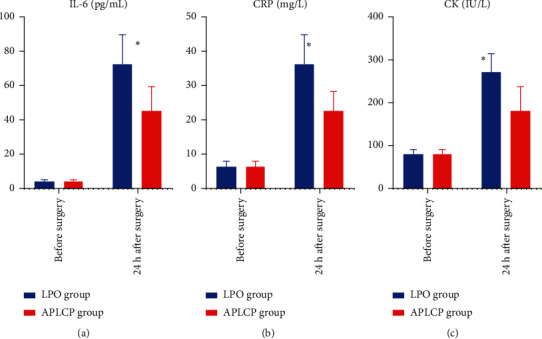
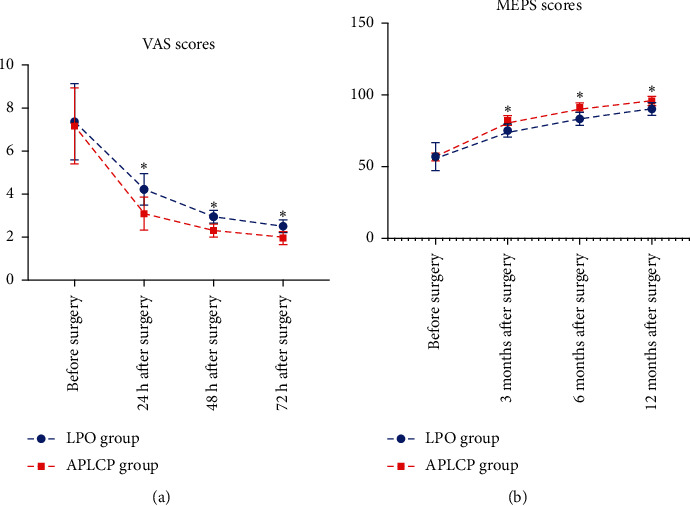
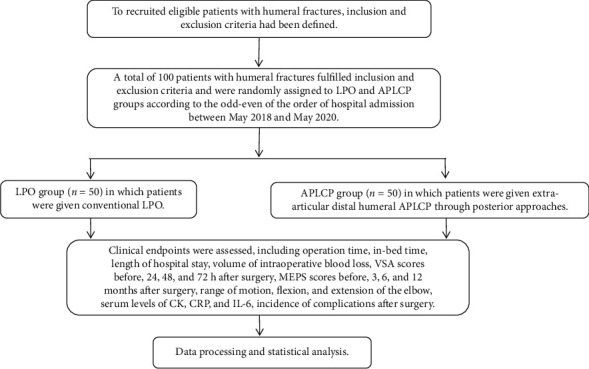
Distal humeral fractures are challenging injuries to surgically correct and account for up to 2% of all adult fractures. Surgical management of extra-articular distal humeral fractures is challenging considering surgical approach, implant selection, and position of the implant owing to the availability of different precontoured implants and plate configurations. Anatomically precontoured locking compression plates (APLCPs) allow the placement of angular stable screws right underneath the reduced joint surface fragments. To date, there is a lack of evidence supporting its superiority to conventional locking plate osteosynthesis (LPO) in treating extra-articular distal humeral fractures. The objective of the study is to evaluate the efficacy and safety of APLCPs in the treatment of extra-articular distal humeral fractures. A total of 100 patients diagnosed with humeral fractures and receiving treatments in our hospital between May 2018 and May 2020 fulfilled inclusion and exclusion criteria and were randomly assigned to LPO and APLCP groups according to the odd-even of the order of hospital admission, 50 cases per groups. Clinical endpoints were assessed including operation time; in-bed time; length of hospital stay; volume of intraoperative blood loss; VSA scores before and 24, 48, and 72 h after surgery; MEPS scores before and 3, 6, and 12 months after surgery; range of motion, flexion, and extension of the elbow; serum levels of CK, CRP, and IL-6; and incidence of complications after surgery. It was found that the APLCP group exhibited shortened operation time and in-bed time, decreased length of hospital stay, and reduced volume of intraoperative blood loss compared to the LPO group (all < 0.001). The two groups had declined VSA scores concomitant with increased MEPS scores after surgery in a time-dependent manner ( < 0.001). Notably, the VSA scores in the APLCP group were all lower than those in the LPO group at indicated time points (24, 48, and 72 h) after surgery ( < 0.001). Besides, the MEPS scores in the APLCP group were all higher than those in the LPO group at indicated time points (3, 6, and 12 months) after surgery ( < 0.001). It was revealed that the patients receiving extra-articular distal humeral APLCP through posterior approaches exhibited greater ranges of motion, flexion, and extension of the elbow than those receiving LPO after surgery ( < 0.001). The patients receiving extra-articular distal humeral APLCP through posterior approaches exhibited lower serum levels of IL-6, CRP, and CK than those receiving LPO after surgery (IL-6: =0.007, CRP: =0.001, CK: =0.001). The APLCP had a lower total incidence rate of complication than the LPO group (48.00% vs. 18.00%, =0.003). In conclusion, these data support the notion that the implantation of anatomically precontoured APLCP through a posterior approach allows for improved functional outcomes and attenuated inflammatory response and prevents the incidence of postoperative complications compared to conventional LPO for internal fixation of extra-articular distal humeral fractures.
肱骨远端骨折是手术矫正中具有挑战性的损伤,占所有成人骨折的2%。由于有不同的预塑形植入物和钢板配置,在考虑手术入路、植入物选择和植入物位置时,肱骨远端关节外骨折的手术治疗具有挑战性。解剖预塑形锁定加压钢板(APLCP)可在复位后的关节面碎片下方置入角度稳定螺钉。迄今为止,缺乏证据支持其在治疗肱骨远端关节外骨折方面优于传统锁定钢板接骨术(LPO)。本研究的目的是评估APLCP治疗肱骨远端关节外骨折的有效性和安全性。2018年5月至2020年5月期间,共有100例在我院诊断为肱骨骨折并接受治疗的患者符合纳入和排除标准,并根据入院顺序的奇偶性随机分为LPO组和APLCP组,每组50例。评估临床终点,包括手术时间、卧床时间、住院时间、术中失血量、术前及术后24、48和72小时的视觉模拟评分(VSA)、术前及术后3、6和12个月的改良肘关节评分(MEPS)、肘关节活动范围、屈伸度、血清肌酸激酶(CK)、C反应蛋白(CRP)和白细胞介素-6(IL-6)水平以及术后并发症发生率。结果发现,与LPO组相比,APLCP组手术时间和卧床时间缩短,住院时间减少,术中失血量降低(均P<0.001)。两组术后VSA评分均随时间下降,MEPS评分升高(P<0.001)。值得注意的是,术后各时间点(术后24、48和72小时)APLCP组的VSA评分均低于LPO组(P<0.001)。此外,术后各时间点(术后3、6和12个月)APLCP组的MEPS评分均高于LPO组(P<0.001)。结果显示,经后路接受肱骨远端关节外APLCP治疗的患者术后肘关节屈伸活动范围比接受LPO治疗的患者更大(P<0.001)。经后路接受肱骨远端关节外APLCP治疗的患者术后血清IL-6、CRP和CK水平低于接受LPO治疗的患者(IL-6:P=0.007,CRP:P=0.001,CK:P=0.001)。APLCP组并发症总发生率低于LPO组(48.00%对18.00%,P=0.003)。总之,这些数据支持以下观点:与传统LPO用于肱骨远端关节外骨折内固定相比,经后路植入解剖预塑形APLCP可改善功能结局,减轻炎症反应,并预防术后并发症的发生。