Xu Ting, Guo Jia-Chen, Wu Sha-Sha, Wang Yan, Liu Xiao-Long, Qian Hai-Bing
Guizhou University of Traditional Chinese Medicine, Guiyang, China.
Key Laboratory of General Higher Education Institutions in Guizhou Province, Guiyang, China.
Evid Based Complement Alternat Med. 2021 Jun 30;2021:6627290. doi: 10.1155/2021/6627290. eCollection 2021.
Q-1 is a novel compound extracted from the Miao medicine Tiekuaizi. Although Q-1 is known to be a coumarin derivative, its structure has not been deposited in the ACX library. Our previous study showed that Q-1 inhibits the activity of inflammatory cells. This study explores the efficacy of Q-1 in regulating rheumatoid arthritis (RA). The findings show that Q-1 acts through the NF-B signaling pathway.
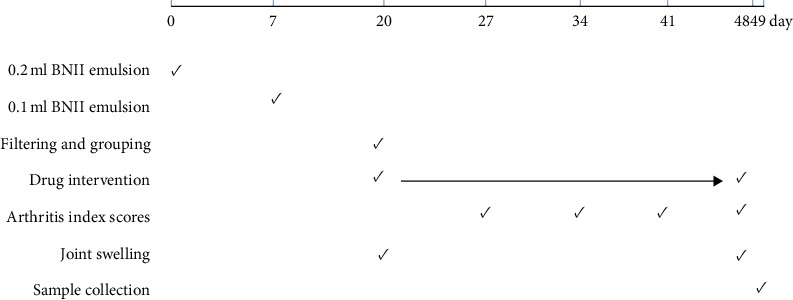
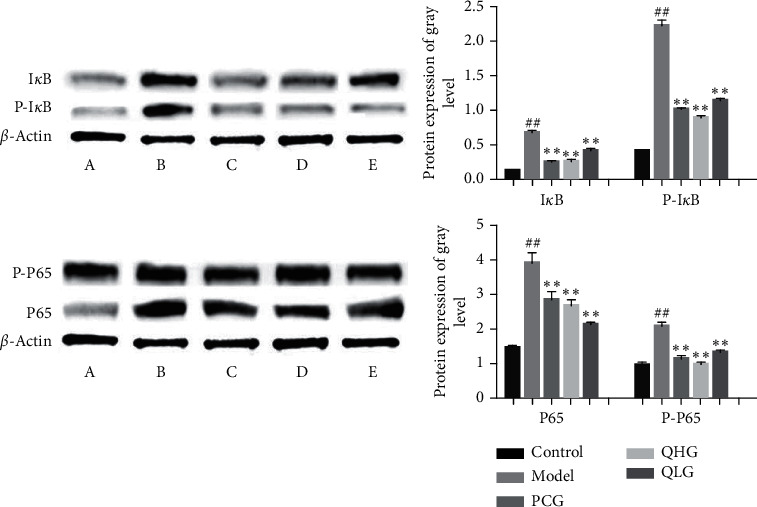
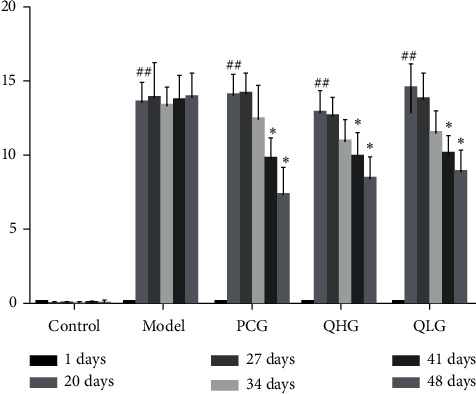
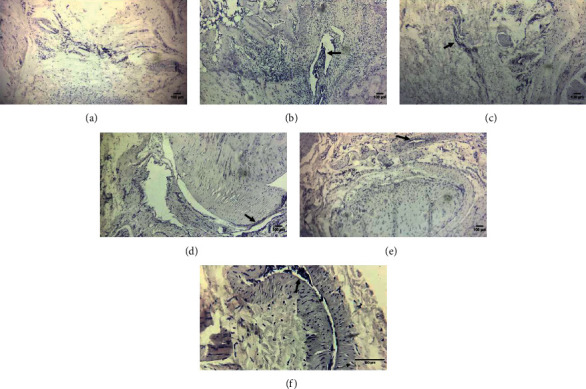
The effects of Q-1 were explored using a bovine type II collagen-induced arthritis (CIA) rat model. The CIA rats were intragastrically administered with high (30 mg·kg) or low (15 mg·kg) doses of Q-1. The control group was administered with an equal volume of drinking water, while the positive control group was administered with glycoside (9.45 mg·kg) for 28 consecutive days. The arthritis indices and ankle joint swelling rates were determined. The levels of IL-1, IL-6, monocyte chemoattractant protein-1 (MCP-1) in serum and sialic acid (SA) in liver homogenate were determined by enzyme-linked immunosorbent assay (ELISA). The pathological features of the ankle joint were analyzed by hematoxylin and eosin (HE) staining. The IB, P-IB, P65, and P-P65 protein levels in synovial tissue were assayed by western blotting.
The arthritis index, ankle joint swelling rate, IL-1, IL-6, and MCP-1 levels in serum, SA level in liver tissue, and IB, P-IB, P65, and P-P65 protein levels in synovial tissues were significantly higher ( < 0.01) in the CIA model compared to the control group. RA was successfully replicated by the CIA model, as shown by the joint swelling results and histopathological sections of the ankle. Notably, all the above indicators decreased significantly ( < 0.01) after treatment with Q-1 compared to the model. In addition, animals treated with Q-1 showed lower inflammation in the ankle joints than the model rats.
The findings indicate that Q-1 effectively inhibited RA in rats by downregulating IB, P-IB, P65, and P-P65, inhibiting the excessive release of inflammatory factors, and inhibiting the overactivation of the NF-B signaling pathway.
Q-1是从苗族药物铁筷子中提取的一种新型化合物。虽然已知Q-1是一种香豆素衍生物,但其结构尚未存入ACX库。我们之前的研究表明,Q-1可抑制炎症细胞的活性。本研究探讨Q-1在调节类风湿性关节炎(RA)方面的疗效。研究结果表明,Q-1通过NF-κB信号通路发挥作用。
使用牛II型胶原诱导的关节炎(CIA)大鼠模型探讨Q-1的作用效果。给CIA大鼠灌胃高剂量(30mg·kg)或低剂量(15mg·kg)的Q-1。对照组给予等量饮用水,阳性对照组连续28天给予糖苷(9.45mg·kg)。测定关节炎指数和踝关节肿胀率。采用酶联免疫吸附测定(ELISA)法测定血清中白细胞介素-1(IL-1)、白细胞介素-6(IL-6)、单核细胞趋化蛋白-1(MCP-1)水平以及肝匀浆中唾液酸(SA)水平。通过苏木精和伊红(HE)染色分析踝关节的病理特征。采用蛋白质印迹法检测滑膜组织中IκB、磷酸化IκB(P-IκB)以及P65、磷酸化P65(P-P65)蛋白水平。
与对照组相比,CIA模型组的关节炎指数、踝关节肿胀率、血清中IL-1、IL-6和MCP-1水平、肝组织中SA水平以及滑膜组织中IκB、P-IκB、P65和P-P65蛋白水平均显著升高(P<0.01)。如关节肿胀结果和踝关节组织病理学切片所示,CIA模型成功复制了RA。值得注意的是,与模型组相比,Q-1治疗后上述所有指标均显著降低(P<0.01)。此外,Q-1治疗的动物踝关节炎症低于模型大鼠。
研究结果表明,Q-1通过下调IκB、P-IκB、P65和P-P65,抑制炎症因子的过度释放,抑制NF-κB信号通路的过度激活,有效抑制大鼠RA。