Post Graduate Program in Health Science, Universidade São Francisco (USF), Bragança Paulista 12916-900, SP, Brazil.
Lymphoma Translational Group, Josep Carreras Leukemia Research Institute (IJC), 08916 Badalona, Spain.
Nutrients. 2021 Jul 13;13(7):2390. doi: 10.3390/nu13072390.
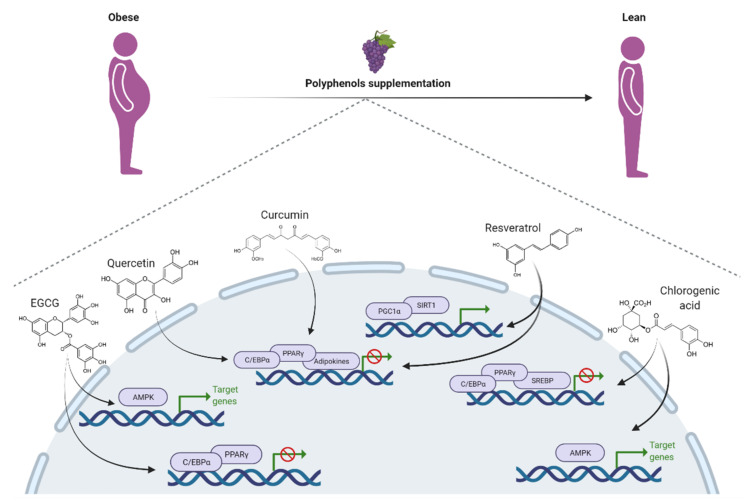
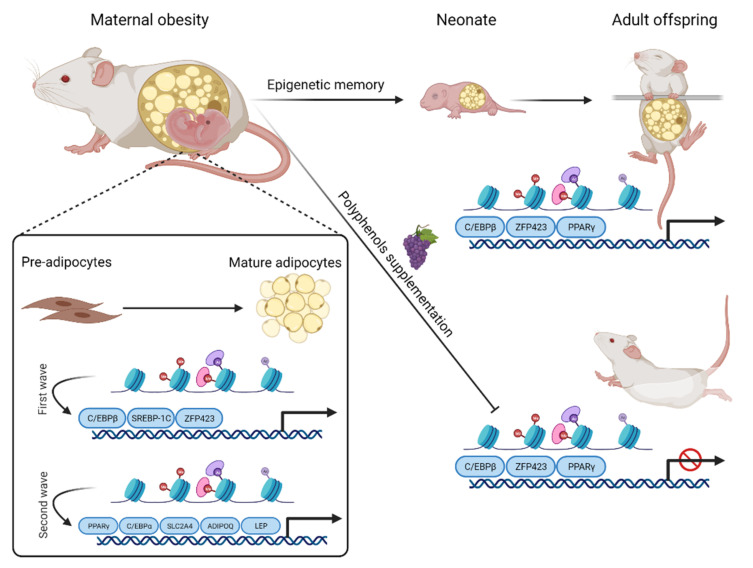
Excess caloric intake and body fat accumulation lead to obesity, a complex chronic disease that represents a significant public health problem due to the health-related risk factors. There is growing evidence showing that maternal obesity can program the offspring, which influences neonatal phenotype and predispose offspring to metabolic disorders such as obesity. This increased risk may also be epigenetically transmitted across generations. Thus, there is an imperative need to find effective reprogramming approaches in order to resume normal fetal development. Polyphenols are bioactive compounds found in vegetables and fruits that exert its anti-obesity effect through its powerful anti-oxidant and anti-inflammatory activities. Polyphenol supplementation has been proven to counteract the prejudicial effects of maternal obesity programming on progeny. Indeed, some polyphenols can cross the placenta and protect the fetal predisposition against obesity. The present review summarizes the effects of dietary polyphenols on obesity-induced maternal reprogramming as an offspring anti-obesity approach.
过量的热量摄入和体脂肪积累会导致肥胖,这是一种复杂的慢性疾病,由于与健康相关的风险因素,成为了一个重大的公共卫生问题。越来越多的证据表明,母体肥胖可以对后代进行编程,影响新生儿的表型,并使后代易患肥胖等代谢紊乱。这种风险增加也可能通过表观遗传在代际间传递。因此,迫切需要寻找有效的重编程方法,以恢复正常的胎儿发育。多酚是蔬菜和水果中含有的生物活性化合物,通过其强大的抗氧化和抗炎活性发挥其抗肥胖作用。多酚补充已被证明可以对抗母体肥胖编程对后代的不利影响。事实上,一些多酚可以穿过胎盘,保护胎儿免受肥胖的影响。本综述总结了膳食多酚对肥胖引起的母体重编程作为一种预防后代肥胖的方法的影响。