Department of Pharmacy and Yonsei Institute of Pharmaceutical Sciences, College of Pharmacy, Yonsei University, Incheon 21983, Korea.
Department of Industrial Pharmaceutical Science, College of Pharmacy, Yonsei University, Incheon 21983, Korea.
Nutrients. 2021 Jul 19;13(7):2460. doi: 10.3390/nu13072460.
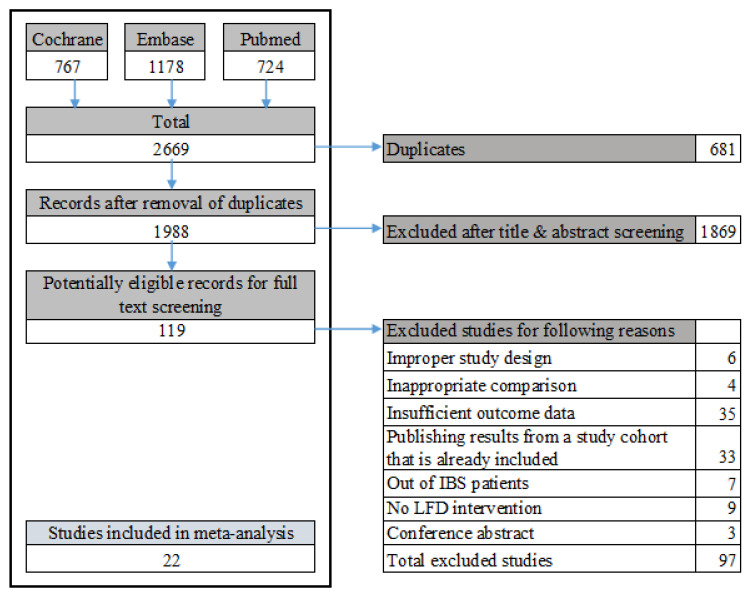
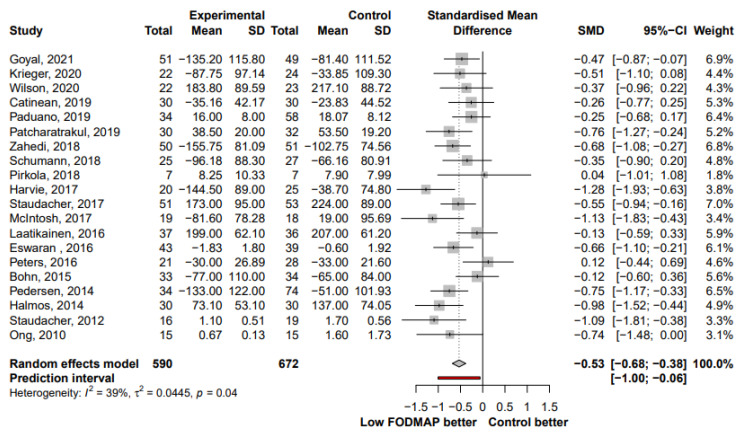
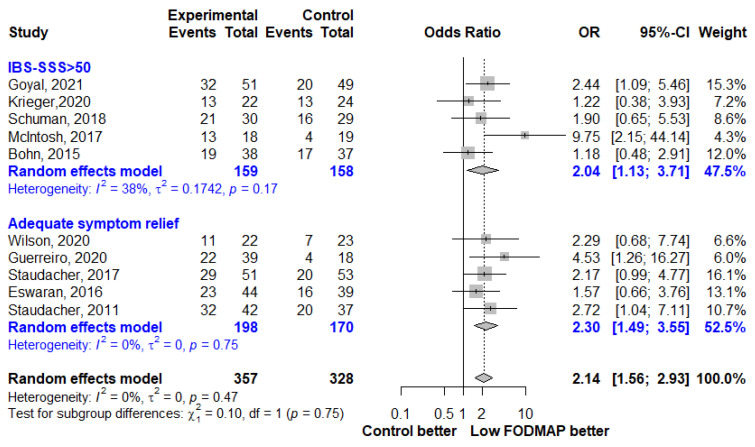
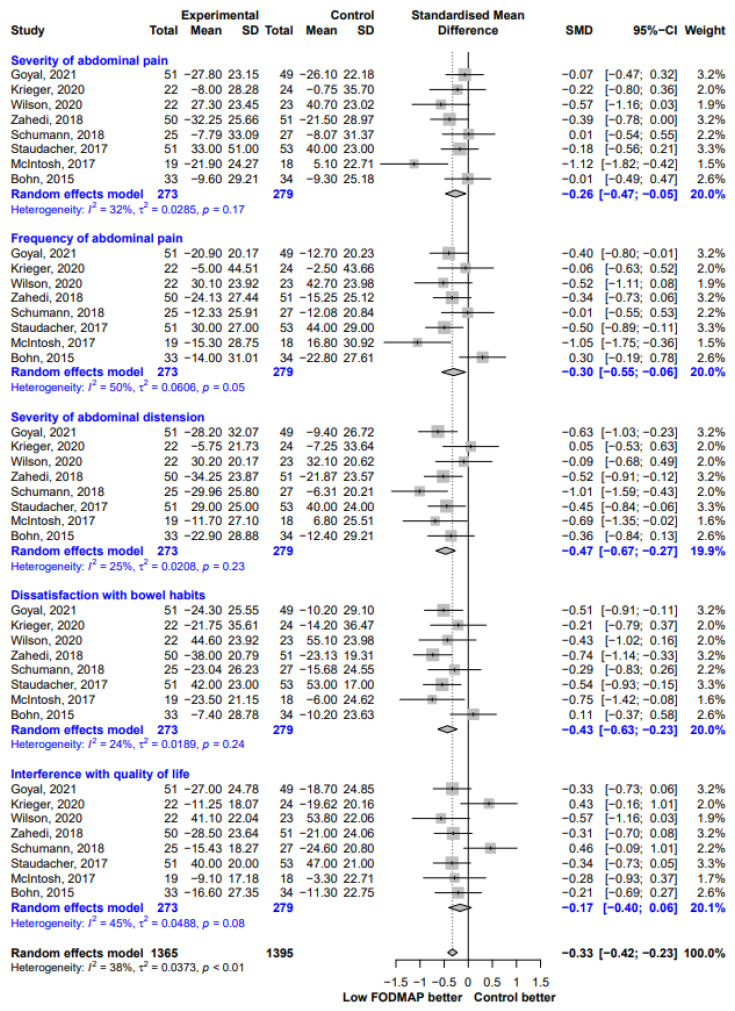
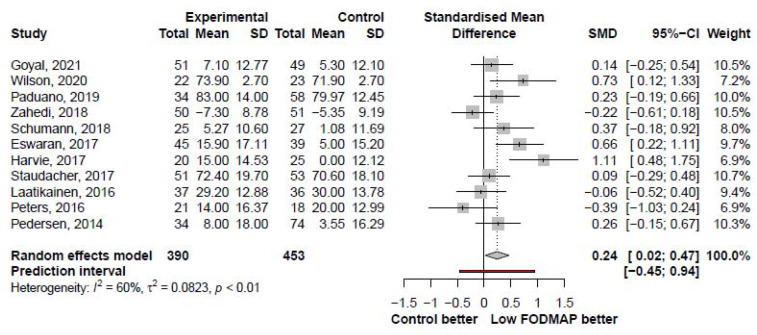
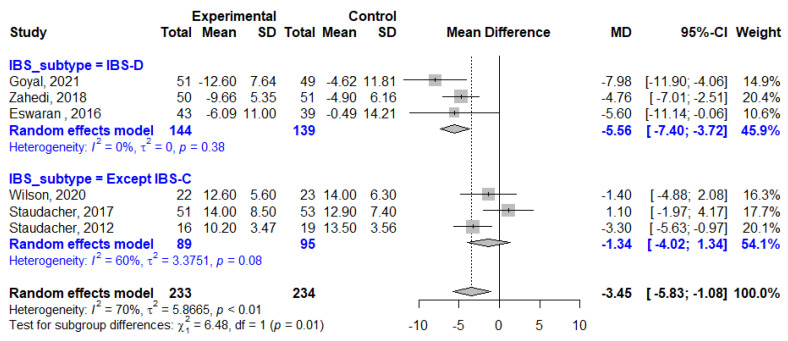
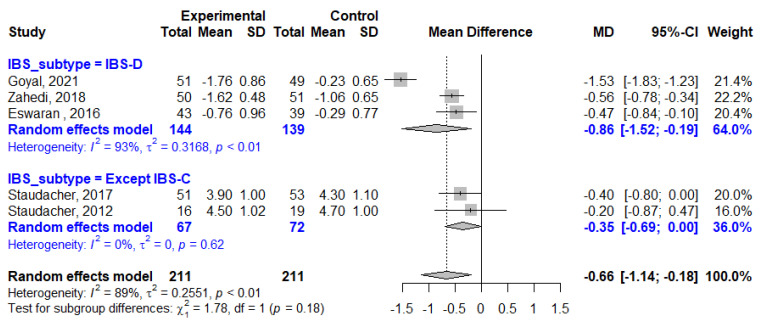
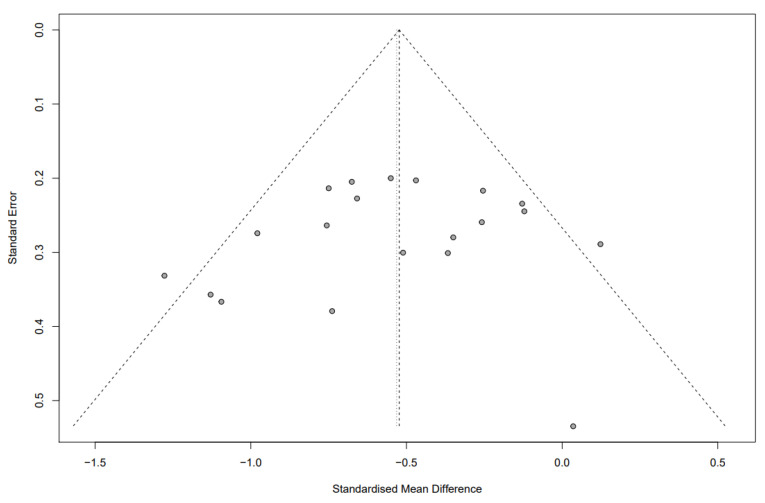
We conducted a meta-analysis exploring the effect of a low fermentable oligo-, di-, monosaccharides, and polyols diet (LFD) on the overall symptoms, quality of life, and stool habits of irritable bowel syndrome (IBS) patients. The meta-analysis was performed using a random-effects method. The effect size was presented as weighted standardized mean difference (SMD) and 95% confidence interval (CI). Subgroup analyses were conducted to determine the potential effects of covariates on the outcome. Twenty-two papers were included. The LFD group showed a moderate reduction in symptom severity and a slight improvement in quality of life compared to the control group (SMD, -0.53 and 0.24; 95% CI, -0.68, -0.38 and 0.02, 0.47, respectively). IBS symptom improvement was consistent between subgroups stratified according to proportions of female patients, study durations, IBS subtypes, assessment methods, and control interventions. Three studies regarding stool habits change in IBS-D patients showed a significant decrease in stool frequency (mean differences [MD], -5.56/week; 95% CI, -7.40, -3.72) and a significant improvement in stool consistency (MD, -0.86; 95% CI, -1.52, -0.19) in the LFD group compared to the control group. This is the most updated meta-analysis including studies that adopted diverse control interventions such as dietary interventions, supplementation, habitual diets, and lifestyle changes.
我们进行了一项荟萃分析,探讨了低可发酵寡糖、二糖、单糖和多元醇饮食(LFD)对肠易激综合征(IBS)患者整体症状、生活质量和粪便习惯的影响。荟萃分析采用随机效应法。效应大小表示为加权标准化均数差(SMD)和 95%置信区间(CI)。进行了亚组分析,以确定协变量对结果的潜在影响。共纳入 22 篇论文。与对照组相比,LFD 组的症状严重程度中度降低,生活质量略有改善(SMD,-0.53 和 0.24;95%CI,-0.68,-0.38 和 0.02,0.47)。根据女性患者比例、研究持续时间、IBS 亚型、评估方法和对照干预措施对亚组进行分层,IBS 症状改善情况一致。3 项关于 IBS-D 患者粪便习惯变化的研究显示,与对照组相比,LFD 组粪便频率显著减少(平均差异 [MD],-5.56/周;95%CI,-7.40,-3.72),粪便稠度显著改善(MD,-0.86;95%CI,-1.52,-0.19)。这是一项最新的荟萃分析,包括采用多种对照干预措施(如饮食干预、补充剂、习惯性饮食和生活方式改变)的研究。