Department of Ophthalmology and Visual Sciences, The University of Chicago, Chicago, IL, USA.
Animal Resources Center, The University of Chicago, Chicago, IL, USA.
Transl Vis Sci Technol. 2021 Aug 2;10(9):14. doi: 10.1167/tvst.10.9.14.
Compelling new evidence reveals a close link between the gut microbiome and the pathogenesis of neovascular age-related macular degeneration (nAMD). Germ-free (GF) animal models are the current gold standard for studying host the microbe interactions in vivo; yet, no GF animal models of nAMD are available today. This protocol describes gnotobiotic operations and assembly for a laser-induced choroidal neovascularization (CNV) model in GF mice to study the gut microbiome in neovascular AMD.
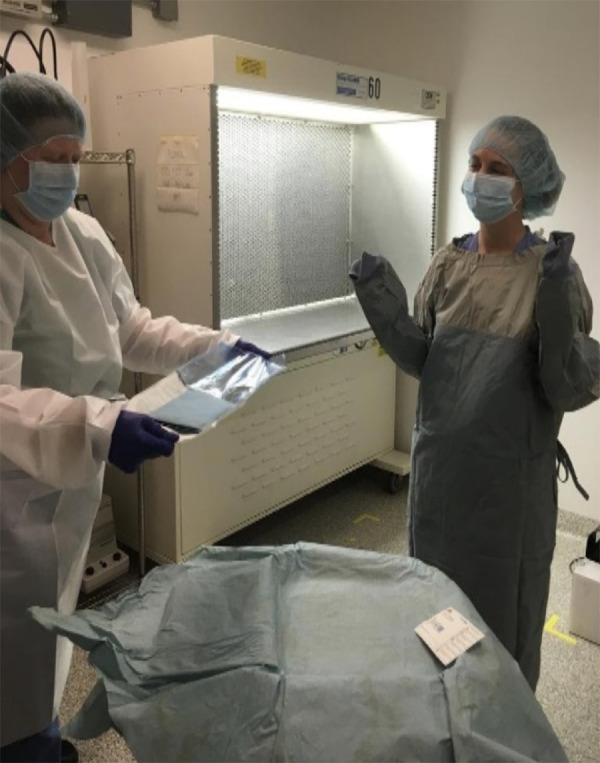
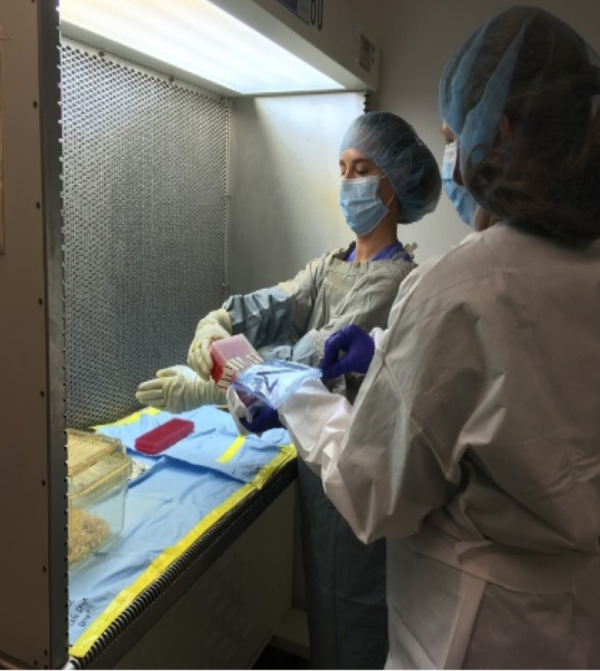
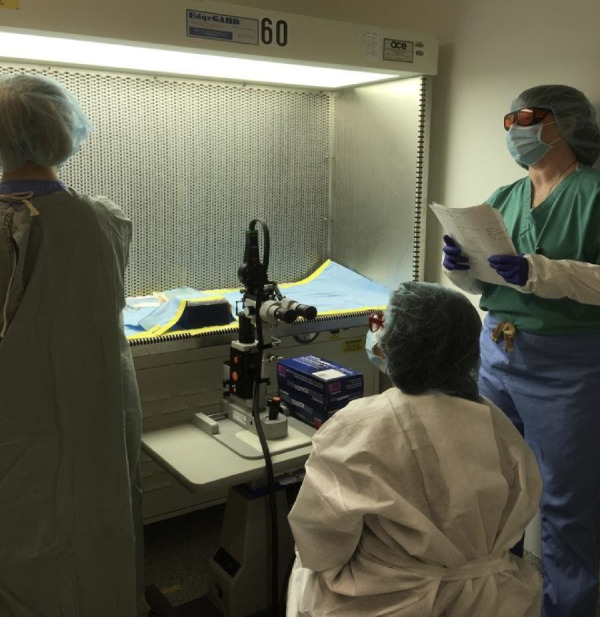
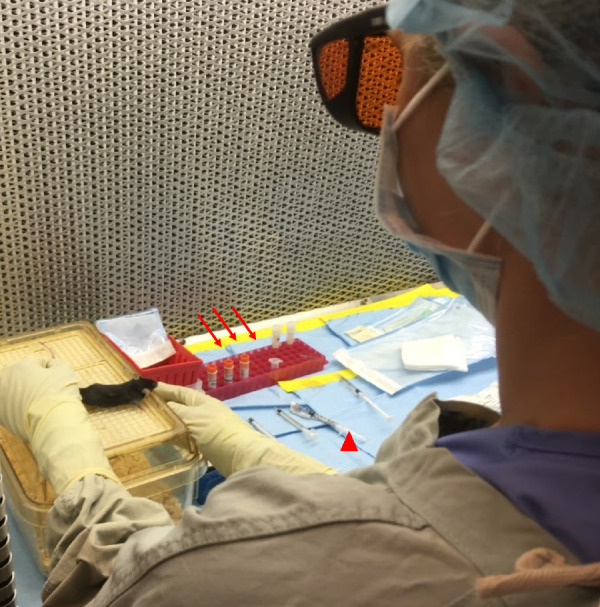
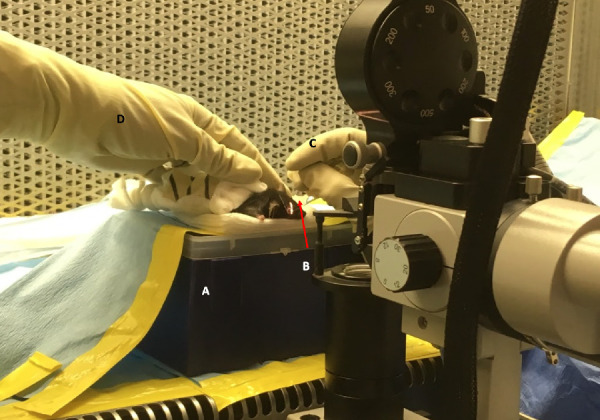
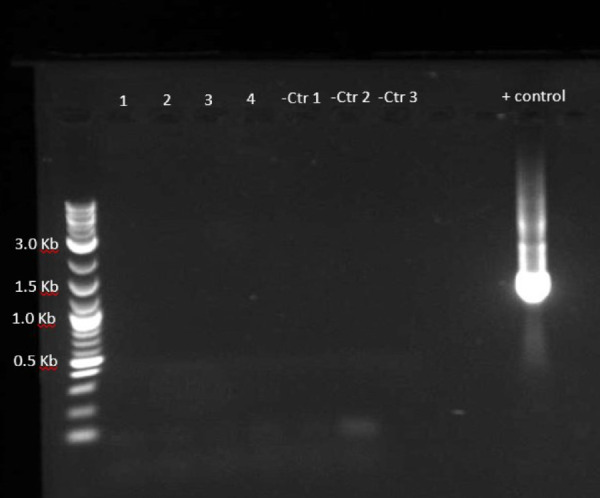
We developed a step-wise approach to performing retinal laser photocoagulation in GF C57BL/6J mice that were bred and maintained at the gnotobiotic facility. Following a strict sterility protocol, we administered laser photocoagulation via an Argon 532-nm laser attached to a customized slit-lamp delivery system. Sterility was confirmed by weekly fecal cultures and reverse transcriptase-polymerase chain reaction.
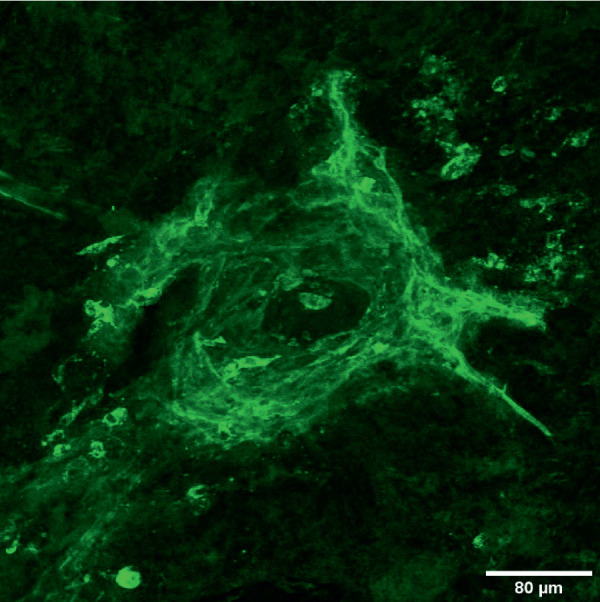
The experiment was repeated twice at different time points using seven mice (14 eyes). Stool cultures and RT-PCR remained negative for 14 days post-procedure in all mice. Lectin immunostaining performed on choroidal flatmounts confirmed the presence of CNV lesions 2 weeks after laser treatment.
We established a GF mouse model of nAMD with detailed guidelines to deliver retinal laser in GF mice maintaining sterility after the laser procedure.
To our knowledge, this is the first protocol that describes a GF murine model of laser-induced CNV. In addition to nAMD, this animal model can be used to investigate host-microbial interactions in other eye diseases with laser-induced mouse models such as glaucoma and retinal vein occlusion.
新的有力证据揭示了肠道微生物组与新生血管性年龄相关性黄斑变性(nAMD)发病机制之间的密切联系。无菌(GF)动物模型是目前研究宿主与微生物体内相互作用的金标准;然而,目前尚无 nAMD 的 GF 动物模型。本方案描述了无菌小鼠激光诱导脉络膜新生血管(CNV)模型中微生物组的无菌操作和装配。
我们开发了一种逐步的方法,在无菌的 C57BL/6J 小鼠中进行视网膜激光光凝,这些小鼠在无菌设施中繁殖和维持。按照严格的无菌协议,我们通过连接到定制的裂隙灯输送系统的氩 532nm 激光进行激光光凝。每周进行粪便培养和逆转录-聚合酶链反应以确认无菌性。
该实验在不同时间点重复进行了两次,共使用了 7 只小鼠(14 只眼)。所有小鼠在术后 14 天内粪便培养和 RT-PCR 均为阴性。激光治疗后 2 周进行的凝集素免疫染色证实存在 CNV 病变。
我们建立了一种具有详细指导方针的 nAMD 无菌小鼠模型,可在激光手术后保持无菌条件下向无菌小鼠递送视网膜激光。
翻译的准确性和流畅度可以根据需要进行进一步优化和调整。