Faculty of Veterinary Medicine, Department of Clinical Sciences, Shahid Chamran University of Ahvaz, Ahvaz, Iran.
Chemistry Department, College of Science, Shahid Chamran University of Ahvaz, Ahvaz, Iran.
Vet Med Sci. 2021 Nov;7(6):2135-2143. doi: 10.1002/vms3.608. Epub 2021 Aug 13.
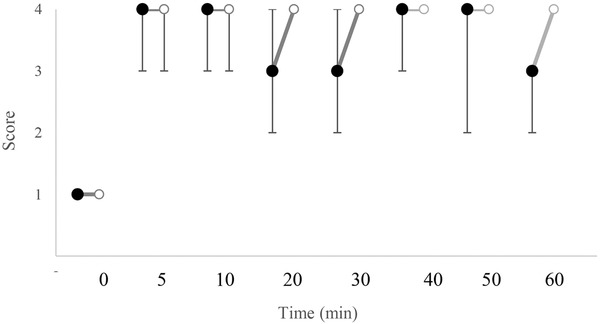
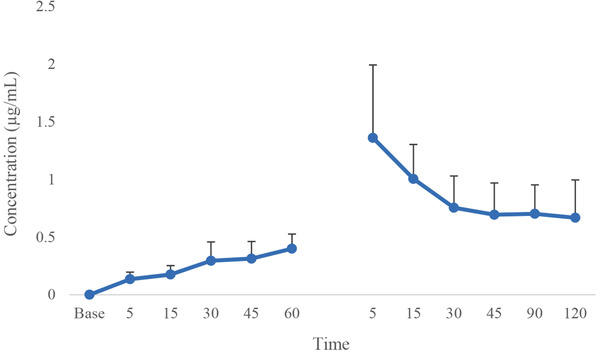
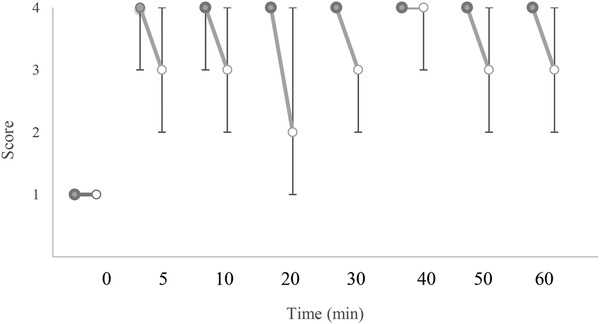
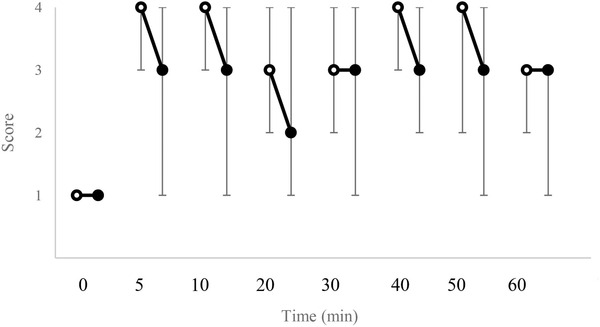
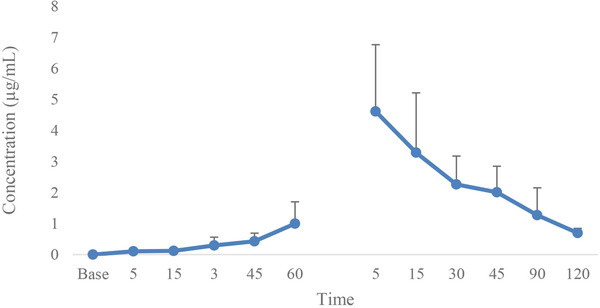
The present study was designed to compare the effects of lidocaine and ropivacaine in intravenous regional anaesthesia (IVRA) in dogs. Twelve adult male dogs were used. Under isoflurane anaesthesia, exsanguination was performed in the target forelimb. Then, a blood pressure cuff was encircled around the limb proximal to the elbow joint with a pressure of approximately 150 mmHg above the mean arterial blood pressure. The animals then received one of the two treatments of lidocaine (3 mg/kg) or ropivacaine (1.5 mg/kg) with a final volume of 0.6 mL/kg into the cephalic vein. After 60 min, the anaesthesia was disrupted and the tourniquet was removed using intermittent opening (30 s) and closing (5 min) manner for three times. The results revealed that at 20 and 30 min after the initiation of IVRA, the dogs in ROP showed higher analgesia than LID. A leakage under the tourniquet during IVRA was detected. Tremor and hypersalivation were observed after tourniquet removal in some dogs. It was concluded that ropivacaine might provide a higher quality of anaesthesia than lidocaine in IVRA in dogs. The development of local anaesthetic toxicity is a major concern and should be considered at the time of tourniquet removal.
本研究旨在比较利多卡因和罗哌卡因在犬静脉区域麻醉(IVRA)中的效果。使用 12 只成年雄性犬。在异氟烷麻醉下,在目标前肢进行放血。然后,将血压袖带环绕在靠近肘关节的肢体近端,压力约高于平均动脉血压 150mmHg。然后,动物接受两种治疗方法之一:利多卡因(3mg/kg)或罗哌卡因(1.5mg/kg),最终体积为 0.6mL/kg 注入头静脉。60 分钟后,通过间歇性打开(30 秒)和关闭(5 分钟)方式,将止血带松开三次,以中断麻醉。结果表明,在 IVRA 开始后 20 和 30 分钟,ROP 组的犬比 LID 组具有更高的镇痛效果。在 IVRA 期间检测到止血带下的渗漏。在一些犬中,止血带去除后观察到震颤和过度流涎。结论是,罗哌卡因在犬的 IVRA 中可能比利多卡因提供更高质量的麻醉。局部麻醉毒性的发展是一个主要关注点,在去除止血带时应予以考虑。