Department of Neurosurgery, Clinical Neuroscience Research Center, Tulane University School of Medicine, New Orleans, LA 70112, USA.
Department of Neurosurgery, Clinical Neuroscience Research Center, Tulane University School of Medicine, New Orleans, LA 70112, USA; Tulane Brain Institute, Tulane University, New Orleans, LA 70112, USA; Department of Neurology, Tulane University School of Medicine, New Orleans, LA 70112, USA.
Life Sci. 2021 Nov 1;284:119881. doi: 10.1016/j.lfs.2021.119881. Epub 2021 Aug 10.
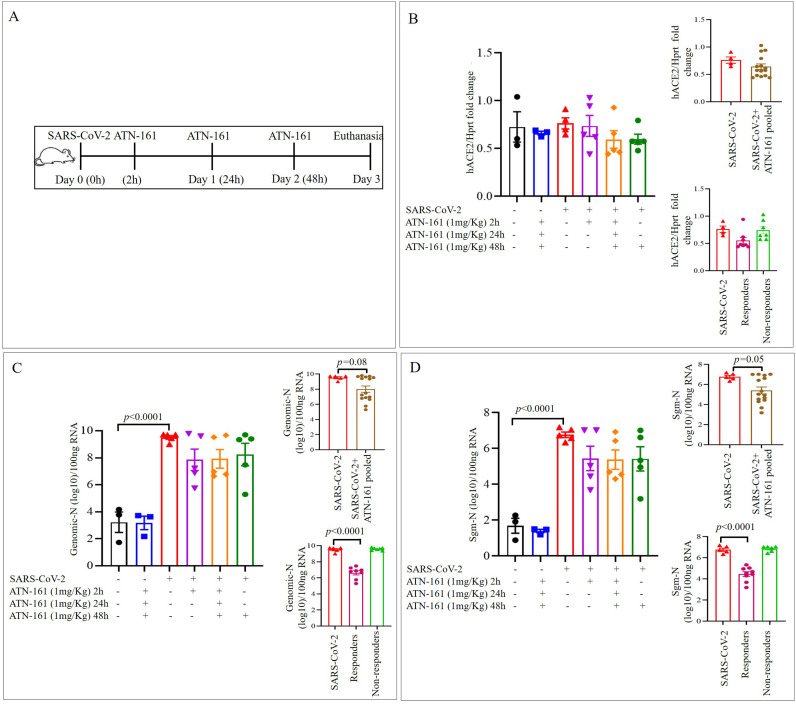
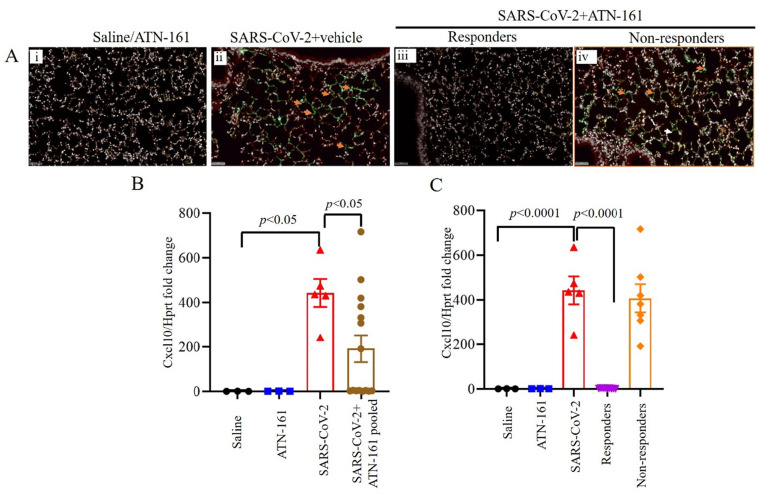
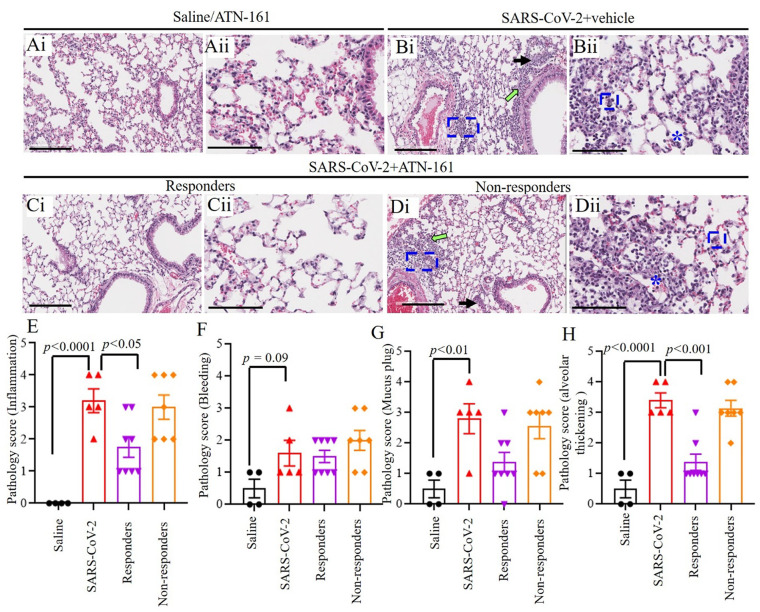
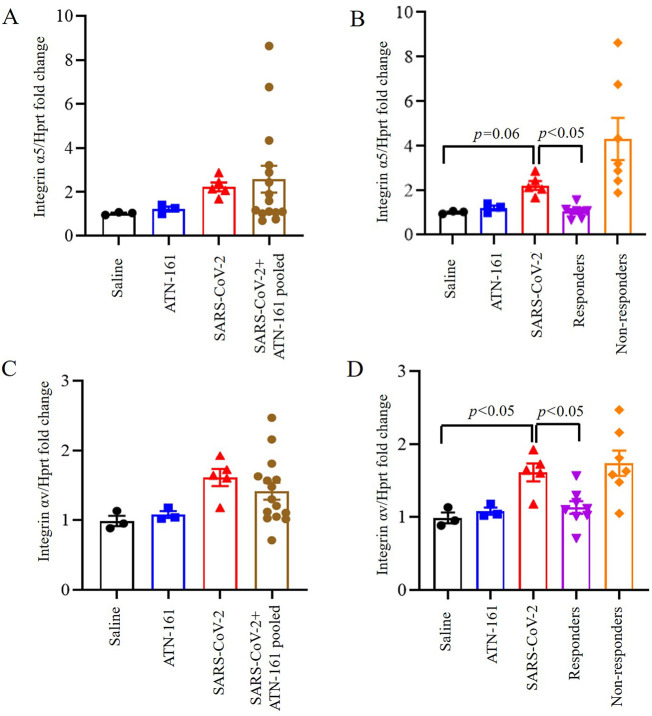
Severe acute respiratory syndrome coronavirus 2 (SARS-CoV-2) is an infectious disease that has spread worldwide. Current treatments are limited in both availability and efficacy, such that improving our understanding of the factors that facilitate infection is urgently needed to more effectively treat infected individuals and to curb the pandemic. We and others have previously demonstrated the significance of interactions between the SARS-CoV-2 spike protein, integrin α5β1, and human ACE2 to facilitate viral entry into host cells in vitro. We previously found that inhibition of integrin α5β1 by the clinically validated small peptide ATN-161 inhibits these spike protein interactions and cell infection in vitro. In continuation with our previous findings, here we have further evaluated the therapeutic potential of ATN-161 on SARS-CoV-2 infection in k18-hACE2 transgenic (SARS-CoV-2 susceptible) mice in vivo. We discovered that treatment with single or repeated intravenous doses of ATN-161 (1 mg/kg) within 48 h after intranasal inoculation with SARS-CoV-2 lead to a reduction of lung viral load, viral immunofluorescence, and improved lung histology in a majority of mice 72 h post-infection. Furthermore, ATN-161 reduced SARS-CoV-2-induced increased expression of lung integrin α5 and αv (an α5-related integrin that has also been implicated in SARS-CoV-2 interactions) as well as the C-X-C motif chemokine ligand 10 (Cxcl10), further supporting the potential involvement of these integrins, and the anti-inflammatory potential of ATN-161, respectively, in SARS-CoV-2 infection. To the best of our knowledge, this is the first study demonstrating the potential therapeutic efficacy of targeting integrin α5β1 in SARS-CoV-2 infection in vivo and supports the development of ATN-161 as a novel SARS-CoV-2 therapy.
严重急性呼吸综合征冠状病毒 2 (SARS-CoV-2) 是一种传染性疾病,已在全球范围内传播。目前的治疗方法在可用性和疗效方面都受到限制,因此迫切需要更好地了解促进感染的因素,以便更有效地治疗感染个体并遏制大流行。我们和其他人之前已经证明了 SARS-CoV-2 刺突蛋白、整合素 α5β1 和人类 ACE2 之间的相互作用对于促进病毒在体外进入宿主细胞的重要性。我们之前发现,临床上验证的小肽 ATN-161 抑制整合素 α5β1 的功能可抑制这些刺突蛋白相互作用和细胞感染。在延续我们之前的发现,在这里,我们进一步评估了 ATN-161 在体内 k18-hACE2 转基因 (SARS-CoV-2 易感) 小鼠感染 SARS-CoV-2 中的治疗潜力。我们发现,在感染 SARS-CoV-2 后 48 小时内,单次或重复静脉注射 ATN-161(1 mg/kg)可降低肺部病毒载量、病毒免疫荧光,并在感染后 72 小时改善大多数小鼠的肺部组织学。此外,ATN-161 降低了 SARS-CoV-2 诱导的肺部整合素 α5 和 αv(一种与 SARS-CoV-2 相互作用有关的 α5 相关整合素)以及 C-X-C 基序趋化因子配体 10 (Cxcl10)的表达增加,进一步支持这些整合素的潜在参与,以及 ATN-161 在 SARS-CoV-2 感染中的抗炎潜力。据我们所知,这是第一项证明靶向整合素 α5β1 在 SARS-CoV-2 体内感染中治疗潜力的研究,并支持 ATN-161 作为一种新型 SARS-CoV-2 治疗方法的开发。